

By: Gabriel Osa
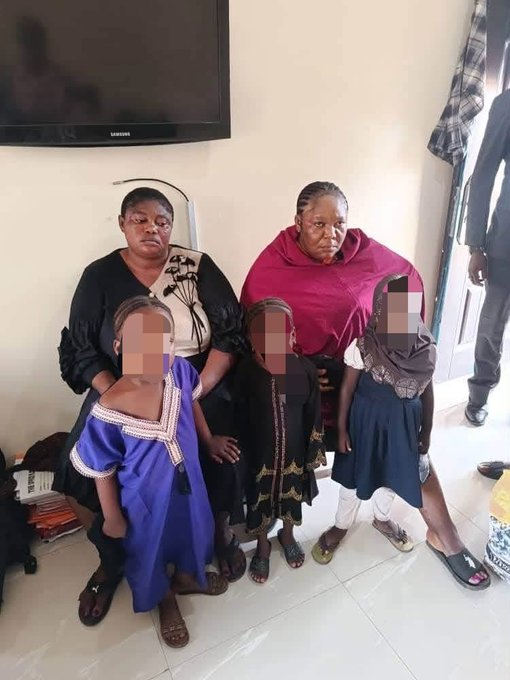
Two women have been arrested in Jalingo, Taraba State, over an alleged attempt to traffic three young girls, in another case highlighting concerns over the movement and exploitation of children across Nigeria.
The suspects were reportedly arrested by security operatives in Jalingo while allegedly transporting the children to another location. The girls were rescued during the operation and were said to be unharmed. Available reports identify the incident as a suspected human-trafficking case, although investigations are still expected to establish the circumstances surrounding the children’s movement, the destination and the intended purpose of taking them away from their usual environment.
The incident occurred at Awoniyi Motor Park in Jalingo, according to one report, which said the two female suspects were intercepted while allegedly transporting three girls towards Yola in neighbouring Adamawa State. The children were reportedly between four and five years old in that account. Other information circulating about the case has described the children as two five-year-olds and one six-year-old. The discrepancy has not been resolved by an official statement available publicly, and the children’s precise ages should therefore be treated with caution until confirmed by the authorities.
The identity of the two women has also been reported differently across social-media accounts and unofficial reports. A Taraba-related post identified two suspects as Ada Eze and Ujunyi F., but the information available does not establish whether those names have been formally confirmed by the police or another competent authority.
Similarly, claims circulating online that the women were Christians from the Igbo community who disguised themselves as Muslims have not been independently verified through an official police or National Agency for the Prohibition of Trafficking in Persons statement located during this report’s verification. The allegation should therefore not be treated as an established fact or used to attach responsibility for the alleged crime to an ethnic or religious community.
The central confirmed issue is the alleged attempted movement of three young children and the arrest of two women in connection with suspected trafficking. The children were reportedly rescued before they could be taken to their alleged destination.
Human trafficking involving children remains a serious concern in Nigeria, where minors can be moved between states or across national borders for purposes including forced labour, sexual exploitation, domestic servitude, illegal adoption and other forms of exploitation. Authorities have repeatedly warned parents and guardians to be cautious about allowing children to travel with people who do not have clear and lawful parental or guardianship authority.
Taraba has previously recorded child-trafficking cases. In February 2026, the National Agency for the Prohibition of Trafficking in Persons, working with the Taraba State Ministry of Women Affairs and Child Development, reunited 10 children with their biological parents after they were rescued in Jalingo. NAPTIP said the children had been intercepted while being conveyed by a suspected trafficker. The agency subsequently counselled the children before their return to their families.
That earlier case demonstrated the challenges authorities face in determining how children came to be in the custody of people who were not their parents and where they were being taken. NAPTIP said irregular movement of children without parental consent or through false promises could expose minors to exploitation and abuse.
The latest arrest therefore comes against an existing pattern of concern in the state. Authorities have continued to encourage communities to report suspicious movements involving children and to cooperate with agencies responsible for investigating trafficking offences.
The three girls involved in the latest case are particularly vulnerable because of their young ages. Children of primary-school age generally depend heavily on adults for transportation, accommodation, food and protection. Their movement without the knowledge or consent of their parents or lawful guardians can therefore create significant safeguarding risks.
The immediate priority following their rescue is expected to be establishing their identities, locating their parents or guardians and determining how they came into the suspects’ custody. Authorities would also need to establish whether the women were acting independently or as part of a wider network.
Investigators may examine the women’s communications, transportation arrangements, financial transactions and contacts to determine whether other people were involved. Such evidence could help establish whether the alleged movement was an isolated incident or part of an organised trafficking operation.
The police or NAPTIP may also need to establish where the girls were originally taken from and why they were allegedly being transported towards another state. Information from the children, their parents, witnesses and the suspects could assist investigators in reconstructing the events leading to the arrest.
The destination is particularly important because trafficking cases frequently involve movement from one location to another. A child may be transferred through several communities before reaching the person or organisation ultimately intending to exploit the victim. Early intervention can therefore prevent children from disappearing into larger trafficking networks.
The reported arrest also demonstrates the importance of intelligence and vigilance at transport facilities. Motor parks are frequently used by people travelling between Nigerian states, making them important locations for authorities monitoring the movement of vulnerable persons.
The children’s rescue without reported physical harm is significant, but it does not by itself resolve the wider safeguarding concerns. Authorities will need to determine whether the girls experienced any abuse, coercion or neglect before they were intercepted. They may also require medical assessment and psychosocial support depending on the findings of the investigation.
For the families involved, establishing contact with the children and confirming their safety will be a central priority. If the girls were moved without parental consent, authorities are also likely to investigate how the suspects obtained access to them in the first place.
The legal consequences for the arrested women will depend on the evidence gathered during the investigation and the specific offences established by prosecutors. An arrest does not amount to a conviction, and the allegations against the suspects will have to be tested through the appropriate legal process.
The case nevertheless reinforces the continuing need for stronger child-protection mechanisms in Nigeria. NAPTIP has previously warned that children can be exposed to exploitation when adults move them under false promises or without proper parental consent. The agency has urged members of the public to report suspicious movements and cooperate with law-enforcement authorities.
Nigeria has also recorded other recent trafficking interventions involving children. In August, police in Cross River State rescued four teenage girls allegedly targeted for trafficking, including girls who had reportedly been taken or were being transported towards Ivory Coast. The cases demonstrate that trafficking networks and recruiters can operate across state and international boundaries.
The Jalingo case now awaits further investigation. Authorities are expected to determine the identities and circumstances of the children, establish their relationship with the arrested women, identify the intended destination and determine whether other suspects were involved.
Until those questions are answered, the verified facts remain limited: two women were arrested in Jalingo over an alleged attempt to move three young girls, and the children were rescued. Claims concerning the suspects’ ethnic or religious identities and their alleged disguise have not been independently established and should not be presented as fact.
The case is a reminder that protecting children from trafficking requires vigilance not only from security agencies but also from families, transport operators, communities, schools and members of the public. Early reporting of suspicious movements can provide authorities with the opportunity to intervene before vulnerable children are taken beyond the reach of their families.
📩 Stone Reporters News | 🌍 stonereportersnews.com
✉️ info@stonereportersnews.com | 📘 Facebook: Stone Reporters News | 🐦 X (Twitter): @StoneReportNew | 📸 Instagram: @stonereportersnews
Add comment
Comments