

Published by Osasere Edowm Ikpoba
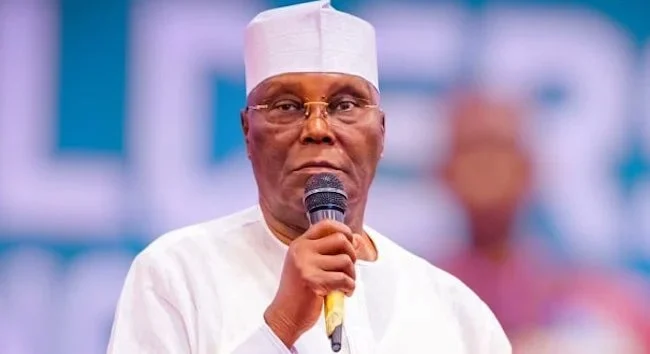
The war of words between former Vice President and 2027 presidential candidate Atiku Abubakar and President Bola Tinubu over Nigeria’s fuel subsidy removal has escalated dramatically, with Atiku launching a blistering attack on the administration’s economic policies and vowing to restore a targeted subsidy if elected. Atiku, who is running under the African Democratic Congress (ADC), accused Tinubu of presiding over “economic arson followed by propaganda about the ashes,” arguing that the removal of the fuel subsidy has brought nothing but pain and agony to the majority of Nigerians.
The clash was triggered when Atiku announced on August 20, 2026, that he would reinstate the fuel subsidy regime if elected president in 2027, arguing that the removal by Tinubu’s administration has not yielded any benefit for Nigeria. Atiku stated that he initially did not oppose the removal of the fuel subsidy but now contends that it has not served the interests of the populace. “Where is the money? Where has the subsidy money gone? Has it been used to improve healthcare, education or security?” he asked. He further declared, “If I win the presidential election, I will restore the subsidy. And anyone who stole Nigeria’s subsidy funds must return the money”.
The Presidency swiftly rejected the proposal, with Tinubu describing Atiku’s position as evidence of “severe ignorance” about governance and economics. In response, Atiku fired back through his public communication aide, Phrank Shaibu, accusing the administration of mistaking Nigerians’ capacity to endure suffering for proof that its policies are working. “If economic ignorance had a presidential seal, Tinubu and his family would be its official logo,” Atiku said in a stinging rebuke. He argued that the administration had detonated simultaneous fuel-price, exchange-rate and cost-of-living shocks across a fragile economy, watching millions become poorer. “That is not reform. It is economic arson followed by propaganda about the ashes,” he declared.
Atiku was careful to distinguish his proposal from the old, open-ended subsidy regime, which he acknowledged was prone to corruption and abuse. Instead, he described his plan as a targeted, capped, budgeted and time-bound production-support mechanism tied to domestic refining capacity, designed to protect consumers from price shocks while supporting local production. He argued that economic policies must respond to prevailing conditions, insisting that the circumstances that informed previous prescriptions had changed significantly under Tinubu. “That is not inconsistency. That is economics. Only incompetence insists on yesterday’s prescription after today’s conditions have changed,” he said.
Atiku also took aim at the government’s claim that subsidy had been completely eliminated, citing what he described as approximately ₦17.5 trillion in energy-security costs and petroleum under-recoveries in the NNPC’s audited accounts. He questioned why under-recoveries remained if subsidy had been abolished and whether the reform had truly eliminated the opacity associated with petroleum-sector costs. “Tinubu has given Nigerians the worst of both worlds: he removed the relief but retained the opaque costs. Nigerians got the pain; government kept the bill,” Atiku charged.
The debate over petrol subsidy has emerged as the sharpest fault line in Nigeria’s presidential race ahead of the January 16, 2027 election. President Tinubu, seeking re-election on the All Progressives Congress (APC) platform, is defending a market-reform agenda built on the removal of the subsidy regime he inherited in May 2023. Atiku is promising to reverse course with a targeted subsidy, while other candidates, including Peter Obi of the Nigeria Democratic Congress (NDC) and Accord Party’s Gbenga Olawepo-Hashim, have staked out their own positions. Atiku’s camp has claimed that petrol could sell for about ₦500 per litre under its proposed production-based model, a sharp contrast to current prices that have soared past ₦1,300 per litre in some areas.
Atiku further criticised Tinubu’s recent admission that only about 120,000 vehicles have been converted to Compressed Natural Gas (CNG) in more than three years, describing it as an acceptance of policy failure. He noted that 120,000 out of an estimated 14 million vehicles on Nigerian roads amount to less than one per cent. The ADC candidate dismissed the government’s CNG push as “medicine after death,” arguing that an alternative fuel cannot be presented as the solution to a purchasing-power crisis. “CNG can make a converted bus cheaper to operate. It cannot make a poor Nigerian richer,” he added. He also criticised the proposed October 1, 2026 implementation date for relief measures, saying, “Nigerians are hungry today. Transport is expensive today. Food is expensive today. Businesses are dying today. Why must relief arrive by appointment?”
Atiku also questioned the timing of President Tinubu’s three-week vacation in Europe, which the Presidency said began with his departure from Abuja for London on Saturday. Although he acknowledged the President’s constitutional right to take annual leave, Atiku said the timing raised questions about leadership and public perception given the economic difficulties confronting Nigerians. “The issue is not that a President takes leave. The issue is that a country in distress increasingly sees a government insulated from the consequences of its own policies,” he said.
As the 2027 election draws closer, the battle over fuel prices promises to remain at the centre of Nigeria’s political discourse, with both sides digging in for a protracted fight over the nation’s economic future. For millions of Nigerians struggling with soaring transport and food costs, the outcome of this debate carries life-altering consequences.
📩 Stone Reporters News | 🌍 stonereportersnews.com
✉️ info@stonereportersnews.com | 📘 Facebook: Stone Reporters News | 🐦 X (Twitter): @StoneReportNew | 📸 Instagram: @stonereportersnews
Add comment
Comments