

Reported by: Ijeoma G | Edited by: Oravbiere Osayomore Promise.
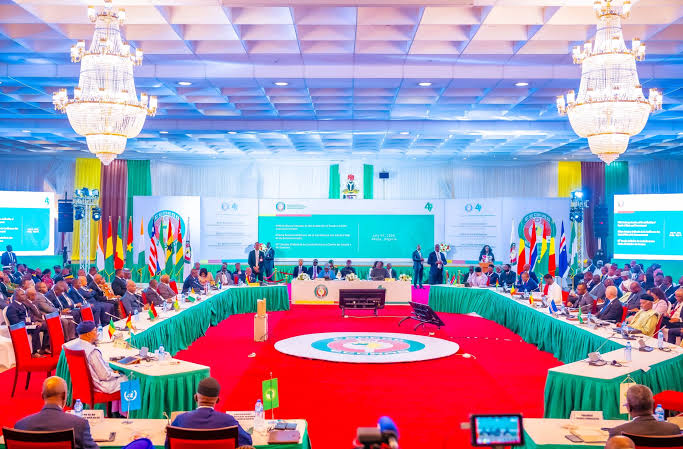
The Nigerian Presidency has declared that the formal withdrawal of Burkina Faso, Mali, and Niger from the Economic Community of West African States (ECOWAS) has significantly weakened key mechanisms for regional integration and created a major crisis for cooperation within West Africa. Special Adviser to President Bola Tinubu on Media and Public Communications, Sunday Dare, made this known on Thursday, September 3, 2026, while speaking at a policy colloquium organised by the Ministry of Defence in Abuja.
The three Sahelian countries, all under military rule, formally exited the regional bloc in January 2025, following their initial announcement of withdrawal plans in 2024. Since then, they have consolidated their cooperation under the Alliance of Sahel States (AES), a rival regional framework that has further fragmented the West African subregion. Dare stated that the withdrawal had disrupted regional mechanisms, particularly ECOWAS protocols aimed at promoting economic integration and facilitating the free movement of goods and services across member states.
"The rupture that came in 2025, when the countries pulled out of ECOWAS, created a major regional crisis," Dare said, adding that the development had also resulted in the emergence of the AES as a counter-regional body. He further stressed the importance of effective border management to both economic integration and regional security, describing national borders as a critical frontline for maintaining stability. He explained that well-managed borders can support legitimate trade and movement while strengthening security, whereas weak border controls can create opportunities for instability and other security threats.
Dare also rejected claims that Nigeria's borders were closed, saying the country's borders remained open but were subject to necessary controls by relevant government agencies. He warned politicians against turning border security into an issue for electoral campaigns or using it to score political points, emphasising that the concept of open borders should not be interpreted as unrestricted movement. He noted that immigration, customs and other security agencies remained responsible for regulating activities at the country's entry and exit points.
Also speaking at the event, the Minister of Defence, General Christopher Musa (retd.), said the Tinubu administration was focused on strengthening Nigeria's national security architecture to protect the country's sovereignty, democratic institutions and development interests. Musa said the Federal Government was committed to providing the Armed Forces with the capabilities required to respond effectively to the country's evolving security environment. He noted that Nigeria's security challenges increasingly cut across land, maritime, air and cyberspace, requiring a coordinated defence strategy involving intelligence sharing, joint operations and greater interoperability among the Armed Forces and other security institutions.
"Our defence architecture must remain agile and forward-looking, with the capacity to anticipate threats, respond decisively and protect Nigeria's territorial integrity and vital national interests," the minister said. He also identified technological advancement as an increasingly important component of modern defence, pointing to developments in artificial intelligence, unmanned systems, surveillance and reconnaissance, cyber capabilities and other emerging technologies.
The withdrawal of the three Sahelian states has been a significant blow to ECOWAS, which has struggled to maintain cohesion and effectiveness in the face of the defection. The AES has since implemented measures that further challenge regional integration, including the imposition of a 0.5 per cent import levy on goods from ECOWAS countries, which took effect in April 2025. The three countries have also launched a common travel passport, signalling their intent to deepen their own integration outside the ECOWAS framework.
While the Nigerian Presidency has acknowledged the gravity of the situation, it has also reiterated its commitment to dialogue and diplomacy. The Federal Government has called on ECOWAS to step up diplomatic engagement with the three countries, emphasising that they remain part of the region's shared family despite their withdrawal. However, the emergence of the AES as a rival bloc and the continued absence of the three countries from ECOWAS structures have raised concerns about the long-term stability and integration of West Africa.
📩 Stone Reporters News | 🌍 stonereportersnews.com
✉️ info@stonereportersnews.com | 📘 Facebook: Stone Reporters News | 🐦 X (Twitter): @StoneReportNew | 📸 Instagram: @stonereportersnews
Add comment
Comments