

Reported by: Ijeoma G | Edited by: Gabriel Osa
Nigerian troops have intensified operations against bandit groups operating in and around the Yantumaki forest in Danmusa Local Government Area of Katsina State, in a renewed effort to deny armed criminal groups the forest sanctuaries they have used to plan attacks, move fighters and terrorise surrounding communities.
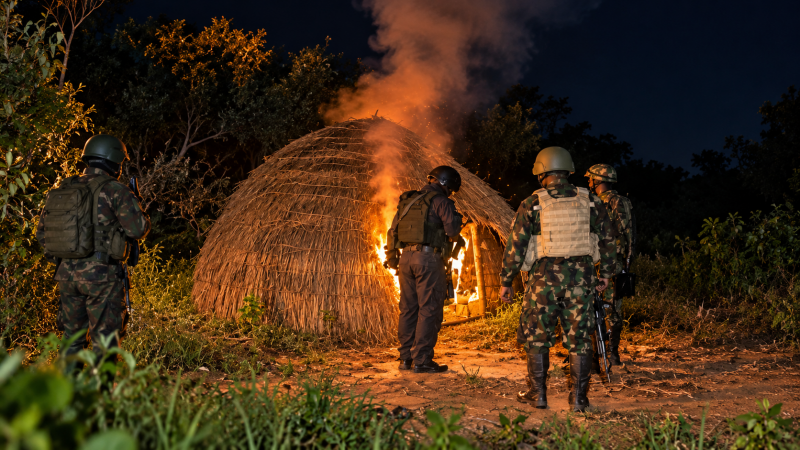
The latest operation, reported to have taken place on Friday morning, targeted suspected bandit hideouts inside the forest. Several fighters were reportedly killed during the operation, while troops recovered motorcycles and weapons and destroyed a number of structures believed to have been used as hideouts. Details of the casualties and the weapons recovered have not been independently established in the available public reports, and military authorities would need to provide a fuller operational account.
The operation is significant because Danmusa and the wider Yantumaki area have repeatedly featured in Nigeria’s long-running struggle against armed banditry in the North-West. Forested and difficult-to-access terrain has provided criminal groups with places from which they can move between communities, hide abducted victims, store equipment and evade security forces after attacks.
Yantumaki itself has previously been affected by attacks attributed to bandits. In June 2024, seven people were killed when armed bandits attacked Maidabino village in Danmusa Local Government Area, according to police. The attackers also reportedly abducted residents and destroyed houses, shops and vehicles. The incident illustrated the severe pressure placed on communities in the area and the vulnerability of settlements located close to criminal operating corridors.
Military operations in the area have also produced notable results in previous years. In December 2024, a joint operation involving the Air Component of Operation FANSAN YAMMA and ground troops targeted terrorist camps around Bichi Hill and areas near Maidabino and Yantumaki. Military authorities said the operation destroyed camps and disrupted the movement of fighters, while fleeing terrorists on motorcycles were tracked during the offensive.
More recently, troops have continued to operate along the Danmusa-Yantumaki axis. In July 2026, troops of Joint Task Force North-West, Operation FANSAN YAMMA, recovered two AK-47 rifles, magazines containing ammunition and a motorcycle after engaging armed terrorists during a fighting patrol in the area. The encounter forced the suspects to withdraw into surrounding bush, after which troops conducted a follow-up search.
In May, troops from the 17 Brigade, Nigerian Army, also neutralised four terrorists during a fighting patrol along the Turare-Yantumaki road. Authorities said weapons, motorcycles, mobile phones and cash were recovered. The incident was another indication that the corridor remains an important area of military attention.
Eliminating individual fighters is unlikely to produce lasting security unless armed groups are also denied the terrain, logistics and freedom of movement that allow them to regenerate. This is why operations against camps and supply routes remain important components of the wider campaign.
For communities around Danmusa, the destruction of hideouts can therefore be as important as the recovery of weapons. Forest camps can serve as temporary bases where fighters regroup after attacks, maintain motorcycles, store supplies and organise movements towards vulnerable villages and highways. Removing those facilities can make it more difficult for armed groups to operate with the same level of freedom.
The use of motorcycles is particularly important in the North-West’s security environment. Motorcycles allow armed groups to move quickly through narrow tracks and rural terrain that are difficult for larger vehicles to access. They can also be used to transport weapons and abducted victims. Recovering or destroying such mobility assets can consequently reduce the ability of criminal groups to conduct rapid raids.
However, military pressure must be sustained. Previous operations across Katsina and neighbouring states have demonstrated that armed groups can withdraw from one location, regroup elsewhere and return when security pressure decreases. A temporary reduction in attacks therefore does not necessarily mean that a network has been dismantled.
The challenge is compounded by the geography of the North-West, where forests and sparsely populated areas cross local government and, in some cases, state boundaries. Bandit groups can exploit these spaces to move between areas of operation, making intelligence-sharing and coordinated operations essential.
The effectiveness of such operations also depends on combining ground patrols with intelligence, surveillance and, where appropriate, air support. In earlier operations around Katsina, air assets were used to identify and strike criminal positions while ground troops moved to exploit the area. Such coordination can restrict escape routes and increase the chances of locating weapons, motorcycles and other equipment left behind by fleeing fighters.
But military operations alone cannot permanently resolve the insecurity affecting rural communities. Security forces also need reliable intelligence from residents, effective policing after military clearance operations and sustained government presence in areas recovered from armed groups. Without those measures, criminal networks can attempt to return once troops move away.
For residents, the ultimate measure of success will not simply be the number of fighters reported killed or weapons recovered. It will be whether farmers can return to their fields, children can attend school safely, travellers can use roads without fear and communities can remain in their homes without paying protection money or facing abduction.
The latest offensive in Yantumaki should therefore be viewed as part of a continuing campaign rather than an isolated victory. The reported destruction of hideouts and recovery of motorcycles and weapons may weaken the groups operating in the area, but sustained surveillance and follow-up operations will be necessary to prevent surviving fighters from rebuilding their positions.
Nigeria’s security forces face pressure to demonstrate that repeated operations can translate into lasting improvements for civilians. Maintaining pressure on armed groups, while protecting non-combatants and strengthening intelligence-led operations, remains central to that objective.
For Katsina communities that have endured years of attacks, the expectation is straightforward: armed groups should not be allowed to treat forests as permanent safe havens. Continued operations that disrupt their camps, mobility, weapons supplies and command structures can help create the conditions for communities to recover. The priority now is to ensure that any gains made in Yantumaki are consolidated rather than lost when the immediate operation ends.
The success of the campaign will ultimately be measured by lasting security, not temporary battlefield gains or isolated operational reports from the region.
📩 Stone Reporters News | 🌍 stonereportersnews.com
✉️ info@stonereportersnews.com | 📘 Facebook: Stone Reporters News | 🐦 X (Twitter): @StoneReportNew | 📸 Instagram: @stonereportersnews
Add comment
Comments