

Reported by: Ijeoma G | Edited by: Oravbiere Osayomore Promise.
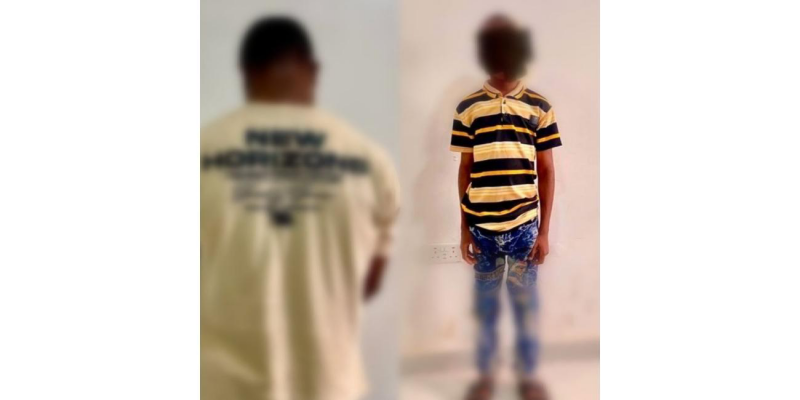
The Abia State Police Command has arrested a man, Uzoma Uwaeme, after a viral video surfaced showing his 13-year-old son tied with a rope, brutally flogged, stripped naked, and left exposed under the scorching sun. The arrest, which took place on Wednesday, September 9, 2026, was carried out by operatives of the Abayi Divisional Police Headquarters on the direct directive of the Commissioner of Police, CP Wilfred Olutokunbo Afolabi. The disturbing footage, which circulated widely on social media, showed the young boy with visible injuries across his body, his hands bound behind his back, and his dignity stripped from him in a manner that has sparked nationwide outrage and renewed calls for stronger protections for children across Nigeria.
According to a statement issued by the Command's Police Public Relations Officer, DSP Maureen Chioma Chinaka, the police became aware of the incident through the video circulating on social media. "The Abia State Police Command is aware of a viral video circulating on social media, depicting a young boy who was tied with a rope, brutally flogged, severely injured, stripped naked, and left exposed under the scorching sun," the statement read. The suspect, a resident of Nwokocha Street, off Udeabara Road, Aba, was identified as the father of the victim and was allegedly responsible for the abuse. The police further disclosed that the boy's mother had reportedly left the marriage, and Uwaeme had since remarried. The circumstances that triggered the alleged assault were not immediately clear, and the police did not provide further details on what may have preceded the brutal act.
The victim was immediately taken for medical attention and was said to be in stable condition. He is currently under the protective custody of the police as investigations continue. The case has been transferred to the State Criminal Investigation Department for a discreet and thorough investigation, while the suspect remains in police custody. The decision to transfer the case to the SCID signals the gravity with which the police are treating the matter, ensuring that the investigation is conducted with the necessary expertise and sensitivity required in cases involving vulnerable victims.
Commissioner of Police, CP Wilfred Olutokunbo Afolabi, strongly condemned the incident, describing it as "inhumane, barbaric, and a gross violation of the rights of the child." The Commissioner reiterated the Command's zero-tolerance stance on all forms of child abuse and domestic violence, assuring members of the public that the suspect would be prosecuted in accordance with the law upon the conclusion of investigations. His words carry significant weight in a state where cases of child abuse have continued to surface despite existing legal frameworks designed to protect minors from violence and exploitation.
The incident has once again brought to the fore the deeply troubling reality of child abuse in Nigeria, where the line between discipline and brutality is often blurred. The use of physical punishment as a means of correction remains deeply ingrained in many Nigerian households, with some parents and guardians viewing flogging and other forms of corporal punishment as not only acceptable but necessary for raising disciplined children. However, the case in Aba has highlighted the extreme and disturbing forms that such punishment can take when left unchecked, particularly in situations where family structures have broken down and children are left in the care of parents who may themselves be struggling with unresolved emotional and psychological issues.
The viral video sparked widespread condemnation across social media, with many Nigerians expressing horror at the treatment of the young boy. The images of the child tied and flogged, stripped naked and left exposed to the elements, resonated deeply with a public that has grown increasingly intolerant of violence against children. Some commentators noted that the boy's mother had left the marriage, suggesting that the abuse may have been taking place in a home environment already marked by instability and neglect. Others questioned why it took a viral video for authorities to act, arguing that neighbours and community members who were aware of the abuse should have reported it long before it reached the point of such visible brutality.
The Abia State Police Command has urged members of the public, particularly parents, guardians, neighbours, and community leaders, not to remain silent when they witness signs of abuse against children or other vulnerable persons. Residents were urged to promptly report suspected cases of child abuse, domestic violence, and other criminal activities to the nearest police station or through the Command's designated communication channels. The Command reaffirmed its commitment to protecting the rights, dignity, and safety of residents, especially children and other vulnerable members of society. "The Abia State Police Command remains committed to safeguarding the rights, dignity, and well-being of all residents, especially vulnerable members of society," the statement concluded.
The case of Uzoma Uwaeme and his 13-year-old son is not an isolated incident but part of a broader pattern of violence against children that has continued to plague Nigeria despite the existence of laws such as the Child Rights Act, which many states have domesticated. The Act guarantees every child the right to protection from all forms of physical and mental violence, injury or abuse, neglect or negligent treatment, maltreatment, or exploitation. However, enforcement remains weak, and many cases go unreported due to cultural norms that prioritise family privacy over the protection of children. The Abia case has placed the spotlight squarely on this gap between legal protections and the lived realities of countless Nigerian children who suffer in silence behind closed doors.
As the investigation proceeds, all eyes will be on the Abia State Police Command and the judiciary to ensure that justice is served and that the victim receives the support and care he needs to heal from his physical and psychological wounds. The boy's experience serves as a sobering reminder that childhood should be a time of nurturing and protection, not a period marked by fear, pain, and brutality. And for every child in Nigeria who might be enduring similar abuse, the case in Aba sends a clear message: silence is no longer an option, and those who inflict such cruelty on children will be held accountable.
📩 Stone Reporters News | 🌍 stonereportersnews.com
✉️ info@stonereportersnews.com | 📘 Facebook: Stone Reporters News | 🐦 X (Twitter): @StoneReportNew | 📸 Instagram: @stonereportersnews
Add comment
Comments