

Reported by: Ijeoma G | Edited by: Oravbiere Osayomore Promise.
The United States has significantly expanded its military and intelligence support to Saudi Arabia, deploying more than 100 military advisers and providing real-time targeting data to help the Kingdom counter a rapidly escalating campaign by Yemen’s Iran-backed Houthi militia. The assistance, first reported by CNN and confirmed by multiple sources, comes as Houthi attacks on Saudi civilian and economic sites have wounded dozens and threaten to ignite a broader regional war that could choke a vital global shipping corridor.
The support effort is centred on a newly-established joint forces command in Saudi Arabia, formed in recent weeks amid signs that Iran was ramping up its own efforts to aid Houthi attacks. According to a US official, the total number of American troops involved is roughly 200. While the US is sharing intelligence and providing “geospatial” targeting support for strikes against Houthi positions, sources stressed that there are tight limits to the cooperation. The US is not participating directly in strikes, nor is it helping refuel Saudi warplanes or providing other operational support it has extended in past rounds of fighting. The effort is instead focused on ensuring Saudi Arabia’s operations run smoothly and professionally.
A US official said the assistance includes a real-time battlefield targeting tool compared to the Maven system used by the Pentagon. Another source familiar with the ongoing cooperation confirmed that Washington is providing geospatial targeting support to Saudi Arabia for strikes against the Houthis. The US military personnel are working as part of the joint forces command, which was formed amid signs that Iran was ramping up its efforts to aid Houthi attacks against Saudi Arabia. The Pentagon declined to confirm the report, with a Department of Defense official telling CNN that “as a matter of practice we do not comment on intelligence-related matters.”
The escalation between Saudi Arabia and the Houthis reignited in July after Riyadh prevented an Iranian plane carrying senior Houthi officials home from the funeral of former Iranian Supreme Leader Ali Khamenei from landing in Sanaa. The Houthis retaliated by attacking Saudi tankers in the Red Sea, threatening a crucial route for the kingdom’s oil exports, and later expanded their attacks to Saudi energy facilities. Saudi Arabia and its Yemeni allies responded with airstrikes and ground offensives against Houthi positions.
The fighting has reached its sharpest pitch since 2022. On Thursday, Houthi forces seized the strategic Red Sea port city of Mokha, pushing closer to the Bab-el-Mandeb Strait, a vital artery for global trade and Saudi oil exports. Earlier in the week, Houthi missile and drone attacks targeted four southern Saudi cities, wounding 73 people and setting oil installations ablaze. Saudi Ambassador to the UN, Abdulaziz Alwasil, warned before the Security Council that the kingdom would take “all measures necessary” in response.
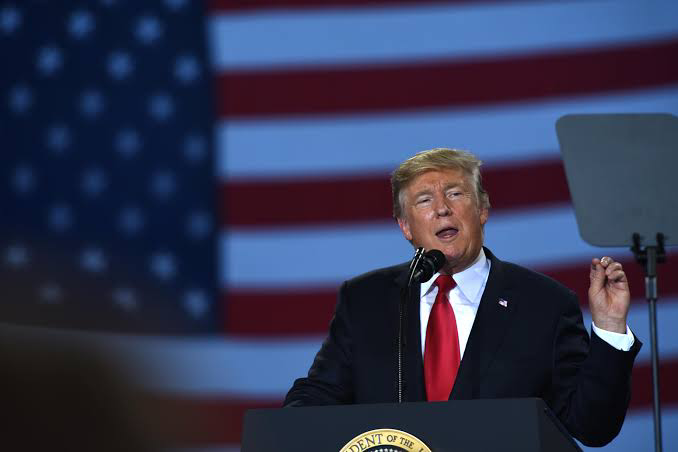
The deteriorating situation prompted Saudi Crown Prince Mohammed bin Salman to call President Donald Trump twice on Thursday. In the first call, MBS briefed Trump on the retreat of Saudi-backed Yemeni forces. Several hours later, he called again to formally urge Trump to order US strikes against the Houthis. Trump declined, and US officials stressed the administration has no plans to intervene directly against the Houthis for now. The decision reflects Washington’s strategic focus on Iran and the Strait of Hormuz, aiming to avoid opening an additional combat theatre.
While ruling out direct air strikes, the White House agreed to provide non-kinetic assistance, authorising the transfer of actionable intelligence and targeting information. US Central Command Commander Adm. Brad Cooper travelled to Saudi Arabia on Thursday for urgent coordination meetings with senior Saudi defence officials. A senior Trump administration official signalled that Washington’s priority is keeping the Red Sea open while leaving the broader fight to regional partners. “The United States is focused on protecting our core national security interests — such as ensuring freedom of navigation in the Red Sea — while empowering our regional partners to take the lead in managing and resolving regional security challenges,” the official said. “We are in continuous dialogue with Saudi Arabia and the Republic of Yemen Government regarding regional stability.”
The international community has rallied behind Saudi Arabia. US Secretary of State Marco Rubio slammed the Houthis as “agents” of Iran, stating, “I think behind some of this is clearly the Iranian hand.” He hailed the “very strong” defensive military ties between Washington and Riyadh. GCC Secretary-General Jasem Mohamed Albudaiwi condemned the attacks as a blatant violation of international laws and norms, a complete disregard for the safety of civilians, and a threat to regional and international security. Kuwait, Egypt, Qatar, Bahrain and Lebanon also issued statements of solidarity with the Kingdom.
Hanging over the US effort are the memories of years of controversial targeting support American forces provided to Riyadh during previous administrations that critics said contributed to a high number of civilian casualties. US officials believe there are currently hundreds of Iranian Revolutionary Guard Corps officers in Yemen, working alongside the Houthis. With Iran already disrupting traffic through the Strait of Hormuz, Houthi control of Bab al-Mandab could give Tehran a powerful new point of leverage over the US and its Gulf allies. The US support is an extension of preexisting cooperation and training, but the decision to expand it signals a growing concern that the conflict could spiral into a second major front. For now, Washington is walking a tightrope: backing its ally without being dragged into another war.
📩 Stone Reporters News | 🌍 stonereportersnews.com
✉️ info@stonereportersnews.com | 📘 Facebook: Stone Reporters News | 🐦 X (Twitter): @StoneReportNew | 📸 Instagram: @stonereportersnews
Add comment
Comments