

Reported by: Ijeoma G | Edited by: Oravbiere Osayomore Promise.
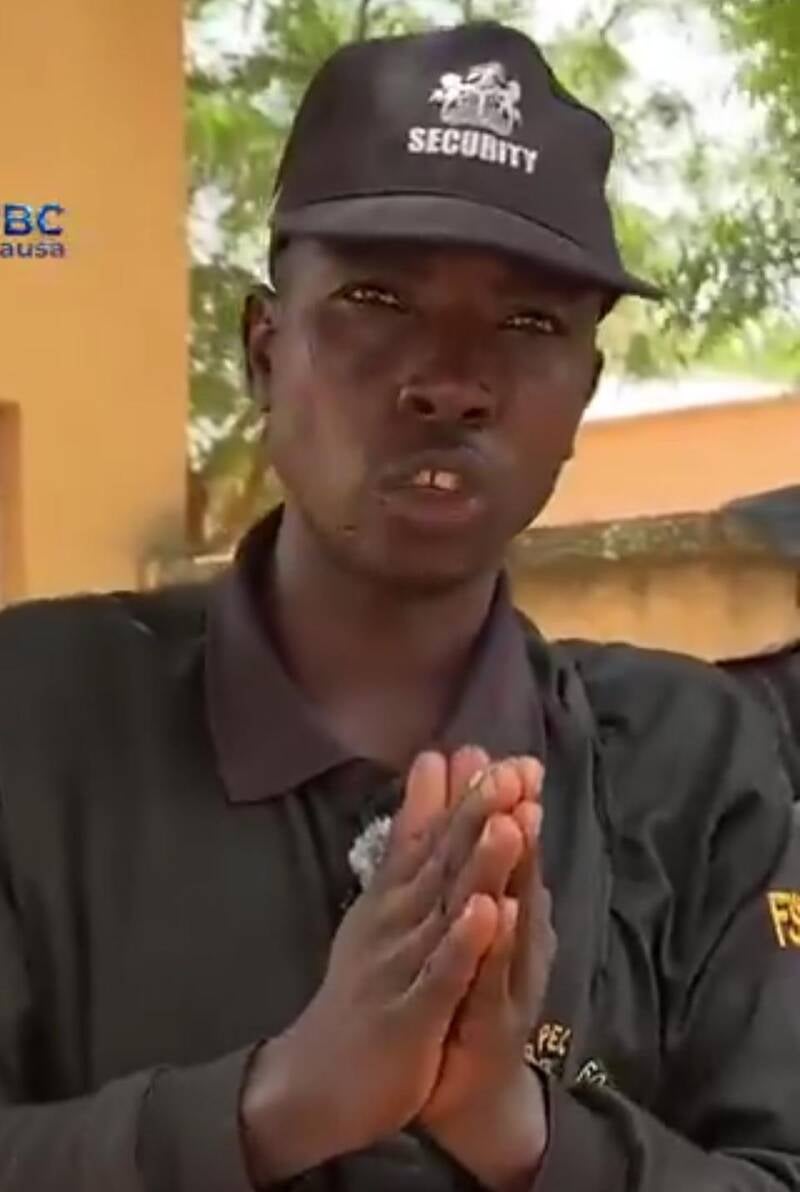
The words were delivered in Hausa, in a voice that carried the weight of a man who has seen too much and been given too little. Abdullahi Ibrahim is a member of the Community Protection Guard in Zamfara State, one of the thousands of ordinary Nigerians who signed up to defend their communities when the federal security forces could not. In an interview with JBC Hausa, he described the moment that has come to define his service: “Eight people were killed in front of me while I was leading our men to stop an attack the bandits were planning on another community.” He did not say he was traumatised. He did not say he was angry. He simply stated the fact, as if it were one more entry in a ledger of losses that has become his daily reality. But behind those words lies a story of institutional neglect so profound that it raises a question every Nigerian should be forced to confront: how can these men be expected to confront heavily armed bandits when they are poorly equipped, poorly paid, and left to risk their lives with so little support?
The Community Protection Guard, known locally as Askarawa, was established by Governor Dauda Lawal in 2024 as a homegrown security outfit designed to complement the efforts of the military, police, and other federal agencies. The logic was simple and, on paper, sound. Local people possess a deep understanding of the terrain, the people, and the criminal networks that operate in the forests and villages of Zamfara. They can serve as the eyes and ears of the conventional forces and, when necessary, take the fight to the bandits who have terrorised their communities for more than a decade. The first batch of 2,720 operatives completed training and were deployed across all 14 local government areas. They were promised monthly allowances, operational vehicles, communication gadgets, and the equipment needed to do the job.
But the reality, as Ibrahim’s account makes painfully clear, has fallen far short of the promise. The guards are facing what he described as serious shortages of weapons, ammunition, and other equipment. They are paid as little as N30,000 in monthly allowances, a sum that is barely enough to feed a family in a country where the cost of living has soared. And they are expected to confront bandits who are armed with AK-47s, GPMG machine guns, and other sophisticated weapons, often acquired through years of cross-border trafficking and looted from security forces. The disparity is staggering. On one side are men who have been trained and equipped by the state, with vehicles, communication systems, and the full backing of the federal security apparatus. On the other are members of the CPG, many of whom are armed with little more than outdated rifles, limited rounds of ammunition, and the desperate courage that comes from defending one’s own home.
The human cost of this neglect is written in blood. In February 2026, bandits killed three CPG members in Maradun Local Government Area. In April, four people, including two operatives, were killed in an attack that residents said would have been far worse had the CPG not stood its ground. In August, two more CPG members were killed and another injured in a bandit attack. The Guardian reported that at least three Zamfara State-owned Community Protection Guard officials were murdered in a single ambush. Each of these deaths represents a family shattered, a community left more vulnerable, and a failure of the state to protect those it asked to protect it. The CPG has become a symbol of the broader security crisis in Zamfara, where the federal government’s inability to defeat banditry has forced states to improvise their own solutions, often with inadequate resources and insufficient federal support.
The government of Governor Dauda Lawal has consistently defended its commitment to the CPG. In January 2026, when the new Commandant, AIG Muhammad Dalijan (retd.), assumed office, he declared that he had “no excuse to fail” because the governor had equipped the guards. The state government has repeatedly pointed to the operational vehicles, motorcycles, and weapons it has provided, and it has argued that the CPG operates under strict rules of engagement, requiring the support of the military, police, and DSS for any operation. These claims are not without foundation. The CPG has been involved in successful operations alongside federal forces, and its presence has provided a measure of reassurance to communities that had been abandoned by the state. But the gap between what the government says it has provided and what Ibrahim and his colleagues actually experience on the ground is a chasm that cannot be bridged by official statements.
The fundamental problem is one of resources and priorities. The federal government allocates billions of naira to defence and security every year, yet the states and local communities that bear the brunt of the violence are left to fend for themselves. The CPG is a state-level initiative, funded by a state government with limited resources and competing demands. It is not a substitute for a functional national security architecture, and it was never meant to be. But it has been forced to fill a vacuum created by the federal government’s failure to protect its citizens. Ibrahim’s story is not just about one man and his colleagues. It is about a nation that has outsourced its most fundamental responsibility to poorly paid, poorly equipped volunteers, and then expressed surprise when they are killed in the line of duty.
As Nigeria prepares for the 2027 general elections, security will be a central issue. Politicians will make promises about defeating banditry, equipping the military, and restoring peace to the North-West. But the men and women of the CPG know what those promises are worth. They have heard them before. They have watched as their colleagues were buried, as their families were left to grieve, and as the government that asked them to serve moved on to the next press conference. Ibrahim’s words should haunt every Nigerian who reads them. Eight people were killed in front of him. He was leading his men to stop an attack on another community. He is paid N30,000 a month. He does not have enough ammunition. And still, he serves. The question is not whether he will continue to serve. The question is whether his country will finally give him the support he needs to survive it.
📩 Stone Reporters News | 🌍 stonereportersnews.com
✉️ info@stonereportersnews.com | 📘 Facebook: Stone Reporters News | 🐦 X (Twitter): @StoneReportNew | 📸 Instagram: @stonereportersnews
Add comment
Comments