

Reported by: Ijeoma G | Edited by: Oravbiere Osayomore Promise.
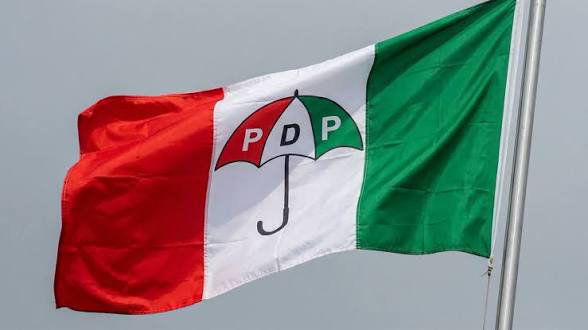
The arrest came at 8:10 p.m. on Friday, September 11, 2026. Comrade Ugwumba Adiele, the Abia State Youth Leader of the Peoples Democratic Party, was at his residence in Umuahia when police officers, believed to be from the Federal Capital Territory in Abuja, took him into custody. The arrest was in connection with a ₦5 billion defamation suit filed by the member representing Ukwa East/West Federal Constituency in the House of Representatives, Hon. Chris Nkwonta, a case that has reignited the debate over the limits of free speech and the criminalisation of public accountability in Nigeria. The circumstances surrounding the arrest could not be independently verified, and it remains unclear whether it was authorised by the FCT High Court, Court 59, Asokoro, Abuja, where the civil defamation case is pending, or whether it resulted from a separate police complaint. What is clear is that a civil dispute over social media posts has escalated into a criminal arrest, and the implications are deeply troubling.
The defamation suit itself concerns statements Adiele allegedly made on social media about the handling of constituency projects. According to court documents and reports, one of the central issues in the case is an allegation that Nkwonta's biological children were used as incorporated trustees to manage a Federal Government project. The lawmaker claims the remarks were false and damaging to his reputation. The allegations have not been established by any court, and Nkwonta is entitled to the presumption of innocence in the defamation claim. But the same presumption applies to Adiele, who has consistently denied defaming the lawmaker. Adiele's lawyers have argued that honest questions do not conduce to defamation and that their client's legitimate questions about a public project simply required answers, not intimidation.
The background to the dispute is a story of a working relationship that soured. Adiele was not a random critic or a political opponent. He served as Nkwonta's Special Assistant on New Media and as his constituency collation agent during the 2023 National Assembly election. He was, in other words, an insider who had access to information about how constituency projects were being managed. According to Adiele, the relationship deteriorated after a thank-you visit to Ukwa East by the PDP Deputy Governorship candidate, Elder Abraham Amah, on January 15, 2025. Adiele alleged that Amah criticised some PDP members who had won elections on the party's platform but later defected, including Nkwonta. He claimed that his failure to challenge Amah over those remarks contributed to the breakdown of his relationship with the lawmaker. From that moment, Adiele said, Nkwonta cut ties with him and stopped paying his salary. He said he made repeated attempts to resolve the matter, including requests for payment of more than twelve months of outstanding salaries or the formal termination of his appointment, but these were unsuccessful.
The dispute escalated after Adiele raised questions about accountability concerning a constituency project allegedly facilitated by Nkwonta. He did not provide documents to support his claims, and the allegations remain unproven. But the lawmaker's response was not a public clarification or a rebuttal of the specific allegations. It was a pre-action demand letter dated January 26, 2026, entitled "Formal Pre-action Demand, Retraction, Unreserved Apology and Payment of Damages Arising from Your Defamatory Publications Concerning Hon. Nkwonta." Adiele's lawyers rejected the demands, stating that his questions were made in good faith and in line with the constitutional right of citizens to hold public officials accountable for the use of public resources. The stage was set for a legal battle, and on June 3, 2026, the matter came before the FCT High Court in Abuja.
The civil suit is one thing. The criminal arrest is another. A defamation suit allows a public official to seek damages for reputational harm. It is a civil remedy, and the burden of proof rests on the claimant. A criminal arrest, by contrast, carries the coercive power of the state. It can involve detention, interrogation, and the threat of prosecution. When a civil dispute over social media posts leads to a nighttime arrest by police officers from another jurisdiction, it raises serious questions about whether the criminal justice system is being used to intimidate a defendant in a civil case. The arrest does not establish liability, and Adiele remains presumed innocent. But the message it sends is unmistakable: if you question a powerful lawmaker's handling of public projects, you may find yourself in handcuffs.
The case has drawn attention because of the size of the damages sought. ₦5 billion is an extraordinary sum, far beyond the means of most Nigerians. Legal analysts have noted that such a claim could have a devastating effect on citizen engagement if granted, effectively silencing those who cannot afford the cost of defending themselves. The law provides for defences such as truth, fair comment, and qualified privilege in matters of public interest. But those defences are only meaningful if a defendant can afford to present them in court. Adiele's lawyers have indicated that he is ready to defend the action. The court will ultimately determine whether his statements were factual assertions or protected expressions of opinion on a matter of public interest.
For now, Adiele's arrest has become a symbol of a broader anxiety in Nigeria: the fear that the machinery of the state can be deployed to punish those who ask uncomfortable questions. Nkwonta has every right to seek redress if he believes his reputation has been damaged. But the pursuit of that redress must be conducted within the bounds of the law, and it must not become a tool for intimidation. The court in Abuja will decide the merits of the defamation claim. The public will decide whether the arrest of a youth leader at his home over a social media post is the kind of democracy Nigerians were promised. The case continues, and so does the debate.
📩 Stone Reporters News | 🌍 stonereportersnews.com
✉️ info@stonereportersnews.com | 📘 Facebook: Stone Reporters News | 🐦 X (Twitter): @StoneReportNew | 📸 Instagram: @stonereportersnews
Add comment
Comments