

Reported by: Oahimire Omone Precious | Edited by: Oravbiere Osayomore Promise.
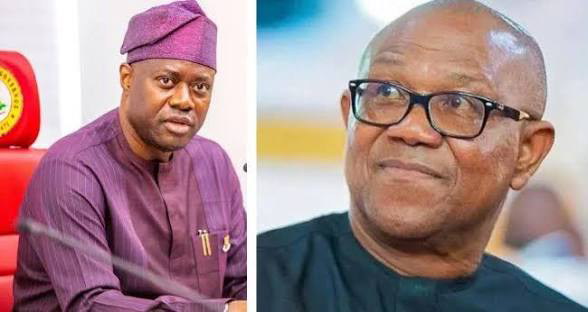
The emerging political rapprochement between Peter Obi and Oyo State Governor Seyi Makinde, which has fuelled speculation of a broader opposition coalition against President Bola Tinubu, could be undone by four fundamental obstacles that the opposition has failed to confront for years. The assessment came from Tunde Rahman, Senior Special Assistant to President Tinubu on Media and Special Duties, who argued that personal ambition, zoning, political structure and a profound trust deficit are the critical hurdles that must be overcome if the opposition is to forge a credible coalition before the January 16, 2027 presidential election.
The renewed speculation follows a series of engagements between Obi and Makinde, who were on opposing political trajectories during the 2023 election. Makinde, then a Peoples Democratic Party governor, was associated with the G-5 governors whose position complicated the PDP's presidential campaign, while Obi led the Labour Party's third-force movement. Their paths have now converged, beginning with a private meeting in Ibadan in April 2026, followed by Obi's appearance at the inauguration of Makinde's Allied People's Movement presidential campaign office in Abuja. Rahman described Obi's presence at the campaign office of a rival presidential aspirant as unusual, saying it had naturally heightened speculation about a possible political understanding between the two men. However, he cautioned that the development should be regarded as "a signal, not yet a coalition."
The first and most difficult hurdle, according to Rahman, is the competing presidential ambitions of the leading opposition figures. Obi is the presidential candidate of the Nigeria Democratic Congress, Makinde is seeking the presidency on the APM platform, and former Vice President Atiku Abubakar remains a formidable force within the opposition. Rahman posed the question that has haunted every opposition coalition attempt since 2015: "Who steps down for whom? Who gets the vice-president's slot?" The ability of the opposition to answer those questions will determine whether its current consultations can mature into a workable political alliance. Without a consensus candidate emerging early, the coalition risks fragmenting before the campaign gains momentum.
Zoning presents an equally serious challenge. Political interests in the South are expected to argue that the region should retain the presidency for another four-year term, given that former President Muhammadu Buhari, a northerner, served eight years. Northern political forces, however, are unlikely to accept indefinite exclusion from the presidency. Rahman said any opposition ticket would have to reconcile these competing regional interests or risk being undermined before it could even present a united front. The zoning debate is not merely theoretical; it is a live fault line that has split the opposition in previous election cycles and could do so again.
The third hurdle is political structure. Rahman noted that the All Progressives Congress controls 31 states and possesses a formidable nationwide grassroots network, giving President Tinubu a substantial organisational advantage going into 2027. He also observed that some governors outside the APC have expressed support for Tinubu's re-election. While acknowledging that elections are ultimately decided by voters, Rahman argued that the political influence of governors cannot be discounted. "Governors do not vote for the people, but their influence on political structures and mobilisation cannot be wished away," he said. He also dismissed the opposition's calculation that votes secured separately by Atiku, Obi and other candidates in 2023 could simply be added together in 2027. "Votes secured by different candidates in one election cannot automatically be added together in another," he warned.
The fourth hurdle is trust. Rahman questioned whether political structures that fought bitterly against one another in the 2023 election could quickly integrate into a disciplined nationwide opposition machinery. "The issue is not just getting the leaders to shake hands. Can their party structures at the state and grassroots levels actually work together?" he asked. The trust deficit runs deep. In 2023, Makinde's G-5 governors worked against Atiku's presidential bid, while Obi's Obidient movement upended the traditional two-party dynamic. The wounds from that election have not healed, and the suspicion between the camps remains palpable. Without a mechanism to build trust at the grassroots level, any alliance forged at the top risks collapsing under the weight of local rivalries and unresolved grievances.
Rahman's assessment is not merely a partisan attack; it is a sober reflection of the structural weaknesses that have prevented Nigeria's opposition from presenting a credible alternative to the ruling party since 2015. The APC's victory in that year was made possible by an unprecedented coalition that brought together the Action Congress of Nigeria, the Congress for Progressive Change, the All Nigeria Peoples Party and a faction of the All Progressives Grand Alliance. That coalition succeeded because its leaders subordinated their personal ambitions to a common goal. Whether the current opposition can replicate that feat remains an open question. For now, Rahman's verdict is clear: the Obi-Makinde rapprochement is a signal, not yet a coalition, and the four hurdles it must overcome are as formidable as any it has faced before.
📩 Stone Reporters News | 🌍 stonereportersnews.com
✉️ info@stonereportersnews.com | 📘 Facebook: Stone Reporters News | 🐦 X (Twitter): @StoneReportNew | 📸 Instagram: @stonereportersnews
Add comment
Comments