

Reported by: Ijeoma G | Edited by: Oravbiere Osayomore Promise.
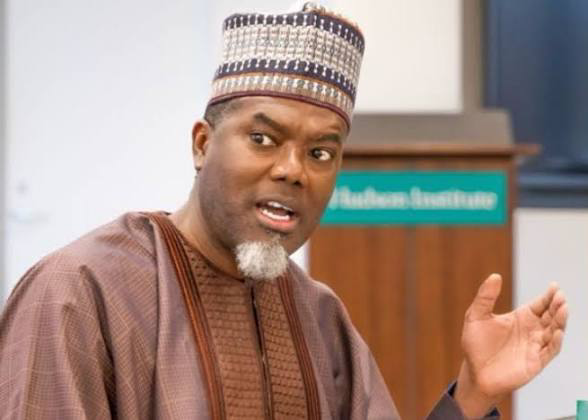
Reno Omokri, Nigeria's Ambassador-designate to Mexico, has ignited a fierce national debate after declaring that Nigeria is neither as corrupt nor as dangerous as the international community believes, arguing that global metrics used to judge the country fail to account for its unique cultural realities. Speaking on Channels Television's Sunday Politics on September 13, 2026, Omokri said the country's corruption perception rating had improved under President Bola Tinubu's administration, but insisted that organisations like Transparency International often apply standards that do not reflect local practices. "Nigeria is not as corrupt as the world thinks it is because the metrics they are using to gauge corruption are global metrics and they do not take into account the particular culture of Nigeria," he said.
Omokri's central argument rests on a distinction that many Nigerians will find controversial: the difference between corruption and cultural appreciation. He pointed to the long-standing tradition of showing gratitude to public officials who perform their duties well, a practice he said predates colonial rule. "When a public official does the job very well in this country, people show appreciation. Transparency International sees that as corruption, but it is not corruption," he said. He argued that Nigeria must stop allowing foreign organisations to define its image and instead tell its own story. "We have to write our own story. If we allow these people to continue writing our stories, they will always see us as people who are poor and backward," he declared.
The ambassador-designate also mounted a vigorous defence of Nigeria's safety record, citing the annual Detty December festivities in Lagos as evidence that the country is not the dangerous place it is often portrayed to be. "Every year, 1.2 million tourists go to Lagos for Detty December. That is the biggest single tourism event in Africa, and not one person has been killed or injured," he said. He further highlighted Lagos State's economic growth under Governor Babajide Sanwo-Olu, claiming the state's Gross Domestic Product had grown from less than $100 billion six years ago to about $259 billion in purchasing power parity terms, with income levels also increasing.
Omokri's remarks are consistent with a series of statements he has made in recent months defending the Tinubu administration's record on security and the economy. In June 2026, he appeared on TRT World and cited Global Terrorism Index figures to argue that terrorist-related deaths in Nigeria had dropped from 7,752 in 2015 to about 550 in the most recent report. He also claimed Nigeria's Corruption Perception Index ranking had improved from 154 in 2021 to 140 today, a movement of 14 places. "So things are getting better in Nigeria exponentially. We're not there yet. We still have a lot of work to do. But things are getting better," he said at the time.
However, the data tells a more complex story. According to Transparency International's 2025 Corruption Perceptions Index, released in February 2026, Nigeria ranked 142nd out of 182 countries with a score of 26 out of 100, a slide from 140th the previous year. The country is positioned as the 36th most corrupt nation on the index, behind 33 other African countries, with its score well below the global average of 43. The Civil Society Legislative Advocacy Centre reported that the ranking reflected limited progress in tackling systemic corruption despite repeated reforms and enforcement actions by government institutions.
On security, the picture is equally contested. The 2026 Global Terrorism Index ranked Nigeria as the fourth most insecure country in the world, a deterioration from its sixth-place ranking in 2025. The Allied Peoples Movement accused the Tinubu administration of living in denial over worsening insecurity, alleging that more than 600,000 Nigerians had been killed and about 2.2 million abducted over the last three years. The party also cited data showing that more than N7.78 billion had been paid as ransom between July 2025 and June 2026, describing kidnapping as an increasingly monetised criminal enterprise. The APM challenged President Tinubu, the Defence Minister and other senior government officials to travel by road without armed security escorts if the security situation had genuinely improved.
The reality is that Nigeria faces a multifaceted security crisis. The country is grappling with a jihadist insurgency in the North-East, armed banditry and mass abductions in the North-West and North-Central regions, separatist violence in the South-East, and recurring farmer-herder conflicts. In August 2026 alone, Nigeria recorded 500 security incidents across the country, with the North accounting for 334, or 67 per cent of the total. Kano State recorded a 940 per cent rise in violent insecurity over five years, while Borno remained the country's deadliest conflict environment. The Nigerian police force, with 300,000 personnel, has announced plans to increase its ranks to 350,000 as it struggles to control an vast territory with porous borders.
Omokri's intervention raises a fundamental question about how Nigeria should engage with international assessments of its governance and security. His argument that cultural context matters is not without merit; the line between gratitude and graft can be blurry, and international rankings do not always capture the nuances of local realities. But his assertion that Nigeria is "not as corrupt as the world thinks" risks sounding dismissive to millions of Nigerians who experience the daily consequences of systemic corruption, from bribery at police checkpoints to the diversion of public funds meant for schools and hospitals. Similarly, his claim that Nigeria is "very safe" will ring hollow to the families of the thousands killed in attacks this year alone, and to the communities that have been displaced from their homes.
Omokri is correct that Nigeria must tell its own story. But telling that story honestly requires acknowledging both the progress that has been made and the immense challenges that remain. It requires a narrative that celebrates the resilience of Lagos traders and the vibrancy of Detty December, while also confronting the reality of the 500 security incidents recorded in a single month, the 142nd ranking on the corruption index, and the millions of Nigerians who live in fear of the next attack. The world may not always get Nigeria right, but Nigerians deserve a story that is grounded in truth, not just in aspiration.
📩 Stone Reporters News | 🌍 stonereportersnews.com
✉️ info@stonereportersnews.com | 📘 Facebook: Stone Reporters News | 🐦 X (Twitter): @StoneReportNew | 📸 Instagram: @stonereportersnews
Add comment
Comments