

Reported by Ariajegbe Sylvia Esezobor
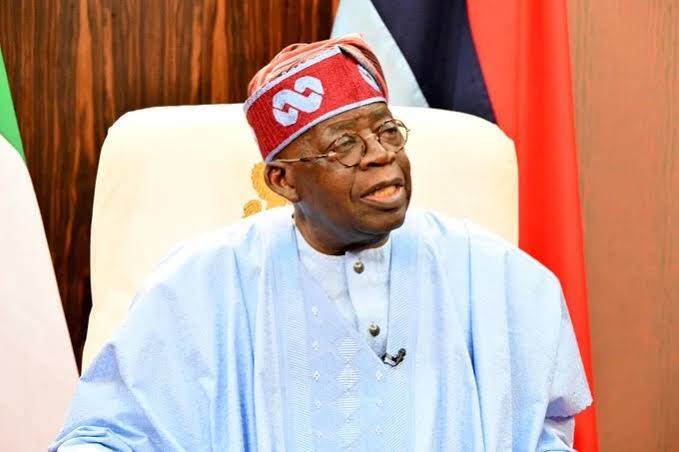
President Bola Tinubu has approved the allocation of a property recovered by the Economic and Financial Crimes Commission to the Nigeria Data Protection Commission as its new headquarters, a move that converts a corruption-linked asset into a permanent home for the agency tasked with protecting Nigerians’ personal data. The Minister of Communications, Innovation and Digital Economy, Dr Bosun Tijani, disclosed the presidential approval on Monday during the commissioning of the facility in Abuja. Tijani said the property was handed to the commission after it complained that its growing responsibilities and international profile were not matched by a befitting permanent office. “The President directed that a property of this size that was recovered from the work of the Economic and Financial Crimes Commission be allocated to NDPC,” the minister said. He described the development as symbolic, noting that an asset once associated with corruption had been converted into an institution dedicated to protecting Nigerians and strengthening trust in the digital economy.
The commission’s leadership confirmed the timeline of the transfer. The National Commissioner and Chief Executive Officer of the NDPC, Vincent Olatunji, said the commission received approval for the property from the EFCC in July 2025, while renovation work commenced in March 2026. He described the new headquarters as a major turnaround for an institution that began with limited office space and funding. Olatunji recalled that the data protection agency started with about twelve employees in February 2022 without dedicated funding, adding that he initially used personal funds to support its operations. According to him, the agency subsequently received fifty million naira from the National Information Technology Development Agency in September 2022 as its first major funding support. The commission has since licensed 356 Data Protection Compliance Organisations, while its activities and those of the licensed firms have created more than twenty-seven thousand jobs in three years.
The property allocation is part of a broader presidential directive on the management of recovered assets. In August 2026, President Tinubu met with the Executive Chairman of the EFCC, Olanipekun Olukoyede, and the Minister of Housing and Urban Development, Muttaqha Rabe Darma, at the State House in Abuja, where he directed closer coordination among agencies responsible for managing, developing, and potentially disposing of properties forfeited to the Federal Government through EFCC investigations and court orders. The aim was to preserve and put recovered assets to productive use. The NDPC headquarters is one of the first major outcomes of that policy. Tijani framed the handover as an example of returning recovered assets to productive use. “An asset that is recovered on behalf of the Nigerian people has been returned to productive use for the protection of Nigerian people,” he said. “A property once associated with the consequence of corruption is today becoming the headquarters of an institution dedicated to protecting Nigerians and strengthening trust in our digital economy.”
The NDPC’s journey to a permanent home reflects the slow institutionalisation of data protection in Nigeria. The commission evolved from a small unit within the National Information Technology Development Agency into a full-fledged data protection authority. Olatunji said the commission began with three offices under NITDA’s E-Government Development and Regulation Department before the Nigerian Data Protection Regulation was issued in January 2019. The Nigeria Data Protection Act was eventually signed into law by President Tinubu on June 12, 2023, providing the commission with a stronger legal and institutional framework. According to Olatunji, the commission has grown from occupying three rooms at NITDA, to five rooms in Maitama and twenty rooms in Asokoro, and now operates from a fifty-six-office headquarters. He said ninety-eight per cent of the commission’s staff are now certified data protection officers, while 356 Data Protection Compliance Organisations have been licensed under its public-private partnership model. The commission has generated over twelve billion naira in revenue within three years, while the data privacy and protection ecosystem is worth more than eighteen billion naira. More than sixty-six thousand Nigerians have been enrolled in the agency’s virtual privacy academy, while 220 training programmes have benefited over ninety thousand people. The commission has also established seventeen data privacy clubs in universities, created 6,176 student ambassadors, and reached more than 250,000 Nigerians through its engagements. Representatives from seventeen countries have visited Nigeria in the past two years to learn from the commission, while the NDPC has signed twenty-eight international agreements.
The commissioning ceremony also served as a platform for the minister to outline broader digital economy targets. Tijani said the Federal Government is targeting the activation of no fewer than two hundred telecommunications towers in unconnected communities across the country by December under the National Unconnected Communities Access Programme, which aims to deploy about 3,700 towers nationwide. He said the first of the towers had been deployed at Kura village near Abuja, with deployment now extended to communities in the Niger Delta. He noted that the ICT sector’s contribution to Nigeria’s Gross Domestic Product had increased to about twenty-one per cent from between sixteen and eighteen per cent when the current administration assumed office, and that the government is targeting a twenty-five per cent contribution if President Tinubu’s administration secures a second term. He also called for stronger data protection as Nigeria’s digital economy expands, particularly with the increasing adoption of artificial intelligence. “As our digital economy expands, as more government services become digital, as more Nigerian businesses use data to create value, and particularly as artificial intelligence becomes increasingly embedded in our economy and society, questions around privacy, data governance, trust, and the responsible use of technology will continue to become more important,” he said.
Reactions to the allocation have focused on the symbolic and practical significance of the move. Supporters of the government described it as a creative use of recovered assets that avoids the pitfalls of auctioning or abandoning forfeited properties. They noted that the NDPC’s previous offices were inadequate for its expanding mandate and that a permanent headquarters would improve its ability to regulate data protection effectively. Critics, however, questioned whether the property was properly valued and whether the transfer followed due process. Some asked whether the EFCC had the authority to hand over a recovered asset directly to another agency without a formal valuation or competitive process. Others noted that the NDPC’s funding challenges in its early years raised questions about the government’s commitment to data protection, arguing that a new building does not resolve underlying resource constraints. The government has not published the valuation of the property or the terms of the transfer. The EFCC has not issued a separate statement on the handover beyond confirming the approval. The commission’s new headquarters is expected to consolidate its operations and provide space for its growing staff and training programmes. Whether the symbolic conversion of a corruption-linked asset into a data protection institution translates into stronger enforcement and better protection for Nigerian citizens remains to be seen. For now, the NDPC has a permanent address, and the government has a new example of how recovered assets can be repurposed. The coming months will test whether the building becomes a foundation for effective regulation or simply a better office for the same challenges.
📩 Stone Reporters News | 🌍 stonereportersnews.com
✉️ info@stonereportersnews.com | 📘 Facebook: Stone Reporters News | 🐦 X (Twitter): @StoneReportNew | 📸 Instagram: @stonereportersnews
Add comment
Comments