

Reported by Ariajegbe Sylvia Esezobor
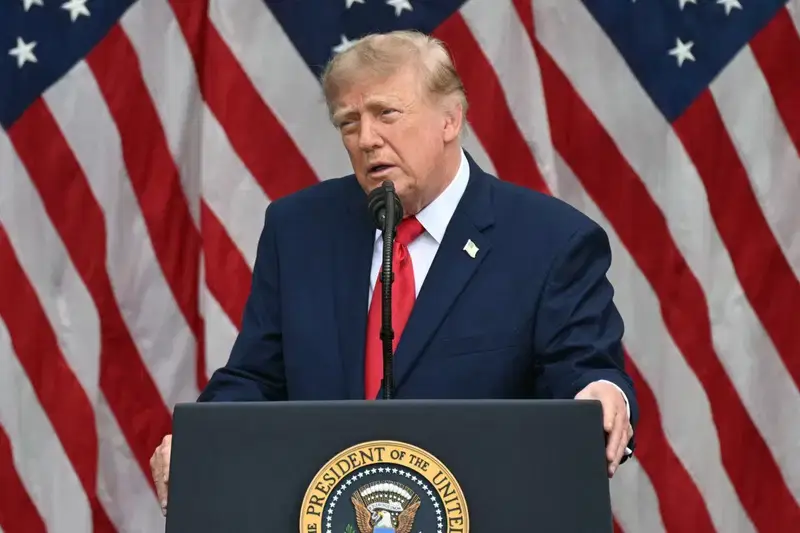
US President Donald Trump said on Monday that he is open to holding talks with Iran, marking a shift in tone after weeks in which he insisted it was too early to strike a deal with Tehran to end the ongoing Middle East war. The remarks, posted on his Truth Social platform, came as regional diplomacy over the Strait of Hormuz suffered a fresh setback, with Gulf Arab states postponing a planned meeting with Iranian officials.
"The failing Nation of Iran wants to make a deal, quickly and badly. I will determine whether or not the USA will choose to engage, the concept of which we are open to," Trump wrote. He did not specify what conditions would need to be met before he decided whether to engage, nor did he indicate whether any direct or indirect contacts with Tehran were already under way. He also gave no timeline for reaching a decision. The comments followed remarks Trump made to reporters while in Ireland, where he said the conflict with Iran would "end after the midterm" elections, a suggestion that any resolution may be tied more to the domestic political calendar than to immediate battlefield or diplomatic developments.
Trump's statement came directly after Oman announced it was postponing a meeting it had been due to host on Monday between Iran and Gulf Arab states. That gathering had been intended to advance negotiations aimed at reopening the Strait of Hormuz, the narrow waterway between Iran and the Arabian Peninsula that is the world's most important corridor for seaborne oil and gas shipments. Oman's Foreign Minister, Sayyid Badr Albusaidi, announced the postponement overnight without giving a new date or a detailed public explanation for the delay. Separately, Iran published a list of 77 ships it said had violated its operating protocols in the strait, warning that vessels found in breach on future transits could face fines, detention or confiscation.
The exchange unfolds against the backdrop of a war between the United States, Israel and Iran that has now stretched on for more than six months. According to widely documented timelines of the conflict, the United States and Israel launched a joint air campaign against Iranian targets on February 28, 2026, opening strikes that reportedly killed Iran's Supreme Leader, Ayatollah Ali Khamenei, in the campaign's earliest phase. Iran responded with a broad wave of retaliatory missile and drone strikes against American and Israeli targets across the region, including military installations, oil infrastructure and shipping in the Strait of Hormuz. In the war's opening weeks, Iranian forces effectively closed the strait to normal traffic, laying naval mines and warning, boarding or attacking merchant vessels, leaving hundreds of ships and thousands of mariners stranded in the Persian Gulf for a period. The United States subsequently imposed its own naval blockade on Iranian ports between mid-April and late May.
A ceasefire brokered with Pakistani involvement held from early April until early July, during which so-called Islamabad Talks were meant to secure a longer-term settlement and reopen the strait. Those talks ultimately failed, and fighting resumed on July 8. Since then, the conflict has increasingly played out at sea, with the United States and Iran trading attacks on tankers and naval assets in and around Hormuz in what analysts have described as a form of tanker war. In early September, Washington struck three Iranian oil tankers, while Tehran targeted commercial vessels and fired a ballistic missile toward US warships patrolling near the strait — an episode one Iranian lawmaker, Hassan Ghashghavi, described to reporters as part of what he called an existential war with the United States, arguing that the US naval blockade violated international law. The United States has said that an increasing volume of oil has begun moving through the strait again, though exact figures remain difficult to verify independently.
The broader regional picture has grown more complicated in recent days. US Vice President JD Vance said Washington has been in direct conversations with Yemen's Houthi movement, as the United States monitors developments around strategic waterways including the Bab el-Mandeb Strait, where Vance said he was concerned about a reported Houthi takeover of Mayyun Island. He added that the US has remained in constant contact with the United Arab Emirates, Saudi Arabia and other regional partners affected by the unfolding situation. Separately, Trump downplayed reports that Chinese entities had supplied Tehran with satellite imagery of a military base in Jordan before and after an Iranian strike in July that killed three US soldiers, telling reporters aboard Air Force One that intelligence gathering of that kind was mutual between Washington and Beijing. That episode carries its own diplomatic weight, coming roughly a week ahead of a planned state visit to the White House by Chinese President Xi Jinping.
Iran has not yet issued a detailed public response specifically addressing Monday's statement from Trump. However, the offer fits a recurring pattern in the relationship between the two governments over the course of this war and in years past: Trump has periodically signaled openness to talks or a "real deal" with Tehran, while senior Iranian officials have often responded with skepticism, questioning Washington's sincerity given the parallel use of sanctions, military pressure or blockade measures. Iranian officials have in the past dismissed similar overtures as attempts to score political points rather than genuine diplomatic openings, and have said any negotiations would need to be free of what they characterize as threats or one-sided preconditions.
For now, no date has been set for any renewed talks between Washington and Tehran, and the postponed Oman meeting leaves the immediate diplomatic track over the Strait of Hormuz in limbo. With shipping through the strait still disrupted, oil markets watching closely, and fighting continuing intermittently at sea, Trump's declaration that the US is open to engagement represents, at most, a potential opening rather than a confirmed shift toward negotiations. Whether it leads to substantive talks, or is followed by the kind of rejection Iranian officials have issued in the past, remains to be seen in the days ahead.
📩 Stone Reporters News | 🌍 stonereportersnews.com
✉️ info@stonereportersnews.com | 📘 Facebook: Stone Reporters News | 🐦 X (Twitter): @StoneReportNew | 📸 Instagram: @stonereportersnews
Add comment
Comments