

Reported by: Ijeoma G | Edited by: Oravbiere Osayomore Promise.
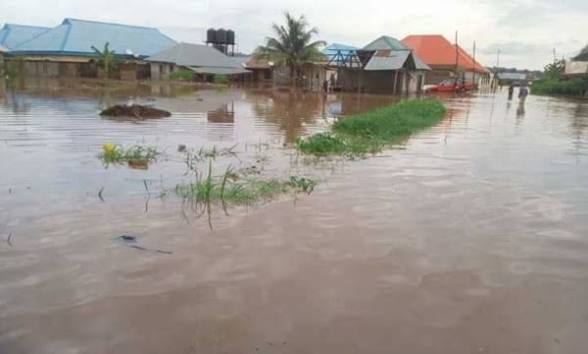
The numbers are staggering, but the stories behind them are even worse. No fewer than 347 people have been made homeless in Cross River State following a devastating combination of mudslides and flash floods that swept through communities in August, the State Emergency Management Agency has confirmed. The Director-General of the agency, Mr Efa Nyong, disclosed the figures on Tuesday, September 15, 2026, while briefing journalists in Calabar, the state capital. According to him, 167 people were rendered homeless by a mudslide in Calabar, while about 180 others were displaced by heavy rainfall in the Central Senatorial District.
The victims are currently being sheltered at various locations across Calabar and parts of the Central Senatorial District. They have lost their homes, their belongings, and in some cases, their livelihoods. They are now dependent on the generosity of the government, private donors, and humanitarian organisations for their most basic needs. The SEMA boss said relief materials and financial assistance had been provided by government and private donors as the agency continued efforts to stabilise and resettle the affected persons. But for the families who have been uprooted, the road back to normal life is long and uncertain.
Nyong, who assumed office on July 14, 2026, attributed the disasters to two distinct but interconnected factors: natural occurrences and human activities. “Basically, two things are happening. They are happening out of natural occurrence and, secondly, out of human activity. That is all that is happening currently in the state as regards disasters,” he said. The natural component is the torrential rainfall that has pounded the state, triggering mudslides in hilly areas and overwhelming drainage systems in urban centres. The human component is the reckless behaviour that makes these natural events far more destructive than they need to be.
The SEMA Director-General singled out the indiscriminate dumping of refuse into drains as a major cause of flooding in the state. He warned that the consequences of such actions are often felt far from the points of disposal. “When people throw waste indiscriminately, it may not show its impact immediately where it is dumped. Its impact could be a couple of kilometres away from where the activity was carried out,” he explained. It is a simple but profound point. The refuse that a resident dumps in a gutter in one neighbourhood can block a drainage channel several kilometres away, causing flooding that destroys homes and displaces families in a completely different part of the city.
Beyond flooding, Nyong also raised the alarm over the devastating impact of fire outbreaks, which have razed business premises, offices, and homes across the state. He urged residents to switch off electrical appliances when not in use, replace faulty cables and bulbs promptly, and upgrade electrical wiring where necessary. The message is clear: many of the disasters that are displacing families and destroying property in Cross River State are preventable. They are the product of negligence, carelessness, and a collective failure to respect basic safety and environmental rules.
The SEMA boss has been proactive in his response to the crisis. He said he had visited communities in the Southern and Central Senatorial Districts to sensitise residents on disaster prevention. He added that the agency planned to extend the sensitisation campaign to the Northern Senatorial District before commencing a statewide advocacy programme involving billboards, radio jingles, and town criers. The goal is to reach every community in the state with the message that disaster prevention is a shared responsibility and that the actions of individuals can have consequences that affect entire communities.
Nyong also explained the state’s disaster-response mechanism, which is structured in layers. The Local Emergency Management Committee, coordinated by the vice-chairman of each local government area, serves as the first responder. Cases beyond the capacity of the local committees are escalated to SEMA, then to the National Emergency Management Agency, and eventually to international partners where necessary. “Where we cannot manage it at the level of the state, we push it further to NEMA. When they cannot manage it at that level, we begin to seek international assistance,” he said. The Nigerian Red Cross Society is one of SEMA’s key partners in providing shelter and other assistance to displaced persons.
On the financial cost of the destruction, Nyong said it was difficult to put a monetary value on the damage because of fluctuations in the value of the naira. “We cannot quantify it because if you want to bring it back to what it was, we don’t know the current state of the naira,” he said. It is a candid admission of the economic reality facing the state and the country. The cost of rebuilding homes, replacing property, and restoring infrastructure is not just a matter of counting naira and kobo. It is a matter of finding the resources to reconstruct lives that have been shattered by forces beyond the control of the victims.
The displacement of 347 people in Cross River State is not an isolated incident. It is part of a broader pattern of climate-related disasters that have affected communities across Nigeria in recent months. In August 2026, heavy rainfall and flooding displaced thousands of people in states such as Jigawa, Kano, and Sokoto. The Nigerian Meteorological Agency has warned that the second phase of the rainy season, expected to commence in September, could bring river and coastal flooding to several states, including Cross River. The warning is particularly ominous for a state that is still grappling with the aftermath of the August disasters.
For the 347 people who have been displaced, the immediate priority is survival. They need shelter, food, clean water, and medical care. They need to know that their government has not forgotten them. The relief materials and financial assistance provided so far are a welcome gesture, but they are not enough to rebuild lives. The victims need long-term support to recover and resettle. They need to be given the tools and resources to rebuild their homes and restore their livelihoods. And they need to be assured that the government is taking concrete steps to prevent future disasters from causing the same level of destruction.
The SEMA Director-General’s warning about the consequences of indiscriminate dumping of refuse and poor electrical wiring is a wake-up call for every resident of Cross River State. The disasters that have displaced 347 people are not just the result of heavy rainfall. They are the result of human choices. They are the result of refusing to follow simple safety rules. They are the result of prioritising convenience over the common good. Until that changes, the cycle of displacement and destruction will continue.
As the rains continue to fall and the threat of further flooding looms, the people of Cross River State are watching and waiting. They are waiting for the government to act. They are waiting for their neighbours to change their behaviour. They are waiting for a future in which they will no longer have to fear the next downpour. The 347 displaced persons are not just statistics. They are mothers, fathers, children, and grandparents whose lives have been turned upside down by forces they cannot control. They deserve more than temporary relief. They deserve a permanent solution.
📩 Stone Reporters News | 🌍 stonereportersnews.com
✉️ info@stonereportersnews.com | 📘 Facebook: Stone Reporters News | 🐦 X (Twitter): @StoneReportNew | 📸 Instagram: @stonereportersnews
Add comment
Comments