

Reported by: Oahimire Omone Precious | Edited by: Oravbiere Osayomore Promise.
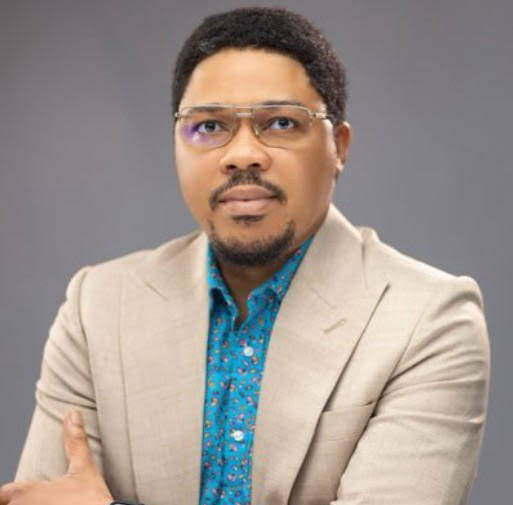
The combined revenues accruing to Nigerian state governments have risen from N4.8 trillion in 2022 to N15.5 trillion following the removal of petrol subsidy, but spending on education and healthcare as a proportion of state budgets has declined, African Democratic Congress candidate for Lagos State House of Assembly, Eti-Osa Constituency 2, Ayo Adio, has said. Adio questioned how governors have deployed the increased revenues, arguing that the major justification for subsidy removal was that additional resources would be channelled into infrastructure, education and healthcare.
Speaking during an interview on Arise TV, Adio said the proportion of state budget spending on education had fallen from 14 per cent to 12 per cent, while healthcare spending had declined from seven per cent to six per cent. "The amount in terms of percentage of budget spending that has gone into education has actually shrunk from 14 per cent to 12 per cent. The combined amount in percentage terms of that revenue that has accrued to states for healthcare spending has shrunk from 7 per cent to 6 per cent," he said. Adio also said the number of states relying on loans to fund budget deficits had increased from 19 to 25, questioning whether the additional revenues had translated into improved public services. "So, I ask you, what is working? What is working?" he asked.
He also questioned the level of infrastructure investment across the country, citing prolonged traffic and delays on major highways, including the Ore Expressway and routes linking travellers to Agbor, Ilorin and Kaduna from Abuja. "When you travel across this country, you don't need a prophet to tell you that not enough has gone into spending of infrastructure," Adio said. The ADC candidate argued that the increase in government revenues should prompt a review of how the resources are deployed, particularly in addressing the rising cost of living and production. He backed targeted subsidies for local refiners, saying the government could provide crude to domestic refiners to improve efficiency and potentially reduce petrol prices. Adio cited the use of targeted subsidies by countries including the United States and South Korea to support strategic industries. "States across the world use targeted subsidies at production so that they can either become competitive to create jobs and in certain instances to pass lower costs to the end user on the last mile," he said. He said the rising costs of petrol, electricity, education and housing were placing additional pressure on households, and questioned whether Nigerians would benefit more from allowing governors to control increased revenues or from deploying part of the resources towards targeted industrial subsidies. "Then you have to ask the fundamental question whether you want governors to be controlling the excess revenues that they claim that they have, or whether you want an industrial subsidy that guarantees lower prices for you at the pump," he said.
Adio's figures align with the findings of a BudgIT report published in September 2026, which analysed the fiscal records of 34 states and documented the same trend. Aggregate revenue across those states rose from N4.84 trillion in 2022 to N15.53 trillion in 2025. Capital spending grew at a compound annual rate of 57.16 per cent, rising from 44.93 per cent of total expenditure in 2022 to 60.65 per cent in 2025. States are building roads, bridges and infrastructure. But education, despite a 139 per cent increase in nominal spending, declined from 14.85 per cent to 12.35 per cent of total state expenditure. The BudgIT report warned that the emphasis on capital projects should not come at the expense of workers and essential social services. Personnel spending, covering salaries, wages and pensions, grew at a compound annual rate of 22.96 per cent, far slower than the 47.48 per cent growth in aggregate state revenues. Personnel expenditure accounted for only 16.16 per cent of total state spending in 2025, down from 24.99 per cent in 2022. Nigerian workers, in other words, have received a disproportionately small share of the fiscal gains.
The Independent newspaper, in its analysis of the BudgIT report, described the situation as a "troubling fiscal paradox: states are receiving more money, spending more money and recording higher capital expenditure, yet millions of Nigerians are still struggling to afford food and meet basic needs." The National Bureau of Statistics has reported that about 63 per cent of Nigerians experience multidimensional poverty, meaning millions lack adequate access to essential necessities such as healthcare, education, clean water and sanitation. Inflation has compounded the problem, with food, transport, electricity and other essential costs rising faster than household incomes. Workers in the informal economy are particularly vulnerable, with more than 70 per cent of Nigerians estimated to work in the informal sector, where earnings are often low, unstable and largely unprotected.
The APC has defended President Tinubu's reforms, arguing that the removal of petrol subsidy has increased government revenues and improved the business environment. Speaking through Senator Abdul'aziz Yari, the Director-General of the President's re-election campaign, the party demanded explanations on how the increased revenues had translated into improved living conditions for Nigerians. The ADC said Yari's comments were significant because he was speaking as the person responsible for persuading Nigerians to give Tinubu another four-year term. In a statement by its National Publicity Secretary, Bolaji Abdullahi, the party said Nigerians should be concerned if the message of the President's re-election campaign was that they must accept the current hardship as permanent. "If the message of the President's re-election campaign is that Nigerians must accept today's hardship as permanent and anyone promising relief is a liar, then Nigerians must be seriously concerned," the party said.
According to figures attributed to the Minister of Finance, subsidy removal and foreign exchange reforms generated about N15.8 trillion in additional resources for the Federation between June 2023 and December 2025. About N5.4 trillion of the amount went to the Federal Government, N5.4 trillion to states and N3.9 trillion to local governments. The ADC said states reportedly received N47.25 trillion in Federation Account Allocation Committee allocations between 2023 and 2025, rising from N10.09 trillion in 2023 to N15.26 trillion in 2024 and N21.90 trillion in 2025. "Monthly FAAC distributions have since crossed N2 trillion, compared with less than N1 trillion around the period before subsidy removal. Yet, while government revenues soared, Nigerians became poorer," the party said. The ADC said petrol prices rose from about N185 per litre in May 2023 to more than N1,300 in many locations by August 2025, while food inflation exceeded 40 per cent at points during the period. It added that transport costs had also surged, while the promised compressed natural gas mass-transit alternative had yet to reach Nigerians on the scale required. "The contradiction is impossible to ignore. Government is counting trillions while Nigerian families are counting the meals they can afford. If governments are receiving substantially more money, why are Nigerians getting substantially less food to eat?" the party asked.
The ADC also challenged the APC to explain whether Nigerians were better off after three years of what it described as unprecedented sacrifice. "Before asking Nigerians for four more years, Senator Yari and the APC must answer one question: after N15.8 trillion in additional resources, record FAAC allocations and three years of unprecedented sacrifice, are Nigerians better off?" it said. The party also expressed concern that increased revenues had coincided with increased borrowing by state governments, saying about 20 states reportedly borrowed N458 billion in 2025 despite the increase in FAAC receipts. "After N47.25 trillion to states in three years, Nigerians have a right to ask: where are the results? If states received an additional N5.4 trillion from the reforms, let the government publish the projects. Show Nigerians the schools, hospitals, roads, and mass-transit systems that their sacrifice paid for," the party said.
Defending Tinubu's economic reforms, the Technical Assistant on Regional Development Programmes in the Office of the Vice President, Dr Hafiz Abdullahi, said ongoing economic initiatives undertaken by the administration are restoring confidence in Nigeria's business environment and creating new opportunities for entrepreneurs to expand. He challenged opposition politicians criticising the administration's economic policies to engage directly with businesses and ordinary Nigerians before concluding that the reforms had worsened economic conditions. Abdullahi said critics should assess the reforms objectively, arguing that while economic changes could initially be difficult to absorb, Nigerians were gradually becoming accustomed to the new realities and beginning to appreciate their potential benefits. "Change is not easy. People don't easily adapt to change. I don't adapt to change easily myself," he said.
Adio's intervention is significant because it moves the debate beyond the federal government and places the spotlight squarely on the governors, who have been the primary beneficiaries of the increased allocations. He is not arguing for a return to the old subsidy regime. He is arguing that the money saved from its removal must be accounted for and deployed in ways that improve the lives of ordinary Nigerians. If governors cannot explain why education and healthcare have declined as a share of state spending despite tripled revenues, then the promise of subsidy removal has been broken. The money has flowed, but the benefits have not. The schools are still crowded. The hospitals are still underfunded. And the governors who received the windfall have yet to provide a satisfactory answer to the simplest question of all: where did the money go?
📩 Stone Reporters News | 🌍 stonereportersnews.com
✉️ info@stonereportersnews.com | 📘 Facebook: Stone Reporters News | 🐦 X (Twitter): @StoneReportNew | 📸 Instagram: @stonereportersnews
Add comment
Comments