

Reported by Ariajegbe Sylvia Esezobor
The Federal Government has vowed that the 2026 National Youth Confab will not become another exercise in producing recommendations that end up on government shelves, announcing a structured implementation framework that will channel resolutions directly to the Federal Executive Council, the National Assembly and relevant judicial institutions.
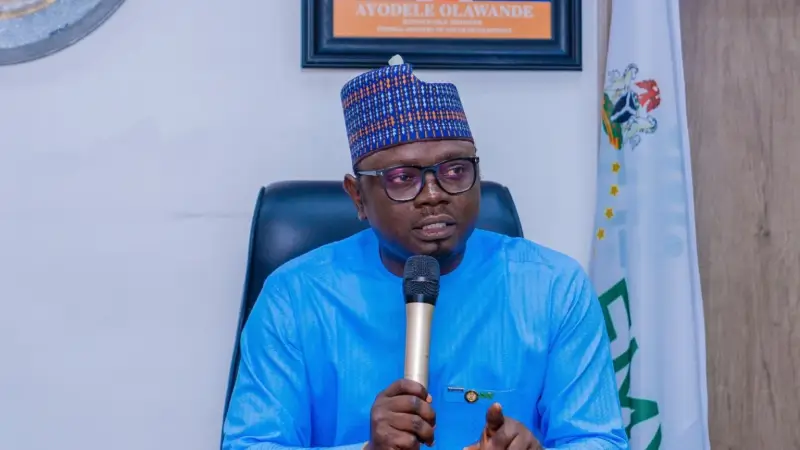
Minister of Youth Development Ayodele Olawande unveiled the plans on Thursday at the State House in Abuja, ahead of the two-week conference scheduled for October under the theme, "Next Gen Nigeria: Crafting Solutions, Owning the Future." He said the initiative was designed to move young Nigerians from passive participation in national discourse to active ownership of solutions and policy outcomes. "This is not just another youth conference. It is not just to come and deliver speeches. It is not about ideas that are merely developed without implementation," Olawande said. "Instead, this conference is an opportunity to learn, engage, cooperate and move from conversation to real action. What we are saying is enough of talking. We want to see the action."
The minister acknowledged the poor implementation record of previous national conferences, saying the government deliberately spent months designing the new Confab to avoid repeating past mistakes. "I've already said that we are not going back to documentation anymore. We are not going back to putting it and come and file it," he said. "We want to have a Federal Executive Council passing things that were brought out of Confab. We want the National Assembly to pass a bill on most of the resolutions." Recommendations requiring executive action will be taken through appropriate government processes including the FEC, proposals requiring legislation will be presented to the National Assembly, and recommendations touching on the judiciary will be identified for consideration by appropriate judicial institutions.
The conference will begin with about two weeks of virtual consultations involving Nigerians aged 18 to 35 both at home and in the diaspora, followed by a physical conference in Abuja. A dedicated portal managed by the National Information Technology Development Agency will receive memoranda, ideas and policy proposals ahead of the physical phase. The physical conference will bring together one youth delegate from each of Nigeria's 360 federal constituencies and six delegates representing Nigerians in the diaspora, alongside stakeholders and observers. The minister said delegate selection would be based on transparency, merit, grassroots representation, gender balance and regional inclusion, with provisions for persons with disabilities and other marginalised groups.
Olawande addressed concerns about political interference, saying politicians would not be allowed to influence the selection of delegates. "Politicians should go and face politics. We have election that are battling front and back, and we have just four months to get to the reef, and politicians are needed in the unit, in the wards and everything," he said. He added that the ministry had no intention of handpicking delegates and that President Bola Tinubu was also not interested in determining who would participate. "You don't need to know me before you get initiated anymore. You don't need to be an in-law or whatever anybody before you can apply to it. Just go and do it and we get it," he said.
The deliberations will focus on six priority areas: governance, leadership and political participation; economic transformation, entrepreneurship and job creation; education and skills for the future; technology, innovation and digital transformation; climate change and energy transition; and social harmony and security. The minister said the conference would establish mechanisms to monitor implementation, including a Multi-Stakeholder Youth Confab Task Force, a Youth Confab Impact Index, sustained youth policy dialogues and a youth-led monitoring and accountability framework. These mechanisms, he said, would track commitments and measure progress after delegates leave Abuja.
Olawande said the implementation framework would extend to state governments because youth development could not be treated solely as a Federal Government responsibility. "There is nothing like federal youth. We have the national, and we have the subnational," he said, adding that a framework would be developed to take implementation to sub-national governments. Timelines for implementation are expected to begin in November, following the October conference.
Speaking for the Presidency, Senior Special Assistant to the President on Digital and New Media, O'tega Ogra, said President Tinubu had deliberately created greater space for young Nigerians to participate in governance and national development. Ogra said the administration had reviewed previous youth conferences and was determined to avoid their shortcomings. The minister urged participants to put national interest above partisan considerations. "It is Nigeria first before political party; it is Nigeria first before government; and it is Nigeria first before anybody," he said.
The minister's emphasis on implementation reflects a recognition that previous national conferences, including the 2014 National Conference, produced recommendations that were never acted upon. The 2014 conference, which brought together hundreds of delegates to discuss Nigeria's structural challenges, generated a comprehensive report that was submitted to the administration of then-President Goodluck Jonathan but was never implemented. Successive governments have faced criticism for allowing conference reports to gather dust, a pattern that has fuelled public cynicism about the value of such gatherings.
Olawande acknowledged the difficulties confronting young Nigerians and said the government was determined to rebuild confidence and strengthen its partnership with the younger generation. He noted that with over 70 per cent of Nigeria's population below the age of 35, young Nigerians are not merely leaders of tomorrow but partners in nation-building today, and that their ideas, experiences and participation are essential to the country's progress. He urged young Nigerians across the 36 states, the Federal Capital Territory and the diaspora to participate actively in the virtual consultations and submit practical ideas.
The conference is scheduled to hold in October 2026, with implementation timelines beginning in November. Whether the framework announced on Thursday will succeed where previous efforts have failed remains to be seen, but the government has staked its credibility on ensuring that the Youth Confab produces measurable outcomes rather than another archived report. As Olawande put it, "The Nigerian youth does not need another document. Enough of documents. We need action. We need opportunities. We need measurable commitments and institutions that will listen and respond to our needs."
📩 Stone Reporters News | 🌍 stonereportersnews.com
✉️ info@stonereportersnews.com | 📘 Facebook: Stone Reporters News | 🐦 X (Twitter): @StoneReportNew | 📸 Instagram: @stonereportersnews
Add comment
Comments