

Reported by: Ijeoma G | Edited by: Oravbiere Osayomore Promise.
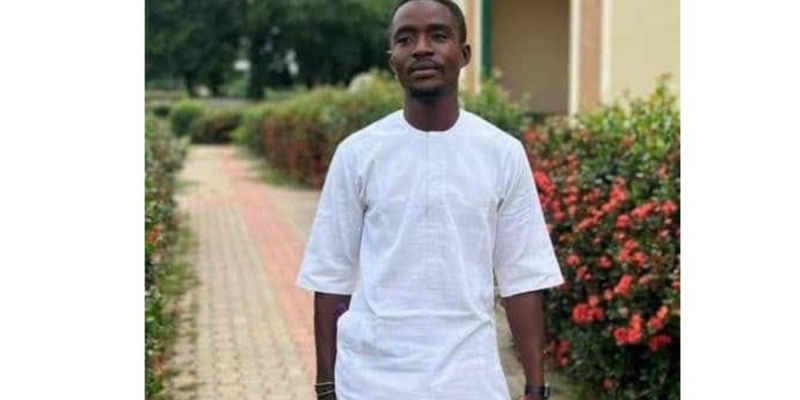
The bullet that killed Ismail Ishaq Magaji was not fired in the heat of a chaotic confrontation. It was fired by a soldier who chased him as he ran. That is the account of eyewitnesses who watched a final-year student of Ibrahim Badamasi Babangida University, Lapai, die on Thursday, September 17, 2026, in Wawa community, Borgu Local Government Area of Niger State. The soldier went after him, they said, and then he shot him. Magaji was rushed to a hospital. Medical personnel tried to save him. He died.
The death of a young man who was weeks away from completing his degree has left Wawa in a state of emergency. The Borgu Local Government Area Chairman, Muhammad Nasir Abdullahi, popularly known as Lambus, declared the emergency as tensions spiralled. Youths, enraged by the killing, marched to the home of the woman at the centre of the dispute and set it ablaze. The disputed land was also destroyed. Security personnel were deployed to prevent further escalation. But the damage had already been done. A student was dead. A community was in flames. And the questions were only beginning.
The dispute that led to Magaji's death was a land matter. The land in question was reportedly connected to his cousin, Hajia Zainab, a female politician from Borgu known locally as "Zee Baby." Community sources alleged that Zainab invited soldiers to the community after the dispute escalated and youths began protesting. What began as a disagreement over land became a confrontation between unarmed youths and armed soldiers. Magaji was caught in the middle. One eyewitness told SaharaReporters that the soldier chased him before shooting him. "It was not like an accidental discharge. He was running and the soldier went after him," the source said. Another community source said the shooting occurred amid confusion as security personnel attempted to disperse the protesters. "There was a confrontation between the youths and the soldiers. Ismail was there when the shooting happened. He was hit by the bullet and people immediately rushed him to the hospital," the source said. Video footage obtained by SaharaReporters showed Magaji receiving medical attention shortly after he was shot. The efforts of medical personnel and people around him were not enough. He died.
The killing of a student during a protest over a land dispute is not an isolated tragedy in Niger State. It is the latest chapter in a long and bloody history of confrontations between security personnel and civilians in the state. In March 2026, youths in Borgu attempted to disarm soldiers enforcing a curfew, an incident that highlighted the deepening mistrust between communities and the military in the area. In 2025, a Nigerian soldier shot dead a nursing mother and her baby in Babanna community, also in Borgu Local Government Area, after an altercation over a N200 bribe. The soldier was later arrested, but the killings continued. In January 2026, security operatives shot dead at least six protesters in Suleja, Niger State, during a demonstration over the rising cost of living. The pattern is consistent: protests are met with live ammunition, civilians die, and the promises of investigation and accountability are made and forgotten.
The Nigerian Army has not issued a statement on Magaji's death. The Niger State Police Command has not confirmed whether any soldier has been arrested or whether an investigation has been opened. The state government has not commented on the incident. The silence from the authorities stands in stark contrast to the rage on the streets of Wawa, where youths burned the home of the woman they blame for inviting soldiers into their community. The declaration of an emergency by the local government chairman is a recognition that the situation is volatile, but it is not a solution. It is a temporary measure to prevent the violence from spreading. It does not answer the question that every resident of Wawa is asking: why did a soldier chase a fleeing student and shoot him dead?
The killing of Ismail Ishaq Magaji raises fundamental questions about the rules of engagement governing the deployment of military personnel to civilian communities. Soldiers are trained to use lethal force only when there is an imminent threat to life. A fleeing student does not constitute such a threat. The decision to chase him and shoot him, if the eyewitness accounts are accurate, is a gross violation of the Nigerian Army's own rules of engagement and the constitutional protections afforded to every citizen. It is also a violation of the African Charter on Human and Peoples' Rights, which Nigeria has ratified, and which guarantees the right to life and the right to peaceful assembly. The soldiers who were deployed to Wawa were there to keep the peace, not to take lives. They failed in that duty. And a young man paid the price.
The aftermath of the killing is a familiar one. The youths who set Zainab's house on fire were expressing the rage of a community that has grown weary of being treated as collateral damage in disputes that are not of their making. The destruction of the disputed land was an act of defiance against a system that they believe has failed them. But arson and destruction are not justice. They are the symptoms of a deeper malaise. The real justice that the people of Wawa deserve is accountability for Magaji's death. The soldier who shot him must be identified, arrested, and prosecuted. The circumstances surrounding the deployment of soldiers to the community must be investigated. And the land dispute that triggered the confrontation must be resolved through lawful means, not through violence.
For now, Wawa remains tense. The emergency declared by the local government chairman is in force. Security personnel are on the streets. The house of the woman whose invitation brought soldiers into the community is in ashes. And the family of Ismail Ishaq Magaji is planning a funeral. The Nigerian Army has a choice to make. It can issue the usual statement about a "misunderstanding" or an "accidental discharge." Or it can do what is right: admit that a soldier chased a fleeing student and shot him dead, arrest the soldier, and allow the law to take its course. The credibility of the institution depends on which choice it makes. The people of Wawa are watching. So is the rest of Nigeria.
📩 Stone Reporters News | 🌍 stonereportersnews.com
✉️ info@stonereportersnews.com | 📘 Facebook: Stone Reporters News | 🐦 X (Twitter): @StoneReportNew | 📸 Instagram: @stonereportersnews
Add comment
Comments