

Reported by: Ijeoma G | Edited by: Oravbiere Osayomore Promise.
The Archbishop of Canterbury has been forced into an embarrassing public reversal after withdrawing an interfaith award given to a prominent Pakistani Muslim cleric who once praised Osama bin Laden as a "Sword of God." The decision, announced by Lambeth Palace on Thursday, September 17, 2026, comes just days after the award was presented at a ceremony timed to coincide with the 25th anniversary of the September 11 attacks.
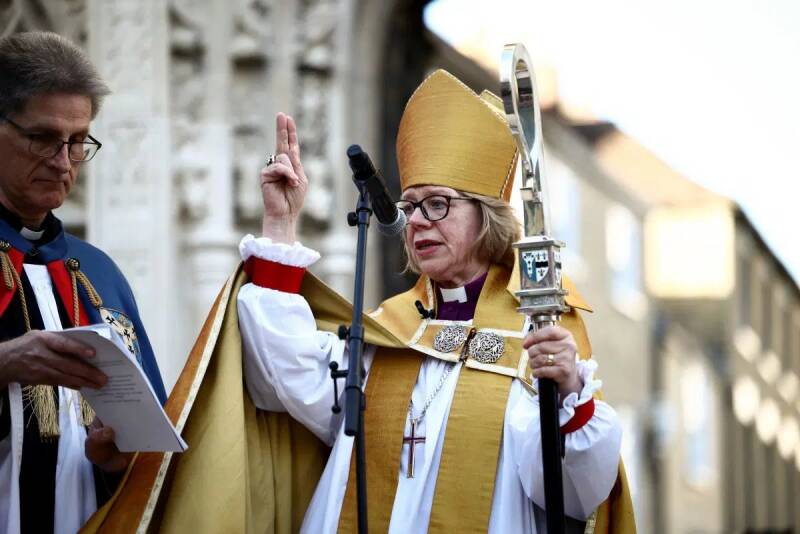
The Most Reverend Sarah Mullally, who became the first woman to lead the Church of England earlier this year, presented the Hubert Walter Award for Reconciliation and Interfaith Cooperation to Maulana Hafiz Muhammad Tahir Mehmood Ashrafi on September 11, 2026. The ceremony at Lambeth Palace was meant to honour Ashrafi for what the Archbishop's office described as his "longstanding support for religious minorities in Pakistan, particularly the Christian community" and his "outstanding work as an ambassador of interfaith harmony."
But within days, the award became a public relations disaster. Criticism began to mount after it emerged that Ashrafi, who chairs the Pakistan Ulema Council, had in 2007 publicly praised bin Laden and announced that his council was awarding the Al-Qaeda leader its "highest title for a Muslim warrior" in retaliation for Britain's decision to grant a knighthood to author Salman Rushdie. "We are pleased to award the title of Saifullah to Osama bin Laden," Ashrafi told AFP at the time. "This is the highest title for a Muslim warrior." He further declared that bin Laden had "been fighting for Islam against the Russians, Americans and British."
The timing could hardly have been worse. The award was presented on the same day the world marked 25 years since the 9/11 attacks, in which nearly 3,000 people were killed by terrorists acting under bin Laden's direction. The juxtaposition of honouring a cleric for interfaith cooperation while the memory of those attacks was still fresh, without apparently vetting his past remarks, left Lambeth Palace scrambling to contain the fallout.
By Thursday evening, the Archbishop's office issued a statement confirming the award had been withdrawn. "Previous comments made by Imam Ashrafi have come to light that have led Lambeth Palace to reconsider this award and we can now confirm today that the award has been withdrawn," the statement read. "We have contacted Imam Ashrafi to make him aware of this decision." Lambeth Palace added that it continued to pray for the Christian community in Pakistan and for those working for interfaith dialogue and harmony in Pakistan and around the world. The statement also stressed that the award had been given for Ashrafi's support for religious minorities, support that is valued by many Christians in Pakistan, including its Anglican Church.
The decision followed mounting pressure from politicians and the public. Conservative Party politician Nick Timothy, who had exposed Ashrafi's previous remarks, was among the first to react. "The naivety of our public institutions for engaging with people like this is staggering. But not surprising," he wrote on X. After the withdrawal was announced, Timothy said it was the right decision, though questions remained about how the award had been given in the first place.
Ashrafi, for his part, has defended himself, claiming his 2007 remarks had been "totally taken out of context" and describing the backlash as "an unfair campaign" against him. He said he was only speaking about bin Laden in response to "the hurt felt by many Muslims" over the knighthood awarded to Rushdie, who was the subject of fatwas calling for his execution over his novel The Satanic Verses. Ashrafi's spokesperson said the comment had not been "an endorsement of bin Laden" but was made in the context of explaining Muslim anger over Rushdie's honour.
But the controversy extends beyond the bin Laden remarks. In giving him the award, Lambeth Palace had cited Ashrafi's intervention in the 2012 case of Rimsha Masih, a young Christian girl in Pakistan falsely accused of blasphemy. However, Ashrafi has otherwise been a vocal supporter of Pakistan's blasphemy laws, which have led to an estimated 2,000 prosecutions since the late 1980s, disproportionately targeting Christians and Ahmadis, as well as many Sunni Muslims. Human Rights Watch has said the laws "perpetuate religious discrimination" and are used to target the poor and minorities. Ashrafi has argued that the blasphemy laws actually "save lives" by preventing mob violence.
The episode has raised uncomfortable questions about how a figure with such a documented record came to be honoured by the Church of England. It also highlights the complexities and perils of interfaith engagement, particularly when it involves figures whose past statements or present associations sit uneasily with the values the award is meant to represent. For the Archbishop of Canterbury, the incident is a damaging early setback for a tenure that began just months ago. For Ashrafi, it is a public rebuke that may complicate his standing in Pakistan, where he remains a significant religious and political figure. And for the wider cause of interfaith dialogue, it is a reminder that good intentions, without rigorous due diligence, can quickly turn into a liability.
Lambeth Palace has confirmed the award has been withdrawn and that Ashrafi has been informed of the decision. The Church of England has not indicated whether it will review its vetting procedures for future interfaith honours, but the episode has already prompted calls for greater scrutiny. As one observer noted, the question is not whether interfaith dialogue should continue, but whether it should be conducted with figures whose records are not subjected to basic verification. For now, the award sits revoked, a quiet symbol of a ceremony that should never have happened.
📩 Stone Reporters News | 🌍 stonereportersnews.com
✉️ info@stonereportersnews.com | 📘 Facebook: Stone Reporters News | 🐦 X (Twitter): @StoneReportNew | 📸 Instagram: @stonereportersnews
Add comment
Comments