

Reported by: Ijeoma G | Edited by: Oravbiere Osayomore Promise.
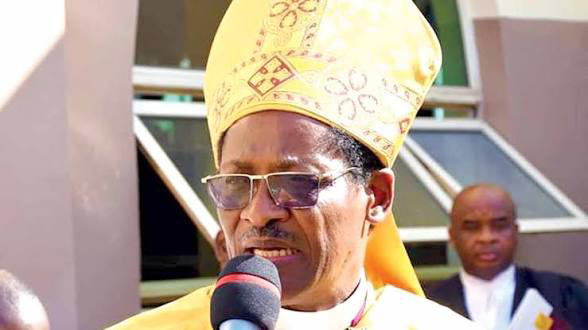
The Church of Nigeria, Anglican Communion, has thrown down a gauntlet that the political class cannot ignore. At the end of its 15th General Synod, held at Our Saviour's Church in Ikenne, Ogun State, from September 14 to September 18, 2026, the church called for a constitutional amendment that would make drug and substance-abuse testing mandatory for every serving public officer and every person seeking elective or appointive office in the country. The call, contained in a communiqué signed by the Primate, the Most Rev. Henry Ndukuba; the Dean, the Most Rev. Blessing Enyindah; and the General Secretary, Ven. Festus Chukwunyere, is not a suggestion. It is a demand that strikes at the heart of Nigeria's leadership recruitment process.
The synod did not mince words about why it is making this call. It expressed deep concern over what it described as the escalating menace of drug trafficking, substance abuse and addiction in Nigeria, particularly among young people. The church linked the crisis to rising violent crime, insecurity, gang activity, and the destruction of mental health, family stability and economic productivity. The bishops and clergy who gathered in Ikenne were not speaking in the abstract. They were responding to a reality that every Nigerian sees: communities terrorised by armed gangs, many of whose members operate under the influence of illicit substances; young people whose lives are being consumed by addiction; and a political system that often rewards influence and wealth over integrity and competence.
The synod's proposal is straightforward and uncompromising. It calls for "a constitutional amendment requiring mandatory, credible and periodic drug and substance-abuse testing for serving public officers and persons seeking elective or appointive public office and appropriate sanctions for verified violations." The word "periodic" is crucial. This is not a one-time test at the point of candidacy. It is an ongoing requirement. A governor, a senator, a minister, a local government chairman, a commissioner — all would be subject to regular testing throughout their tenure. If the test is positive and the violation is verified, the constitution itself would prescribe sanctions.
The church also called on government and relevant agencies to intensify public education, prevention, enforcement, rehabilitation and reintegration, with stronger collaboration among government, schools, families, communities, the church and relevant agencies. The synod made it clear that it is not merely interested in punishing offenders. It wants a comprehensive approach that addresses the root causes of drug abuse and supports those who need help. But it also made it clear that the political class cannot be exempt from the standards it sets for the rest of society.
The timing of the synod's call is significant. It comes as Nigeria prepares for the 2027 general elections, a contest that will determine the country's direction for the next four years. The synod addressed the elections directly, calling on Nigerians, political leaders and political parties to place national unity, peace and the common good above partisan interests. It urged political actors and citizens to reject hate speech, violence, intimidation, vote-buying and misinformation, and to embrace issue-based campaigns and peaceful participation. The church also urged the Independent National Electoral Commission to uphold neutrality, transparency and credibility in the conduct of the elections, and called on the judiciary to act independently and impartially in election-related matters.
The synod's call for drug testing is not happening in a vacuum. In 2025, the Federal Government approved the introduction of mandatory pre-employment drug testing for prospective applicants into the public service. The Director of Information and Public Relations in the Office of the Secretary to the Government of the Federation, Segun Imohiosen, said the approval was part of efforts to address the growing problem of illicit drug use and its impact on national development and security. Permanent Secretaries and Heads of Extra-Ministerial Departments and Parastatals were directed to make drug testing a core requirement in the recruitment of new personnel. The Anglican Church's proposal extends that logic to the highest levels of leadership. If a junior civil servant must be tested before employment, why should a governor or a senator be exempt?
The synod also addressed other national challenges. On insecurity, it urged governments at all levels to do more to protect citizens, recommending increased intelligence gathering, coverage of ungoverned spaces and the recovery of territories under the control of terrorists. On the food crisis, it expressed concern over the deepening situation, attributing it to conflict, climate change, hyperinflation and high farming costs. It called on the government to restore farm security, invest substantially in mechanised farming, provide single-digit loans, transparently subsidise inputs, reduce post-harvest losses and establish a transparent Agriculture Trust Fund. "Farmers must be empowered to feed the nation," the communiqué stated. The church's message was clear: the challenges facing Nigeria are interconnected, and they require a response that is as comprehensive as it is courageous.
The proposal for mandatory drug testing of public officers and aspirants is the most striking element of the communiqué. It is a direct challenge to a political culture that has too often tolerated — and in some cases, rewarded — behaviour that would disqualify a person from any other position of trust. The church is saying that leadership is not just about winning elections. It is about character, integrity and the capacity to serve. And it is saying that the constitution, which is the highest law of the land, should reflect those values.
Whether the National Assembly will take up the call for a constitutional amendment remains to be seen. Constitutional amendments in Nigeria are complex, politically charged and often slow. But the Anglican Church has planted a flag. It has said, in the clearest terms, that drug abuse is not a private matter when it involves people who hold public trust. It has said that the political class must be held to the same standards as the citizens it governs. And it has said that the church will not be silent while the nation's future is undermined by addiction, insecurity and impunity.
For Nigerians who have watched with dismay as one scandal follows another, the synod's call offers a glimmer of hope. It is a reminder that not all institutions have abandoned the fight for a better Nigeria. It is a reminder that moral authority still exists, and that it can be a powerful force for change. The question now is whether the political class will listen, or whether it will continue to treat the church's demands as background noise. The answer will say much about the kind of country Nigeria wants to be.
📩 Stone Reporters News | 🌍 stonereportersnews.com
✉️ info@stonereportersnews.com | 📘 Facebook: Stone Reporters News | 🐦 X (Twitter): @StoneReportNew | 📸 Instagram: @stonereportersnews
Add comment
Comments