

Reported by: Ijeoma G | Edited by: L. Stone
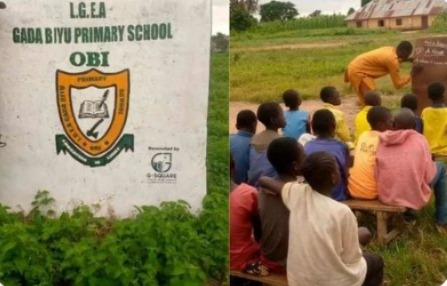
Parents and residents of Gada Biyu in Obi Local Government Area of Nasarawa State have appealed for urgent intervention after a classroom block at the LGEA Primary School collapsed during lessons, killing a pupil and injuring several others, with children now reportedly taking classes outside because replacement classrooms have not yet been completed.
The collapse occurred on July 23, 2026, at LGEA Primary School in Gada Biyu, Obi Local Government Area of Nasarawa State. The incident happened while pupils were receiving lessons inside the affected building and resulted in the death of 10-year-old Shautaha Orduwe, while several other pupils were injured. The Nasarawa State Universal Basic Education Board, through its Executive Chairman, Dr Kassim Muhammad Kassim, later visited the bereaved family and inspected the damaged facility.
Following the collapse, officials of the Nasarawa State Government reportedly visited the school and assessed the damage. Community members said the officials assured them that the collapsed classroom block would be rebuilt. The assurance initially created expectations among residents that reconstruction would begin quickly and that pupils would soon return to safe classrooms.
The government’s response also included an official condolence visit. On July 27, NSUBEB Chairman Kassim led permanent members and directors of the board to Gada Biyu to sympathise with the family of Shautaha. During the visit, he expressed condolences and inspected the damaged school facilities to determine the needs arising from the collapse.
NSUBEB subsequently announced that the collapsed classroom block would be replaced with a new structure. The board also approved two employment opportunities for qualified members of the community as part of its rural teachers’ recruitment exercise. The announcement indicated that authorities recognised the need for both infrastructure and staffing support at the affected school.
However, residents who spoke about the situation in September said reconstruction had not commenced despite the earlier assurance. The school has reportedly resumed academic activities, but pupils are said to be receiving lessons outdoors because there are insufficient classrooms available following the collapse.
The situation has caused concern among parents, who fear that children are being exposed to another set of avoidable risks while attending lessons outside. Apart from exposure to weather conditions, outdoor classes can make it difficult for teachers and pupils to maintain a normal learning environment, particularly when a school has already experienced a serious structural failure.
Community members have therefore called on the Nasarawa State Government and relevant education authorities to fulfil the reported commitment to replace the collapsed building. They have also urged authorities to ensure that any new structure is safe, durable and suitable for the number of pupils attending the school.
The death of Shautaha has added urgency to those demands. The 10-year-old pupil was buried after the incident, according to reports, while the family received condolences from the education authorities. His death has remained the most serious consequence of the classroom collapse and has intensified calls for greater attention to the condition of public school buildings.
The circumstances surrounding the structural failure have not been fully disclosed in the reports reviewed. There has been no publicly available detailed engineering assessment establishing why the building collapsed, whether it had previously shown signs of weakness or whether any inspection had identified defects before the incident.
Those questions are significant because determining the cause of the collapse is important to preventing a recurrence. A replacement building would need to address not only the immediate shortage of classrooms but also the structural and safety concerns that may have contributed to the failure of the previous facility.
The situation at Gada Biyu also highlights a broader challenge facing basic education in rural communities, where the condition and availability of school infrastructure can directly affect attendance, teaching conditions and child safety. When classrooms become unusable, communities may have few immediate alternatives, forcing schools to improvise while waiting for government intervention.
Nasarawa State authorities have continued to announce investments in education. In a September 2026 briefing, the state government said three modern schools, one in each senatorial district, had been awarded for construction. The government also said NSUBEB had concluded arrangements to recruit 1,000 qualified primary school teachers and had procured exercise books, uniforms, sandals and other instructional materials for public schools.
Those statewide measures, however, do not resolve the immediate problem at Gada Biyu. The affected school requires a direct response to the loss of its classroom block, particularly because pupils have already returned to academic activities. Community members are seeking a completed facility rather than another temporary arrangement.
The government’s earlier decision to approve replacement of the collapsed block provides a stated basis for action, but residents say the promised reconstruction has yet to become visible at the school. The difference between an announced intervention and its implementation has become the central concern for families whose children currently have no adequate classrooms.
The next steps will depend on the Nasarawa State Government and NSUBEB, including the commencement and completion of the promised replacement building and any technical assessment required to establish the cause of the collapse. No further casualty from the school has been reported since the July incident, but the continued use of outdoor spaces for lessons remains a concern for the community.
As pupils continue their education under difficult conditions, Gada Biyu residents are calling for the promised reconstruction to move from announcement to implementation. The community’s immediate demand is straightforward: provide the children with a safe classroom and ensure that the tragedy of July 23 does not become a warning ignored until another avoidable incident occurs.
📩 Stone Reporters News | 🌍 stonereportersnews.com
✉️ info@stonereportersnews.com | 📘 Facebook: Stone Reporters News | 🐦 X (Twitter): @StoneReportNew | 📸 Instagram: @stonereportersnews
Add comment
Comments