

Reported by Ariajegbe Sylvia Esezobor
The Federal Government has constituted a ten-member independent committee to investigate the deaths of thirty-seven detainees in the custody of the Nigeria Security and Civil Defence Corps in Niger State, and suspended twenty officers, including the state commandant, pending the outcome of the investigation.
The committee, announced on Saturday by the Minister of Interior, Olubunmi Tunji-Ojo, is chaired by Mr. Jonathan Kure, a retired Deputy Director-General of the Department of State Services. Professor Isa Hayatu Chiroma, a Senior Advocate of Nigeria and former Director-General of the Nigerian Law School, will serve as Secretary. The panel includes AIG Hosea Hassan Karma (retired); Professor Olayinka Buhari, a professor of histopathology and former Chief Medical Director of the University of Ilorin Teaching Hospital; representatives of the Minna Emirate Council and the Niger State Government; Alhaji Liman Sulaiman, National Secretary of the Miners Association of Nigeria; Mr. Deji Adeyanju, lawyer and human rights activist; Mrs. Zainab Suleiman Okino of Blueprint Newspaper; and Dr. George Agbakahi, a public affairs analyst.
The committee was constituted following a directive by President Bola Tinubu for what the Presidency described as a comprehensive, transparent and unhindered investigation. It is mandated to establish the identities of the deceased, investigate the circumstances of their arrest, detention and death, and determine responsibility, complicity, negligence or misconduct. It will also recommend appropriate action, compensation where applicable, and measures to prevent a recurrence. The panel may co-opt relevant experts, access facilities and documents, visit relevant locations, and request memoranda from members of the public. It has two weeks to complete its work and submit its report to the Minister.
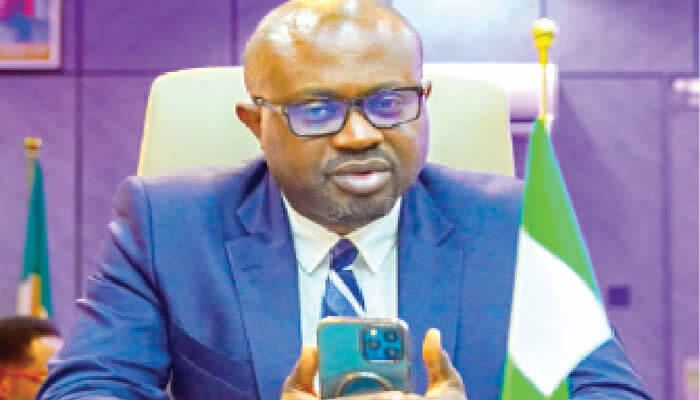
Tunji-Ojo described the deaths as deeply disturbing, saying the government owed the families of the deceased and the Nigerian public a transparent account of what transpired. He directed the NSCDC leadership and all relevant officers to cooperate fully with the committee and to preserve all records and material evidence connected to the incident. He warned that any attempt to destroy or conceal evidence, intimidate witnesses or obstruct the investigation would be treated as a serious offence. The Minister expressed condolences to the families of the deceased and appealed for calm while the investigation continues.
The suspension order affects the Niger State Commandant of the NSCDC, Suberu Siyaka Aniviye, along with nineteen other officers. Those suspended include the O/C Station Guard, SC Usman Isah Ndamaka; Station Guard, ASCI Hassan Mohammed; Station Guard, CCA Bala Mohammed; Arresting Officer and O/C Investigation, CSC Oluwadare Sunday; Arresting Officers DCC Obafemi Elvis and CSC Annas Shitto Lamino; HOD INT/INV, DCC Philip Ajayi; O/C Legal, Barr. Stephen Tsado; and Day/Night Duty Officer, ASCI Alhassan Mohammed. Others are officers listed for guard duty, including IC Abdullahi Sale, IC Mohammed Sonfada, CAI Liman Abubakar, CAI Bala Usman, IC Mohammed Jiya, DSC Isah Suleiman, CAI Ahmed Wushishi, IC Sale Adamu, IC Haruna Mohammed, ASCI Aliyu Sallah and CAI Isah Sanusi.
The deaths occurred in the early hours of Thursday, September 17, 2026, after the detainees were arrested during enforcement operations conducted by the NSCDC in parts of Niger State on September 15 and 16. The operations targeted suspected illegal mining activities in the M.I. Wushishi and Lukoto areas. The NSCDC initially attributed the deaths to a suspected outbreak of disease, with the Niger State commandant saying the bodies had been sent to a local hospital for further medical examination to establish the actual cause of death. The NSCDC’s national headquarters later said the cause of death was yet to be established. A survivor told the Associated Press that about sixty-five detainees were packed into a poorly ventilated cell, suggesting the dead may have suffocated. Survivors who spoke to journalists described being locked in a small, airless room and banging on the cell door to attract the attention of guards. The accounts have not been independently verified.
The tragedy triggered protests in Minna, the Niger State capital, prompting Governor Mohammed Umaru Bago to impose a 24-hour curfew. The Governor declared three days of mourning and questioned the number of miners arrested, saying his office and that of the Homeland Security were not informed before the NSCDC operation. He said sixty-seven artisanal miners had been held in a cell before thirty-seven died. The state government also constituted its own committee of inquiry into the deaths.
The deaths have drawn reactions from across Nigeria’s political spectrum. Former Vice President Atiku Abubakar called for an independent, thorough and transparent investigation, saying he was deeply saddened and profoundly disturbed by the deaths. “No Nigerian should enter government custody and lose the most basic right of all: the right to life,” he said. He commended the Federal Government’s suspension of the officers but warned that this must not be the end of the matter, calling for the findings to be made public and for anyone found responsible to be held fully accountable. Peter Obi, the presidential candidate of the Nigeria Democratic Congress, also demanded an urgent and transparent investigation. The African Democratic Congress called for autopsies and compensation for the families of the victims. Amnesty International Nigeria demanded an immediate probe, while the Socio-Economic Rights and Accountability Project urged United Nations Special Rapporteurs to intervene over the deaths and the reported use of lethal force against protesters. Parents of the deceased miners have demanded compensation, saying it would serve as a deterrent against abuse of power and ensure accountability among law enforcement personnel.
The Committee chaired by Kure brings significant security and legal expertise to the investigation. Kure served as Director of the DSS in Ondo State and later as an Assistant Director-General at the agency’s national headquarters. Professor Chiroma, a Senior Advocate of Nigeria and former head of the Nigerian Law School, will oversee the secretariat. The inclusion of Professor Buhari, a pathologist, is expected to be relevant to determining the cause of death, while the representation of the Minna Emirate Council and the Niger State Government reflects an effort to involve local stakeholders. The appointment of Deji Adeyanju, a prominent human rights lawyer, and Zainab Suleiman Okino, a respected journalist, adds civil society and media perspectives to the panel.
For the families of the deceased, the committee’s work represents the first formal step toward accountability. For the government, it is a test of whether a transparent investigation can restore a measure of public trust in institutions that have too often failed to protect the lives in their custody. As the panel begins its work, the coming two weeks will determine whether the deaths of thirty-seven Nigerians are met with the accountability the Minister has promised, or whether the investigation becomes another chapter in a long history of impunity. The government has said it will publish the committee’s findings, and the families of the deceased have made clear they expect nothing less than the truth.
📩 Stone Reporters News | 🌍 stonereportersnews.com
✉️ info@stonereportersnews.com | 📘 Facebook: Stone Reporters News | 🐦 X (Twitter): @StoneReportNew | 📸 Instagram: @stonereportersnews
Add comment
Comments