

Reported by Ariajegbe Sylvia Esezobor
When the Independent National Electoral Commission published its final list of presidential candidates for the January 2027 general elections, the headline numbers told a familiar story. Eighteen political parties are fielding candidates. Sixteen of them are men. Only two are women.
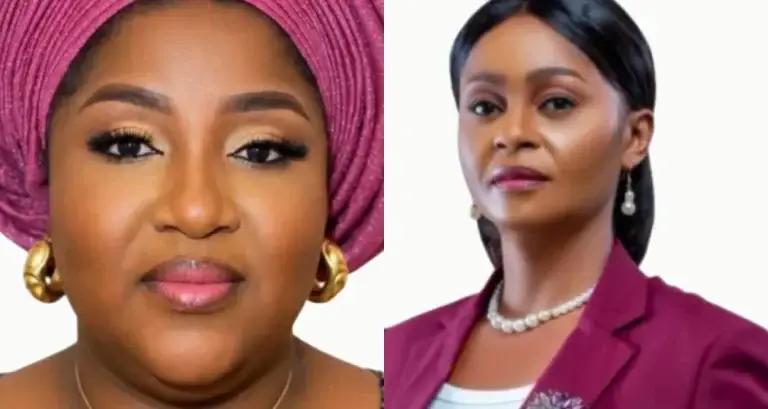
Ada Elizabeth Fredrick Okwori of the National Democratic Party and Nkem Esther Okereke of the National Rescue Movement are the only female presidential candidates on the ballot, constituting 11.1 per cent of the field. Four women are running as vice-presidential candidates, including Peace Egobia Ofordile of the Allied Peoples Party, Nafisat Usaku Abubakar of the Democratic Leadership Alliance, Hajja Bintu Konto of the Labour Party, and Patience Ndidi Key of the Young Progressive Party.
Their presence on the ballot is both historic and limited. It represents a modest improvement over the 2023 election, when no woman contested the presidency, but it also underscores the persistent gender gap in Nigerian politics. According to data released by INEC, women make up just 9.6 per cent of all 4,881 candidates contesting the presidency and National Assembly seats in 2027. Advocacy groups have described the figures as evidence of a political system that continues to exclude women from positions of power.
Okwori, 48, is the founder and national leader of the National Democratic Party, a party she established after years of involvement in politics through the Peoples Democratic Party and grassroots mobilisation. An Idoma from Benue State with roots in Otukpo, she founded the Ward2Ward initiative, a movement designed to promote political participation at the community level. She emerged as the NDP’s presidential candidate through a consensus process involving party structures across the country, rather than a competitive primary. In an interview with Blueprint, she said she stepped forward because “Nigeria deserves better.” Her campaign has positioned the NDP as a credible alternative to the established parties, though she faces the formidable challenge of building national name recognition in a race dominated by three political heavyweights: President Bola Tinubu of the All Progressives Congress, former Vice President Atiku Abubakar of the African Democratic Congress, and former Anambra Governor Peter Obi of the Nigeria Democratic Congress.
Okereke, 43, is a Nollywood actress and film producer who emerged as the NRM’s presidential candidate in May 2026 through consensus, becoming the party’s first female presidential flag bearer. Her selection marked a historic moment for the NRM, a party that has struggled for visibility since its registration. Okereke has outlined plans to tackle Nigeria’s electricity crisis, insecurity, corruption and economic challenges. In June 2026, she held a news conference in Abuja titled “Nigeria Will Work Again,” where she called on Nigerians to unite and rebuild the country. Her background in entertainment gives her a public profile that few minor-party candidates possess, but her campaign will need to translate that visibility into votes across a country where party structures and regional networks often determine electoral outcomes.
The two women are running alongside male running mates. Okwori’s running mate is Uchenna Anthony Chukwuemeka, while Okereke is running with Nasir Muhammed Sulaiman.
The historical context of their candidacies is significant. Nigeria has never elected a female president. The closest a woman came to the presidency was in 2019, when Oby Ezekwesili briefly sought the office before withdrawing. Several women have contested governorship elections, but no woman has ever been elected governor of a Nigerian state. The 2027 race represents a modest step forward, but the structural barriers remain formidable. Political parties often reserve presidential tickets for men, and female candidates struggle to raise the campaign funds needed to compete nationally. The exclusion of women from political power is not unique to Nigeria; it is a continental problem. Across Africa, women hold fewer than a quarter of parliamentary seats and only a handful of presidencies.
The 2027 election is scheduled for January 16, with the governorship and state assembly elections following on February 6. The presidential race will be dominated by the three major candidates, and neither Okwori nor Okereke is expected to win. But their presence on the ballot ensures that the question of women’s political representation remains visible at the highest level of Nigerian politics. Whether their candidacies translate into broader gains for women in future elections will depend on whether the political system itself is willing to change.
For now, the two women are on the ballot, and their names will appear alongside the men who have dominated Nigerian politics for decades. For a country that has never elected a female president, that is not a victory, but it is a reminder that the possibility exists.
📩 Stone Reporters News | 🌍 stonereportersnews.com
✉️ info@stonereportersnews.com | 📘 Facebook: Stone Reporters News | 🐦 X (Twitter): @StoneReportNew | 📸 Instagram: @stonereportersnews
Add comment
Comments