

Reported by: Ijeoma G | Edited by: Oravbiere Osayomore Promise.
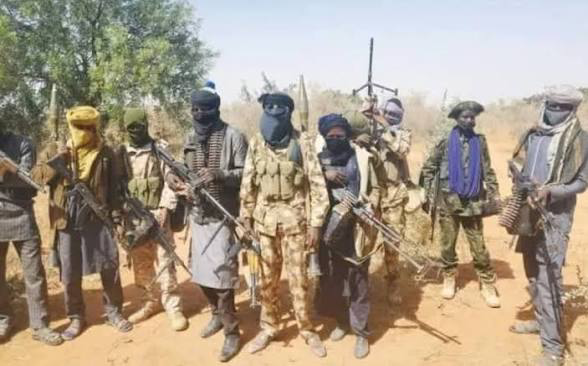
Bandits have reportedly entered the outskirts of Sabon Birni Local Government Area of Sokoto State, seizing a motorcycle and attempting to move further into the town before security forces responded to stop them. The incident, reported on Sunday, September 20, 2026, is the latest in a relentless pattern of attacks that have turned Sabon Birni into one of the most dangerous places to live in Nigeria's North-West.
The attackers, whose numbers were not immediately clear, seized the motorcycle and were attempting to advance deeper into the community when security forces moved in to intercept them. The situation remained fluid as of the time of reporting, with residents uncertain whether the bandits had been fully repelled or whether they had simply withdrawn to regroup. For the people of Sabon Birni, the incursion is a familiar and terrifying sequence: the sound of motorcycles, the arrival of armed men, the seizure of property, and the desperate hope that the security forces will arrive before the violence escalates.
Sabon Birni has been on the front line of banditry for years. The local government area, which shares a border with the Republic of Niger, has been repeatedly targeted by armed groups, including factions loyal to notorious bandit kingpin Bello Turji. In early August 2026, a series of attacks displaced 7,000 people across Sabon Birni and Shagari local government areas, according to the National Emergency Management Agency. At least 21 people were feared dead and 37 others abducted in one of the assaults on Tsamaye community, where bandits invaded from about 9 p.m. until the early hours of the following morning, killing residents, burning houses, and rustling livestock. Residents who attempted to flee across a river were caught in a tragedy when overloaded boats capsized, throwing about 25 people into the water. Seven were rescued, and at least 18 remained missing.
The scale of displacement has been staggering. A senior police officer, speaking on condition of anonymity, told reporters that most communities in Sabon Birni had been deserted because of the persistent attacks. "People can no longer remain in their homes out of fear," the officer said. Displaced residents have fled to Sokoto metropolis, believing it is safer than remaining in their villages. Many communities, including Borai, Tsululu, Garin Tudu, Bukka Hamsin, Turkawa, Rumbukawa, Dutsin Na Umma, Zangon Mu'azu, Arawa, Kuru, Zangon Mallam, Mai Hurde, Zugun, Gidan Na Birni, Mashaya and Marina, have been emptied of their inhabitants.
The Nigerian military has been engaged in sustained operations to counter the bandit threat in Sabon Birni. Troops of Operation FANSAN YAMMA have eliminated several notorious terrorist kingpins, including Dan Dari Biyar, and have recovered weapons, motorcycles, and rustled livestock in clearance operations. In September 2026, troops killed three insurgent kingpins in an ambush in Sabon Birni. The military has also arrested informants and logistics suppliers who enable bandit operations. Yet, despite these successes, the attacks continue. The bandits have demonstrated a remarkable ability to adapt, regroup, and launch fresh assaults, often exploiting the difficult terrain, porous borders, and limited security presence in the vast rural areas of Sokoto State.
The latest incursion into Sabon Birni's outskirts raises urgent questions about the effectiveness of the security architecture in the region. How did the bandits manage to enter the area, seize a motorcycle, and attempt to advance into the town without being detected or intercepted before they struck? The security forces responded, but the response appears to have been reactive rather than preventive. The pattern is familiar: bandits strike, security forces respond, bandits flee, and the cycle repeats. Residents are left to wonder whether the security forces have the capacity, intelligence, and will to prevent the next attack rather than simply reacting to it.
The humanitarian consequences of the persistent violence are profound. Thousands of families have been displaced, many of them living in camps or with relatives in Sokoto and other towns. Farmlands have been abandoned, livestock rustled, and livelihoods destroyed. Children have been orphaned, women widowed, and entire communities erased from the map. The psychological toll on survivors is immeasurable. The fear is constant, and the hope for peace grows dimmer with each passing day.
The Sokoto State Government has acknowledged the severity of the crisis. Governor Ahmed Aliyu has repeatedly called for stronger security measures, and the state has closed public schools in several areas due to security concerns. The Federal Government has deployed additional troops and resources to the region, but the results have been uneven. The military's operational successes are real, but they have not translated into lasting security for communities like Sabon Birni.
For the people of Sabon Birni, the latest incursion is not just a news item. It is a reminder that their lives remain hostage to armed groups that operate with alarming ease. The motorcycle seized on Sunday belongs to someone who may now be unable to farm, trade, or travel. The attempt to push deeper into the town could have ended in another mass abduction, another massacre, another displacement. The security forces that responded are heroes in the moment, but the question that lingers is whether their intervention was a lucky break or the product of a system that is finally working. The answer, for now, remains uncertain. What is certain is that Sabon Birni cannot continue like this. Its people deserve more than reactive security and temporary relief. They deserve lasting peace.
📩 Stone Reporters News | 🌍 stonereportersnews.com
✉️ info@stonereportersnews.com | 📘 Facebook: Stone Reporters News | 🐦 X (Twitter): @StoneReportNew | 📸 Instagram: @stonereportersnews
Add comment
Comments