

Reported by Ariajegbe Sylvia Esezobor
Leaders of thought from the Ilaje communities of Ondo State and the Itsekiri communities of Delta State have rejected the rerouting of the Lagos-Calabar Coastal Highway from the coastal corridor to inland communities, resolving to work together to oppose the realignment and demanding that the project retain its original coastal alignment.
The resolution was reached at a joint meeting of representatives of the two ethnic nationalities held in Lagos on Saturday, September 19, 2026. It was signed on behalf of the Itsekiri ethnic nationality by Barrister Austin Nonen Oboroegbeyi and Comrade Amaechi Omagbitse, and on behalf of the Ilaje ethnic nationality by Dr Benson Enikuomehin and Dr Adeolu Austin Efotan. The stakeholders called on the Itsekiri Nation to issue a statement rejecting what they described as the alteration of the original coastal alignment of the highway by the Federal Ministry of Works under the supervision of the Minister, Senator David Umahi.
The stakeholders insisted that the highway should retain its coastal character and pass through the coastal communities of Ondo and Delta states before continuing to other parts of the Niger Delta. They argued that the alleged rerouting to non-coastal communities was contrary to the vision of President Bola Tinubu for the coastal highway. “The Ilaje and Itsekiri have agreed to work together in making sure the Coastal Road maintains its Original Route, passing through the Coastal Communities,” the resolution stated.
The dispute centres on the alignment of the Ondo State section of the 700-kilometre highway. Lawyers and community stakeholders from Ondo State had earlier accused the Federal Ministry of Works of bypassing several Ilaje coastal communities and moving the route inland through parts of Edo State. The alleged alternative alignment runs from Oke-Upare in Ondo State through Ovia North and Ovia West Local Government Areas of Edo State to Gelegele before connecting Warri in Delta State. Community representatives have argued that several coastal settlements, including Ugbonla, Ilowo, Ilepete, Obe-Enikanoselu, Obe-Rewoye, Ikorigho, Jinrinwo and Awoye, have been excluded from the project.
Umahi has said engineering investigations revealed difficult soil conditions, including deep layers of peat extending more than 40 to 50 metres, which influenced the revised alignment. He explained that the decision to redesign the route followed detailed engineering reviews aimed at delivering the project in a more cost-effective manner and reducing construction risks. The minister said while the original design followed the coastline, the peat deposits made direct construction technically difficult and significantly more expensive.
The Ilaje and Itsekiri stakeholders rejected the ministry’s explanation, describing the reasons attributed to the rerouting as a “blatant falsehood.” They presented cost and distance comparisons to support their position, claiming that construction along the coastal route, including the Ilaje communities in Ondo and the Itsekiri axis in Delta, would cost between N4 billion and N7.5 billion per kilometre, compared with between N7.5 billion and N12 billion per kilometre for the alternative inland route. They also disputed the projected distance of the two alignments, saying the stretch from Olosunmeta to the Itsekiri axis in Delta State is between 100 and 110 kilometres, while the proposed alternative route would cover between 170 and 190 kilometres. They argued that the longer route would increase both the length and overall cost of the project.
The stakeholders further maintained that the alternative route presented difficult terrain and would require numerous bridges, while the coastal alignment would provide a more direct corridor through communities including Olosunmeta, Ararami, Abe-Oroyo, Ogogoro, Ugbonla, Apata, Awoye, Ugbege, Oghoye, Orere, Agogboro and Ode-Ugborodo. They called on the Federal Government to preserve what they described as the sanctity of the coastal highway as envisioned by the President.
As part of their resolutions, the Ilaje and Itsekiri leaders agreed to establish a tactical committee comprising representatives of both ethnic nationalities. The committee is expected to engage the Federal Government and other relevant authorities with a view to securing the original vision of the coastal highway. It will also be responsible for mobilising traditional institutions, youths, women, professionals and other stakeholders across the affected communities. The groups further resolved that legal action should be considered where necessary to pursue what they described as justice, equity and fairness. They also agreed to prepare an all-inclusive memorandum involving traditional rulers, religious leaders, market women, opinion leaders and other stakeholders across the Niger Delta communities of the Ilaje and Itsekiri nations. An implementation committee is also to be established to coordinate the execution of the resolutions.
The controversy over the Ondo alignment has intensified in recent weeks. In August 2026, the pan-Yoruba socio-political organisation Afenifere expressed concern over the current alignment of the highway, which it said bypassed about 100 kilometres of Ondo State’s coastline linking the state with the Itsekiri area of Delta State. The Afenifere Secretary-General, Chief Sola Ebiseni, petitioned President Tinubu over what he described as the inexplicable alteration and bypassing of the oil-producing communities in Ondo State. He proposed that the highway continue along the Ondo coastline to Oghoye in Warri before linking with the Edo section through an alternative alignment across Delta and onward to Bayelsa.
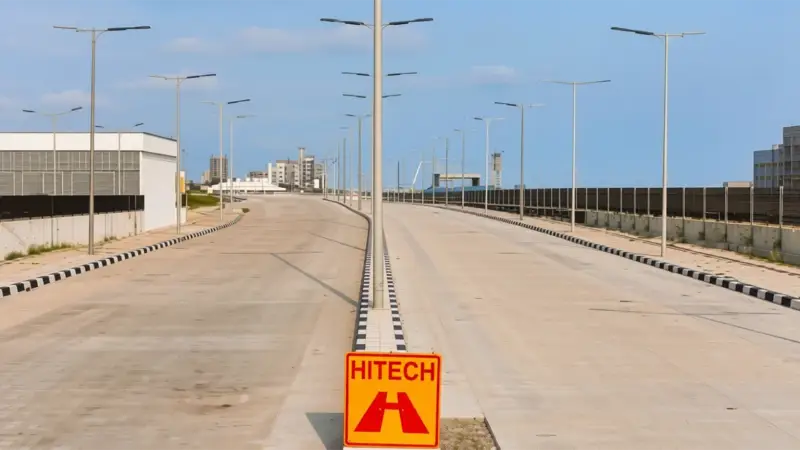
The Lagos-Calabar Coastal Highway is a flagship infrastructure project of the Tinubu administration, designed to connect Lagos to Calabar through the coastal states of the Niger Delta. The project has been proposed for many years but could not be implemented due to funding limitations and other challenges. Umahi has attributed the progress recorded so far to the support of President Tinubu, the National Assembly and the capacity of the construction company handling the project. He has assured that the highway would be completed by the President.
For the Ilaje and Itsekiri communities, the highway represents more than a transport corridor. The stakeholders have argued that a coastal alignment is essential for integrating their local economy into the national trade network, noting that the communities depend heavily on sea-based commerce and coastal connectivity. They contend that moving the route inland fails to address the specific geographical needs of the Ilaje people and would leave the communities further marginalised. As the tactical committee prepares to engage the Federal Government and the memorandum is drafted, the coming weeks will determine whether the stakeholders can persuade the Ministry of Works to restore the original alignment or whether the inland route becomes a permanent source of grievance in the Niger Delta. For now, the two ethnic nationalities have made their position clear: the coastal highway must follow the coast.
📩 Stone Reporters News | 🌍 stonereportersnews.com
✉️ info@stonereportersnews.com | 📘 Facebook: Stone Reporters News | 🐦 X (Twitter): @StoneReportNew | 📸 Instagram: @stonereportersnews
Add comment
Comments