

Reported by Ariajegbe Sylvia Esezobor
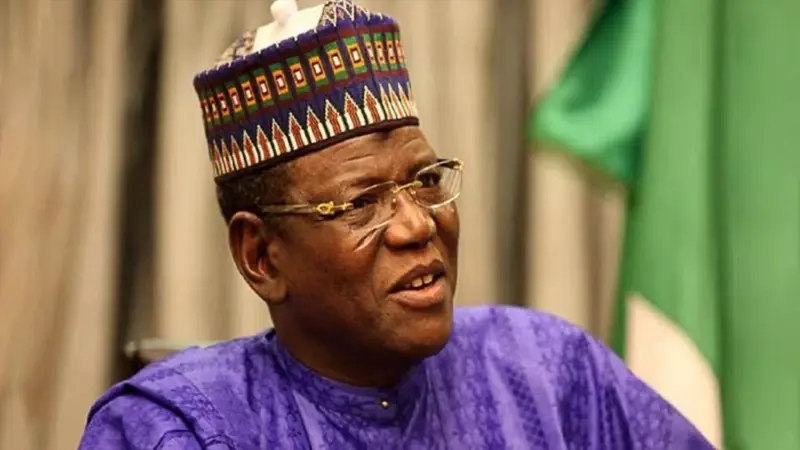
Former Jigawa State Governor and founding member of the Peoples Democratic Party, Sule Lamido, has raised a fresh alarm over Nigeria’s political trajectory, warning that the country may be losing its ideological direction twenty-seven years after the return to democracy, as a wave of defections and realignments reshapes the field ahead of the 2027 general elections.
In a blunt and emotionally charged statement posted on his verified Facebook page and titled “My Dilemma in Today’s Murky Political Environment!”, Lamido painted a troubling picture of a nation where old political loyalties have collapsed, alliances have become fluid, and former allies now occupy opposing camps with little ideological distinction. The elder statesman openly admitted he is struggling to understand what he called the political “chemistry and direction” of the moment as the build-up to the 2027 elections accelerates. “Whatever titles or status they hold were conferred on them by PDP,” Lamido declared, referring to the politicians now leading rival parties. “Whatever visibility they now command is all thanks to PDP”.
What makes Lamido’s warning particularly explosive is his assertion that nearly every major political bloc currently competing for power is populated by leaders whose careers were nurtured and elevated by the PDP. He listed Senate President Godswill Akpabio, Secretary to the Government of the Federation George Akume, former APC National Chairman Abdullahi Adamu, former Kano governor Abdullahi Umar Ganduje, Senator Aliyu Magatakarda Wamakko, and former Gombe governor Danjuma Goje as prominent figures now aligned with the ruling All Progressives Congress. In the opposition-aligned African Democratic Congress, he referenced former Vice President Atiku Abubakar, former Rivers governor Rotimi Amaechi, former Sokoto governor Aminu Waziri Tambuwal, and former Cross River governor Liyel Imoke. In the emerging Nigeria Democratic Congress, he pointed to Bayelsa political heavyweight Seriake Dickson, NNPP leader Rabiu Musa Kwankwaso, and Labour Party’s 2023 presidential candidate Peter Obi.
Lamido’s message reflects a deeper anxiety about the quality and character of the leaders positioning themselves for power in 2027. He questioned how the same politicians who once campaigned under the PDP umbrella and benefited from its structure could now champion different movements and ambitions outside the platform that brought them national prominence. The implication is clear: Nigeria’s political class is recycling itself, and the next generation of leaders may be indistinguishable from those who have presided over decades of underdevelopment, insecurity, and economic mismanagement.
The former governor’s warning comes amid a volatile political season. In July 2026, he urged five PDP governorship candidates from Gombe, Bauchi, Kano, and Yobe states to see themselves as “building blocks” for rebuilding Nigeria, stressing that the country’s future rests on committed and visionary younger leaders. “Nigeria needs a new foundation, and that foundation must be built by younger leaders who have commitment, passion and the courage to protect the country’s reputation,” Lamido said. “Whoever emerges victorious should govern in the interest of all Nigerians”. He also advised the candidates to conduct issue-based campaigns rather than attacking opponents personally, insisting that the 2027 electioneering should focus on addressing insecurity, economic hardship, corruption, and national unity.
In August 2026, Lamido escalated his call, urging young voters to use their numerical strength to vote out what he described as the “old generation of leaders” in the 2027 general elections. He said both Nigeria and Jigawa State need a new generation of leaders who are youthful, energetic, and committed to service. The appeal echoed his earlier critique of the political class, in which he accused political actors of abandoning their fundamental duty to protect lives and property in favour of pursuing political interests over genuine governance.
Lamido has also weighed in on the opposition coalition under the G-100 banner, dismissing it as a “family civil war” among politicians who share the same political background. In an interview with Saturday Tribune, he said he had no business commenting on the coalition because all its key figures had, at one time or another, been part of the APC or its political family. “They are from the same political background. They are from the same group, their own family. It is a civil war,” he said. “I am PDP. I have been PDP since 1999 and I remain PDP till date”. He also questioned whether the coalition could succeed in defeating President Bola Tinubu in 2027, suggesting that Nigerians should focus on the political parties, their backgrounds, and the political pedigree of the various actors.
The alarm from Lamido carries particular weight because of his standing as one of the founding members of the PDP and a former two-term governor who has remained in the party through its years of dominance and decline. His decision to speak out repeatedly — on defections, on the quality of leadership, and on the direction of the country — suggests a deepening concern that Nigeria’s democracy is drifting away from the principles that animated its restoration in 1999. His critique is not merely partisan. It is a warning from an elder statesman who believes that the country’s political class has lost its moral compass, and that the consequences will be borne by ordinary Nigerians who continue to wait for the dividends of democracy.
As the 2027 general elections approach, scheduled for January 16, Lamido’s message will resonate with many Nigerians who share his frustration. The political realignments he describes are not merely elite manoeuvres; they shape the choices available to voters and determine whether the next government will break from the failures of the past or repeat them. Whether his warnings will translate into a meaningful political movement, or remain the lament of a veteran watching his party and his country drift, remains to be seen. What is certain is that Lamido has placed the question of leadership at the centre of the 2027 conversation, and he has done so with a clarity that few of his contemporaries have matched.
📩 Stone Reporters News | 🌍 stonereportersnews.com
✉️ info@stonereportersnews.com | 📘 Facebook: Stone Reporters News | 🐦 X (Twitter): @StoneReportNew | 📸 Instagram: @stonereportersnews
Add comment
Comments