

Reported by: Ijeoma G | Edited by: Oravbiere Osayomore Promise.
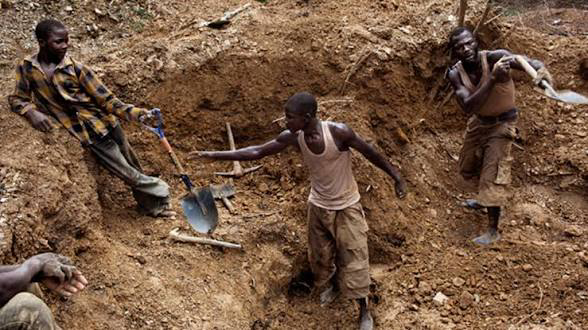
The words hang in the air like a curse. “We are ready to die here.” They were spoken not by soldiers marching into battle, nor by protesters staring down the barrels of rifles, but by miners—some of them teenagers, some women, all of them poor—digging for gold with shovels and picks at the M.I. Wushishi mining site in Minna, Niger State. Their declaration, reported by Vanguard and other news outlets on Sunday, September 20, 2026, came just days after 37 of their colleagues were found dead in the custody of the Nigeria Security and Civil Defence Corps. The site they returned to is the same place where their friends and neighbours were arrested. The pits they descended into are the same ones that swallowed their colleagues whole. And the risk they accepted is the same risk that has already claimed dozens of lives.
The miners did not return out of ignorance. They returned out of desperation. Salisu DanMallam, a man who has mined in the area for more than 15 years, told journalists that he stayed away for two days after the NSCDC raid. “If you don’t come out for a day or two you will feel it because there are no profitable jobs,” he said. For DanMallam and thousands like him, mining is not a choice. It is the only thing standing between their families and starvation. The gold beneath the earth of M.I. Wushishi is their only source of income. The alternative is not employment—it is hunger, homelessness, and hopelessness.
The events that led to the miners’ return began on September 15 and 16, 2026, when operatives of the NSCDC conducted operations around the Lt. Gen. Mohammed Inuwa Wushishi Estate in Minna. The corps said the operations were aimed at arresting suspected illegal miners. Scores of people were taken into custody. Then, in the early hours of Thursday, September 18, dozens of those detainees were found dead. The NSCDC’s initial explanation was a suspected disease outbreak. The suspended commandant of the Niger State command, Suberu Aniviye, said “scores” of the detained suspects were found dead following what he described as a disease outbreak. But survivors and family members told a different story.
A survivor, Dauda Shehu, told the Associated Press that 65 detainees had been packed into a poorly ventilated cell. “We were jampacked and there was no ventilation for us to breathe well,” he said. “All of a sudden, we realized that we could not breathe and we started scrambling to get fresh air.” The intelligence report shared with Agence France-Presse suggested the deaths were caused by overcrowding and poor ventilation. A local government official who saw the bodies said many of the victims were young men and that they had died of suffocation, not disease. The NSCDC has not publicly responded to these allegations.
The tragedy has triggered a political and humanitarian crisis. President Bola Tinubu ordered a full and transparent investigation. Governor Mohammed Umaru Bago declared a 24-hour curfew in Minna and three days of mourning. The Minister of Interior, Olubunmi Tunji-Ojo, announced the suspension of 21 NSCDC officers. On Sunday, September 20, the NSCDC announced the suspension of three more personnel and ordered three days of half-mast to mourn the deceased miners. The Commandant General, Ahmed Audi, said the suspensions were intended to signal a collective mourning and an “unwavering resolve to purge the system of bad eggs”. The Federal Government constituted a 10-member independent committee, chaired by a retired Deputy Director-General of the Department of State Services, Jonathan Kure, to investigate the deaths.
But for the miners who returned to the site on Saturday, the investigations and suspensions are happening in a world far removed from their daily reality. Their world is one of hand tools, muddy streams, and knee-deep pits. Their world is one where the risk of landslides is a constant companion. DanMallam said miners avoid digging deep because of the danger of the earth caving in. “Even if we dig, we don’t dig beyond our knee level,” he said. “We don’t dig much because of landslide”. His words reveal a community that has internalized danger as a condition of survival. They know the pits can kill them. They dig anyway.
The miners’ return is not a rejection of their colleagues’ deaths. It is a testament to the depth of their desperation. One miner, 26-year-old Buhari Rabiu, said he had spent two years at the site. He alleged that NSCDC officers had previously arrested and assaulted him during a raid, that he was hospitalized for his injuries, and that N120,000 was collected for his release. He also alleged that a friend was shot at close range by NSCDC personnel. These are the experiences that have shaped the miners’ relationship with the state. They do not see the NSCDC as a protector. They see it as a predator.
The roots of this crisis go deeper than a single raid or a single tragedy. Niger State is rich in minerals, particularly gold, and the scramble for those reserves has drawn thousands of artisanal miners to sites like M.I. Wushishi. Many of them are unlicensed. Many of them are unregulated. The government calls them illegal miners. They call themselves workers trying to survive. The line between the two is blurred by poverty, lack of opportunity, and a state that has failed to provide alternatives. The government’s response has been enforcement—raids, arrests, and prosecutions. The miners’ response has been to return, again and again, because enforcement does not create jobs. It does not feed families. It does not build schools or clinics or roads.
The miners’ declaration that they are “ready to die” at the site is a cry of despair. It is a statement of absolute desperation from people who have weighed their options and concluded that the risk of death in a mining pit is preferable to the certainty of death by hunger. The government can suspend officers and order investigations. It can declare curfews and mourn the dead. But until it addresses the economic conditions that force people into illegal mining in the first place, the cycle will continue. The miners will return. The pits will remain. And the next tragedy will be waiting.
For now, the M.I. Wushishi site is active again. No security personnel were seen during a visit on Saturday. The miners dug. They scooped soil into sacks and pans. They used the stream to separate the gold from the earth. The sun rose and set on another day of work. And somewhere in the background, the families of the 37 dead waited for answers that may never come.
📩 Stone Reporters News | 🌍 stonereportersnews.com
✉️ info@stonereportersnews.com | 📘 Facebook: Stone Reporters News | 🐦 X (Twitter): @StoneReportNew | 📸 Instagram: @stonereportersnews
Add comment
Comments