

Reported by: Ijeoma G | Edited by: Oravbiere Osayomore Promise.
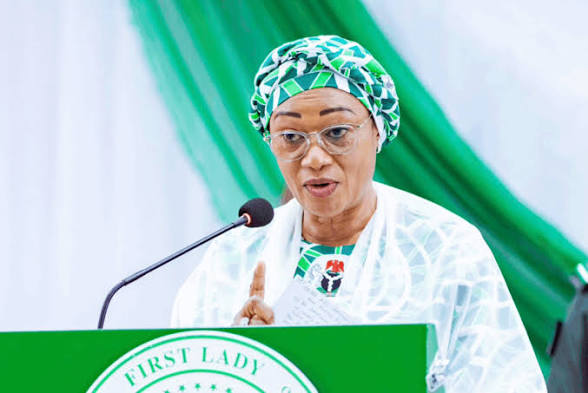
The First Lady of Nigeria, Senator Oluremi Tinubu, has issued a forceful and urgent appeal to Nigerians to reduce food waste and adopt sustainable practices, warning that irresponsible consumption habits are no longer tenable in a world grappling with climate change, conflict, and deepening food insecurity. In a message marking World Cleanup Day 2026, observed on Sunday, September 20, under the theme "From Clean Plates to Clean Cities," the First Lady framed responsible consumption as a civic duty, not a suggestion. "I encourage households, businesses, and communities to reduce food waste, dispose of refuse properly, and adopt more sustainable practices that protect our environment," she said.
The theme, she noted, highlights the direct link between what Nigerians put on their plates and the cleanliness of their cities. "Keeping our environment clean begins with reducing the waste we generate," she stated, stressing that environmental cleanliness is not only about clearing refuse from streets but about preventing the waste from being created in the first place. She called on Nigerians to become "more conscious and deliberate" in how they purchase, prepare, consume, and preserve food, positioning waste reduction as central to national development rather than a peripheral concern.
The First Lady's message carries particular weight against the backdrop of Nigeria's staggering food waste crisis. According to data from the European Union, Nigeria wastes an estimated 38 million tonnes of food annually, making it the highest food-wasting country in Africa. That translates to approximately 189 kilogrammes of food wasted per capita each year. Researchers estimate that nearly 50 percent of Nigeria's perishable food output is lost annually, amounting to about 35 million metric tons, with economic losses valued between N3.5 trillion and N5 trillion. The causes are systemic: inadequate cold storage facilities, poor post-harvest handling, weak supply chains, and a culture of excess that treats food waste as an unavoidable by-product of daily life.
World Cleanup Day, a global environmental campaign observed annually on September 20, mobilises individuals, communities, civil society organisations, businesses, and governments to take action against litter and waste pollution. The 2026 edition was particularly significant, as the global observance was hosted in China for the first time, in Shaoxing, under the same theme. The choice of theme, "From Clean Plates to Clean Cities," reflects a growing international consensus that food waste is one of the largest and most preventable waste streams, and that addressing it is essential to building sustainable urban environments.
The First Lady's intervention also comes amid a broader waste management emergency in Nigeria's largest city. In September 2026, Lagos State Governor Babajide Sanwo-Olu declared a "state of emergency" on waste management, citing mounting pressure on waste collection and the growing menace of indiscriminate dumping across the metropolis. Lagos now generates approximately 17,000 tonnes of waste daily, up from the 13,000-tonne estimate previously used by the government. The state announced the acquisition of 160 new compactor trucks and the expansion of dumpsites and receiving points as part of emergency measures. The crisis in Lagos is a microcosm of a national problem: Nigeria's waste management infrastructure is overwhelmed, and the culture of proper disposal remains weak.
Senator Tinubu has been a consistent advocate for environmental sustainability through her Renewed Hope Initiative. In July and August 2026, she launched the Green Nigeria Challenge, a N50 million prize designed to encourage states and communities to convert abandoned spaces and dumpsites into green parks and recreational centres. She expressed disappointment that no state government participated in the state category of the challenge, lamenting the lack of engagement despite the significant prize on offer. She also commended the Federal Capital Territory Administration, led by Minister Nyesom Wike, for transforming the Abuja City Gate into a recreational and environmental landmark, urging other states to emulate the initiative. Her message on World Cleanup Day 2026 builds on these efforts, reinforcing the message that environmental responsibility is a shared obligation that begins at home.
The First Lady's call also carries an intergenerational dimension. "Through our collective efforts, we can build cleaner, healthier communities for present and future generations," she said, emphasising that the choices Nigerians make today will determine the quality of life for those who come after them. That framing is significant in a country where environmental degradation, flooding, and pollution disproportionately affect the poor and vulnerable, and where the consequences of neglect are measured in lives lost, livelihoods destroyed, and futures foreclosed.
For Nigeria, the challenge is immense but not insurmountable. The solutions are known: invest in cold storage and supply chain infrastructure to reduce post-harvest losses; strengthen waste collection and recycling systems; enforce anti-dumping regulations; and, most importantly, change the culture of consumption that treats food as disposable. The First Lady's message on World Cleanup Day 2026 is a reminder that the journey to cleaner cities begins not with the bulldozer or the compactor truck, but with the choices made in every Nigerian home. Whether that message translates into action remains to be seen, but the scale of the crisis leaves no room for complacency.
📩 Stone Reporters News | 🌍 stonereportersnews.com
✉️ info@stonereportersnews.com | 📘 Facebook: Stone Reporters News | 🐦 X (Twitter): @StoneReportNew | 📸 Instagram: @stonereportersnews
Add comment
Comments