

Reported by Ariajegbe Sylvia Esezobor
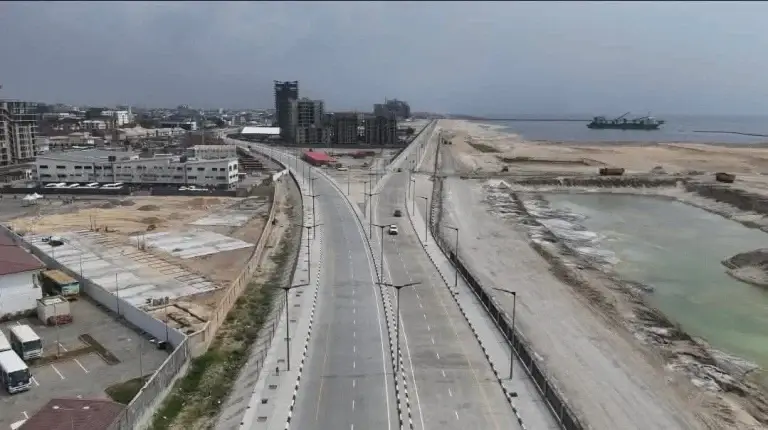
The Federal Government has issued a two-week ultimatum to motorists and other road users on the Lagos section of the Lagos-Calabar Coastal Highway, threatening to shut down the road if persistent safety violations, vandalism and illegal activities do not improve significantly.
The warning was issued on Monday by the Federal Controller of Works in Lagos State, Olufemi Dare, during an inspection tour of the highway. Dare said the directive came from the Minister of Works, David Umahi, following what he described as relentless safety breaches that have turned a construction zone into a corridor of death. "Within two weeks, if there's no improvement on all these issues, then we have no option than to come back and shutdown this road," Dare said. He stressed that the highway was still under construction and should ordinarily not have been opened to traffic before the completion of its bridges. He noted that the government had an alternative in the Lekki-Epe Expressway.
The Lagos section of the coastal highway comprises two sections spanning about 103 kilometres. Section One covers approximately 47 kilometres, running from the end of Ahodubule to Eleko Junction, while Section Two extends for about 56 kilometres from Eleko Junction to Odo-Ome at the Lagos-Ogun State boundary. Dare disclosed that there are 20 major bridges across the two sections in Lagos, with 10 in each section, several of which are still under construction. The prescribed speed limit on the road is 30 kilometres per hour because of the ongoing works, but motorists have continued to drive at speeds of up to 120 kilometres per hour. "People who come to coastal road and get to a speed of 120 kilometres per hour on the coastal road, and where constructions are going on, bridges, construction are going on," Dare said. "We have said your speed on the coastal road must not be more than 30 kilometres per hour." He stated that lives were being lost on the highway "almost every other day," warning that the government could no longer allow the situation to continue.
The Federal Controller outlined a litany of illegal activities that have compounded the safety crisis. Articulated vehicle operators have turned sections of the highway into temporary parking spaces, and illegal U-turns created by road users have become a recurring hazard. Dare announced a ban on commercial motorcycles, known as Okada, and tricycles, including Keke Marwa, on the highway, disclosing that more than 100 Okada riders were arrested in the previous week alone. Hawking, animal grazing and sleeping on the road's median have also been banned. Authorities have identified more than 10 illegal settlements along the highway, which Dare said were being used as bases for criminal activities. Shanties and other unauthorised structures will be removed, and anyone caught grazing livestock along the highway will face prosecution.
Vandalism of safety infrastructure has emerged as a particularly severe challenge. Dare said about five kilometres of ClearVu fencing and approximately 18 kilometres of concrete covers had been removed and carted away by vandals operating mainly at night. "They come in the night, they remove the ClearVu fence that was used to barricade the communities from the coastal highway," he said. The government is considering replacing the steel ClearVu fencing with concrete barriers in vulnerable areas because the existing fencing can be easily removed. "We have to change the strategy," Dare said. "In areas where we have block work today, we do not have any problem with them." He also disclosed that members of the coastal guard initiative had been attacked while trying to protect infrastructure, adding to the security concerns.
In response to the escalating crisis, the Federal Government has intensified collaboration with the Lagos State Police Command. Dare said the Commissioner of Police, Fatai Tijani, had held meetings with relevant authorities over the weekend and directed increased police deployment along the highway. "Beginning from this morning, we've started to see the improvement in deployment of police. And we are going to have more," he said. The Ministry of Works is also working on adding to the 40 already commissioned coastal guards, sourcing recruits from communities along the road with community leaders expected to nominate individuals responsible for monitoring their respective areas. Closed-circuit television cameras are also being installed to strengthen surveillance.
The two-week ultimatum has thrown the future of the highway into uncertainty. The Lagos-Calabar Coastal Highway is a flagship infrastructure project of the Tinubu administration, designed to connect Lagos to Calabar through the coastal states of the Niger Delta. The project has been proposed for many years but could not be implemented due to funding limitations and other challenges. The first section was opened to traffic ahead of schedule, but the decision to allow public use while construction continues has created a dangerous dynamic that the government is now struggling to control. The highway has also been the subject of political controversy, with opposition figures questioning its cost and priority. Former Vice President Atiku Abubakar and former Anambra Governor Peter Obi have both criticised the project, with Obi saying it may never be completed in the next 30 years.
For motorists who rely on the highway as a faster alternative to the congested Lekki-Epe Expressway, the threatened shutdown would represent a significant disruption. The Lekki-Epe Expressway, which the government has identified as the alternative route, is already notorious for traffic congestion, particularly during peak hours. If the coastal highway is closed, commuters and commercial operators in the Lekki-Epe corridor will be forced back onto a road that is already operating beyond its capacity. For the communities along the coastal highway, the potential closure would also affect access to markets, schools and healthcare facilities.
The government's ultimatum places the responsibility for the highway's fate squarely on road users. Dare's message was unambiguous: comply with the 30km per hour speed limit, stop parking articulated vehicles on the road, cease creating illegal U-turns, refrain from vandalising infrastructure, and vacate illegal settlements. If these conditions are met within two weeks, the highway will remain open. If not, the government says it will have no choice but to shut it down. The coming days will reveal whether the warning produces the behavioural change the government is demanding, or whether the Lagos section of the flagship coastal highway becomes another abandoned project in Nigeria's long history of infrastructure ambitions that failed to deliver.
📩 Stone Reporters News | 🌍 stonereportersnews.com
✉️ info@stonereportersnews.com | 📘 Facebook: Stone Reporters News | 🐦 X (Twitter): @StoneReportNew | 📸 Instagram: @stonereportersnews
Add comment
Comments