

Reported by: Ijeoma G | Edited by: Oravbiere Osayomore Promise.
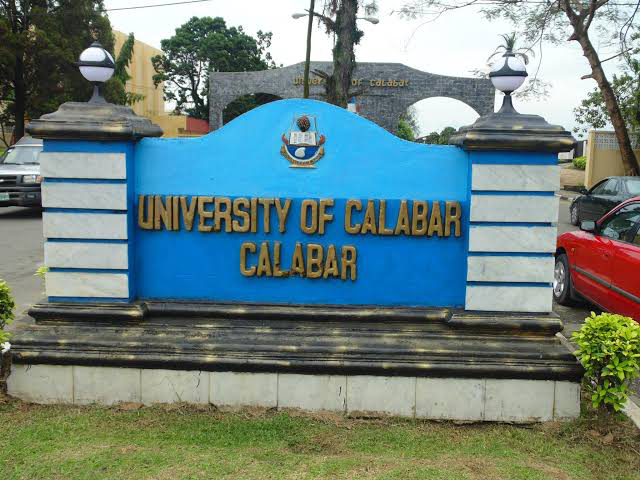
The University of Calabar has suspended nine students for the entire 2026/2027 academic session following their involvement in examination misconduct, in a decision that underscores the institution's hardening stance against academic fraud. The suspension was conveyed in letters signed by the Registrar, Dr Chukwuka Icha, and made available to journalists in Calabar on Monday, September 21, 2026. The university's Public Relations Unit confirmed that the action followed the approval of the Senate based on recommendations submitted by the institution's Examination Misconduct Committee.
The affected students, who are expected to resume their studies in the 2027/2028 academic session, come from five different departments across four faculties. Five of the students are from the Department of Theatre and Media Studies, Faculty of Arts. The remaining four are from the Department of Human Nutrition and Dietetics, Faculty of Basic Medical Sciences; the Department of Geology, Faculty of Physical Sciences; the Department of Pharmacology, Faculty of Basic Medical Sciences; and the Department of Sociology, Faculty of Social Sciences.
The university's Public Relations Unit, in a statement, said the suspension was conveyed to the affected students through letters signed by the Registrar. The action, the university said, followed the approval of the Senate based on recommendations by its Examination Misconduct Committee. "The affected students have been suspended for the 2026/2027 academic session and are expected to resume their studies in the 2027/2028 academic session," the statement read. The university directed the Acting Chief Security Officer, deans, heads of departments, and other relevant units to take note of the suspension and ensure full compliance with the directive.
The named students include Ogabi Christabel Emmanuel, Atim Sarah Mofam, Wasim Kumato, Onum Kingsley Evela, and Reuben David Chinonso, all of the Department of Theatre and Media Studies, Faculty of Arts. Others are Etuk Emediong Loius of the Department of Human Nutrition and Dietetics, Faculty of Basic Medical Sciences; Okoronkwo Eleazar Chidera of the Department of Geology, Faculty of Physical Sciences; Atamgba Victor Yeneochiakim of the Department of Pharmacology, Faculty of Basic Medical Sciences; and Thialo James Akobi of the Department of Sociology, Faculty of Social Sciences.
The decision is the latest in a series of disciplinary actions taken by the University of Calabar against students involved in examination malpractice and related offences. In July 2026, the institution suspended 19 students for one academic session over alleged examination malpractice, following recommendations by the Students' Disciplinary Committee. According to the university's Vice-Chancellor, Professor Florence Obi, the affected students were suspended for the 2025/2026 academic session and were expected to resume their studies in the 2026/2027 academic session. In March 2026, the university suspended nine students for two academic sessions following findings of exam malpractice and result forgery. Five of those students were apprehended with unauthorised materials during examinations, while four others were implicated in the forgery of results.
The recurring suspensions reflect a broader crisis of academic integrity in Nigerian universities, where examination malpractice has become a persistent challenge. The University of Calabar, like many other institutions, has adopted a zero-tolerance approach in an attempt to deter students from engaging in cheating, result forgery, and other forms of academic dishonesty. The university's Examination Misconduct Committee, which investigates and recommends sanctions, has been at the centre of this effort, working alongside the Senate to ensure that offenders are held accountable.
The suspension of nine students across five departments is a reminder that academic fraud is not confined to any single faculty or discipline. It cuts across the arts, basic medical sciences, physical sciences, and social sciences, affecting students at different stages of their academic journeys. The fact that some of the affected students have matriculation numbers beginning with 2019 and 2022 suggests that the misconduct occurred at various points in their studies, underscoring the need for sustained vigilance across all levels of the university system.
For the students involved, the suspension represents a significant setback. A full academic session lost means a delayed graduation, additional tuition costs, and the disruption of personal and professional plans. It is a heavy price to pay for a decision that, in many cases, may have been driven by pressure to succeed, fear of failure, or a lack of confidence in their own abilities. But the university's decision to enforce the rules is also a necessary one. If students who cheat are allowed to graduate alongside those who earn their degrees through hard work and integrity, the value of the institution's certificates is diminished, and the credibility of the entire educational system is undermined.
The university's directive that the Acting Chief Security Officer, deans, heads of departments, and other relevant units take note of the suspension and ensure full compliance is a signal that the institution is serious about enforcement. It is not enough to announce suspensions; they must be implemented consistently and visibly, so that the consequences of academic dishonesty are clear to all students. The University of Calabar has demonstrated its willingness to act. The challenge now is to sustain that momentum and to address the underlying factors that drive students to cheat in the first place. That will require not just discipline, but also investment in academic support services, mentorship, and a culture that rewards integrity rather than cutting corners. Until that balance is achieved, suspensions alone will not solve the problem.
📩 Stone Reporters News | 🌍 stonereportersnews.com
✉️ info@stonereportersnews.com | 📘 Facebook: Stone Reporters News | 🐦 X (Twitter): @StoneReportNew | 📸 Instagram: @stonereportersnews
Add comment
Comments