

Reported by: Oahimire Omone Precious | Edited by: Oravbiere Osayomore Promise.
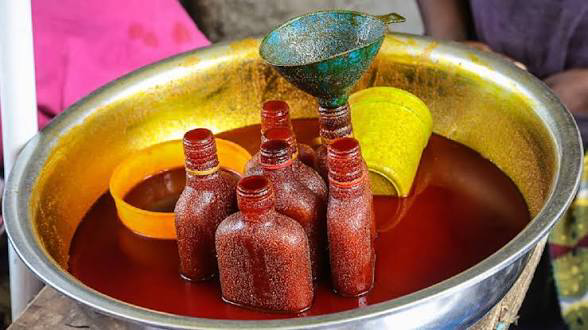
The Lagos State Consumer Protection Agency has issued a red alert over a rising wave of sophisticated adulterated palm oil flooding markets across the state, warning that the product contains potentially cancer-causing substances. The warning came on Monday, September 21, 2026, during the Lagos State Food Safety Conference and Exhibition, following a technical presentation by Dr. Nurah Oseni, a Senior Lecturer in the Department of Food Technology at Auchi Polytechnic.
The General Manager of LASCOPA, Afolabi Solebo, said the agency had intensified surveillance across markets and vowed that any suspect caught would be arrested and prosecuted under relevant laws. He urged Lagos residents to "shine their eyes" and report suspected adulterated palm oil through the agency's official channels. "We remain committed to protecting consumers from unsafe and substandard products," Solebo said.
Dr. Oseni, in her paper titled "Palm Oil Adulteration: Emerging Risks, Detection Strategies and Regulatory Control," identified several factors that make palm oil highly vulnerable to adulteration. These include its high trading volume, consumers' preference for deep-red colour as a sign of quality, price differentials, informal market practices, and the difficulty of detecting modern adulterants. She listed emerging risks to include the use of potentially carcinogenic Sudan and Azo dyes to enhance colour, blending with recovered or recycled oils including spent cooking oil, and multi-adulterant mixtures designed to evade basic quality checks.
The health implications of consuming such adulterated products are severe. Sudan and Azo dyes are industrial chemicals not approved for food use. They are known to be carcinogenic and can cause organ damage over time. The blending of palm oil with recycled cooking oil introduces additional contaminants, including free radicals and other harmful compounds that can compromise human health. The World Health Organization has repeatedly warned about the dangers of consuming industrial dyes and recycled oils, linking them to increased risks of cancer, liver damage, and other chronic conditions.
The warning has triggered alarm among consumers, particularly in a city where palm oil is a staple ingredient in countless households. The product is used in everything from soups and stews to the popular local delicacy, akara, and is a major source of dietary fat for millions of Nigerians. The fear is that the most vulnerable populations—low-income families who shop primarily in informal markets—are the least equipped to identify adulterated products and the most likely to suffer the consequences.
Dr. Oseni advised consumers to use simple visual checks as a first precaution. She noted that authentic palm oil may separate into layers, with the lower layer appearing orange to red-yellowish rather than uniformly deep red. However, she cautioned that visual inspection alone cannot confirm adulteration. She recommended a tiered detection system involving risk-based screening, rapid physicochemical and spectroscopic tests, and confirmatory laboratory analysis. She also proposed a five-step surveillance framework for Lagos: Risk Map, Sample, Screen, Confirm and Act, backed by an adulteration intelligence database. The framework should involve coordinated responsibilities among processors, traders, laboratories, regulators, researchers and consumers, she said.
The LASCOPA warning is the latest in a series of alerts issued by the agency in recent months. In May 2026, the agency raised the alarm over adulterated palm oil flooding markets and sealed a shop on Lagos Island. The recurring nature of the problem suggests that efforts to curb the trade have been insufficient. The use of sophisticated dyes and multi-adulterant mixtures designed to evade basic quality checks presents a significant challenge for regulators, who often lack the laboratory capacity to screen for all potential contaminants in the vast informal markets that dominate Lagos.
The economic incentives driving the adulteration trade are substantial. Adulterated palm oil is cheaper to produce than authentic oil because industrial dyes and recycled oils are far less expensive than genuine red palm oil. Traders can sell the adulterated product at prices comparable to authentic oil while enjoying higher profit margins. For consumers, the lower price is an irresistible draw, especially in a harsh economic climate where many households struggle to afford basic necessities. The result is a market flooded with dangerous products that look, smell, and even taste like the real thing.
The LASCOPA alert has been met with a mixture of concern and frustration from Lagos residents. Many are questioning why the government has not been able to shut down the producers of these adulterated products despite repeated warnings. The agency has said surveillance has been intensified, but the sheer scale of the informal market means that enforcement is difficult and resource-intensive. The public has been urged to report suspected cases through LASCOPA's official channels. The agency has not disclosed specific details about the mechanisms for reporting or the penalties for offenders, but Solebo assured that anyone caught would face the full weight of the law.
The Lagos State Government has also been urged to strengthen its collaboration with federal agencies such as the National Agency for Food and Drug Administration and Control and the Standards Organisation of Nigeria to tackle the problem more effectively. The battle against adulterated palm oil cannot be won by any single agency. It requires a coordinated approach that combines enforcement, public awareness, laboratory testing, and market surveillance. For now, the LASCOPA alert serves as a stark reminder that the food on Nigerian tables is not always what it seems. The warning is a wake-up call for consumers to be vigilant and for authorities to redouble their efforts to protect public health.
For the people of Lagos, the message from LASCOPA is clear: shine your eyes. The palm oil you buy in the market may look red and fresh, but it could be laced with cancer-causing chemicals. The only way to be sure is to buy from trusted sources, conduct simple visual checks, and report any suspicious products to the authorities. The health of millions depends on it.
📩 Stone Reporters News | 🌍 stonereportersnews.com
✉️ info@stonereportersnews.com | 📘 Facebook: Stone Reporters News | 🐦 X (Twitter): @StoneReportNew | 📸 Instagram: @stonereportersnews
Add comment
Comments