

Reported by Ariajegbe Sylvia Esezobor
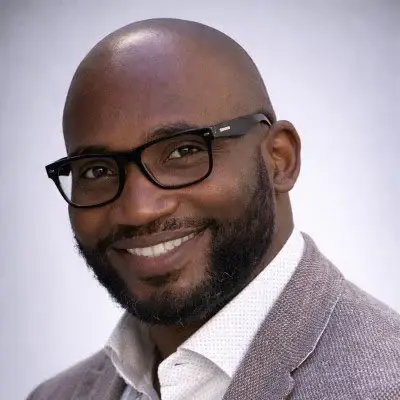
When Professor Obi Ekwenna-Davis sat down at a robotic surgical console in Mowe, Ogun State, on Saturday, September 19, 2026, the patient he was about to operate on was not in the room. The patient was in Abuja, approximately 500 kilometres away, with a kidney affected by a cancerous tumour that needed to be removed. What followed was a three-hour procedure that made history as Nigeria's first tele-robotic surgery and the first telesurgery in West Africa, a feat that could reshape how specialist healthcare is delivered across a country where access to advanced surgical expertise is heavily concentrated in a few urban centres.
Ekwenna-Davis is a Professor of Urology and Transplant Surgery and a robotic surgeon, but his journey to this milestone began far from the operating theatre. He is the son of Nigerian immigrants who came to the United States with hope and almost nothing else, and against considerable odds, he built a career in academic medicine that has been marked by a series of firsts. He obtained his medical degree from the University of Illinois College of Medicine after earning a bachelor's degree in Biochemistry and Molecular Biology from the University of California, Berkeley. His professional training includes an abdominal transplantation fellowship at the University of Miami, where he also completed his urology residency. He is a Fellow of the American College of Surgeons and a Diplomate of the American Board of Urology, credentials that place him among the most qualified urological surgeons of Nigerian descent working anywhere in the world.
Today, Ekwenna-Davis serves as a Professor and Vice-Chair in the Department of Urology at the University of Toledo in Ohio, United States, where he also serves as Associate Director of the Urology Residency Programme. His career in academic medicine has been marked by a steady progression from Assistant Professor to Associate Professor and then to his current leadership role. But his connection to Nigeria has remained constant. In 2017, he led a team of doctors at the Federal Medical Centre in Umuahia, Abia State, to perform two successful kidney transplants, an intervention that demonstrated his commitment to transferring his expertise back home. He is also a co-founder of RoboMed Global, a US-based robotic surgery company that has been at the forefront of introducing advanced surgical technology to Nigeria, and the Managing Director of Robo Medics.
The tele-robotic procedure he led on September 19 was a robot-assisted right radical nephrectomy, an operation in which a kidney affected by a cancerous tumour is removed. The patient remained at Nisa Premier Hospital in Abuja, while Ekwenna-Davis operated from a Toumai robotic surgical console at Redeemer's Health Village in Mowe, Ogun State. The surgical robot at the Abuja hospital was connected to the robotic control system at RHV through a high-speed internet connection, with Starlink providing the primary connectivity and MTN broadband serving as a backup. The operation lasted approximately three hours, with brief pauses to ensure that the equipment and communication systems were functioning properly. Ekwenna-Davis's movements at the console were transmitted in real time to the robotic system in Abuja, allowing him to control the equipment inside the patient as if the patient were sitting next to him.
Following the surgery, Ekwenna-Davis said the patient was in good condition, had lost minimal blood, and was expected to be discharged within 24 hours. "We were able to operate on a patient in Abuja, 500 kilometres away. We were able to operate on a patient with a kidney tumour, a cancer tumour. And so that was successful," he said. He added that the technology could expand access to specialist expertise beyond the location of the surgeon. "It means access to experts from within and outside the country. Telesurgery can be done from any part of the world with precision, with excellent results". His message to Nigerians and to the global medical community was simple and profound: "Distance should never decide who receives safe surgery. This is what safe and trusted surgery looks like".
The Toumai robotic surgical system used for the procedure was approved by the National Agency for Food and Drug Administration and Control in December 2025, marking the first robotic surgical platform approval in West Africa. The system, manufactured by Shanghai-based MicroPort MedBot, uses three-dimensional visualisation and multiple robotic arms to assist surgeons during procedures. Its availability in Nigeria is itself a significant development, as it means that Nigerian hospitals can now offer robotic-assisted surgery without patients having to travel abroad. The tele-robotic procedure extended that capability further by demonstrating that the surgeon does not even need to be in the same hospital, or the same state, as the patient.
The implications for Nigeria's healthcare system are substantial. Specialised surgical expertise is heavily concentrated in Lagos, Abuja and a few other urban centres, forcing patients in remote areas to travel long distances or abroad to access advanced care. Tele-robotic surgery offers a potential solution by allowing specialists to operate on patients regardless of their physical location. It could also create opportunities for Nigerian medical professionals in the diaspora to contribute their expertise to patients back home without leaving their countries of residence. Dr Adedamola Dada, Chief Executive Officer of Redeemer's Health Village, described the procedure as the first telesurgery in West Africa and said the initiative was designed to demonstrate how modern healthcare technology could improve access to specialised treatment in Nigeria and help reduce medical tourism.
The milestone is not without challenges. Dada acknowledged that connectivity remained one of the constraints that would have to be addressed as telesurgery expands, along with weather conditions, the quality of equipment and the availability of trained medical personnel. He also urged the Federal Government to support the training of Nigerian professionals in robotic surgery, noting that equipment was not the primary challenge but manpower. To that end, Redeemer's Health Village is developing a robotic academy to train surgeons, operating theatre nurses, biomedical engineers and other specialists needed to sustain robotic surgery in Nigeria, with plans to train at least 150 surgeons within the next two years.
For Ekwenna-Davis, the September 19 procedure represents the culmination of years of work to bring advanced surgical technology to Nigeria. His career has been defined by a commitment to bridging the gap between the expertise he has developed in the United States and the needs of patients in his parents' homeland. The tele-robotic surgery is the latest and most dramatic expression of that commitment, and it has placed Nigeria on the map of countries where remote robotic surgery is not merely a theoretical possibility but a demonstrated reality. As the medical community looks to build on this achievement, Ekwenna-Davis's work stands as proof that geography need not be a barrier to world-class surgical care.
📩 Stone Reporters News | 🌍 stonereportersnews.com
✉️ info@stonereportersnews.com | 📘 Facebook: Stone Reporters News | 🐦 X (Twitter): @StoneReportNew | 📸 Instagram: @stonereportersnews
Add comment
Comments