

Reported by: Ijeoma G | Edited by: Oravbiere Osayomore Promise.
Three armed men stormed a house party in a township south of Durban and opened fire on the revellers, killing at least 11 people, including a pregnant woman, and wounding three others in one of the deadliest mass shootings to hit South Africa this year. The attack unfolded on Tuesday night in the Ziko area of KwaMakhutha township, about 30 kilometres south of Durban on the country's east coast, when the assailants entered the premises and began shooting indiscriminately at the people gathered inside.
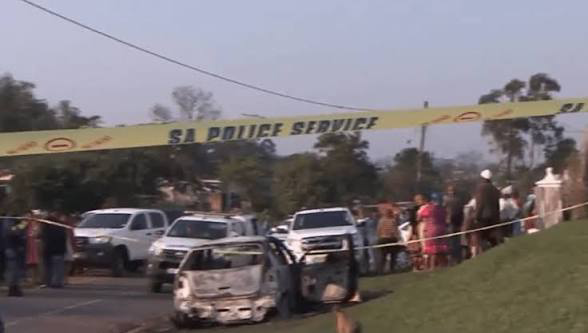
According to police, 13 men and one woman, who was believed to be pregnant, were attending the party inside the house when the gunmen arrived and opened fire. Ten victims died at the scene, while four others were rushed to hospital, where one of the wounded later succumbed to gunshot injuries. The woman was among those killed. The attackers also set fire to a vehicle belonging to one of the victims before fleeing the scene, with footage from local television showing the burnt-out wreckage of the car.
KwaZulu-Natal Premier Thamsanqa Ntuli confirmed the attack, saying the victims were gathered at the house shortly before 11:00 p.m. local time when the armed assailants entered and began shooting. "The incident has left the community in profound shock and grief," Ntuli said. Police have launched a manhunt for the three suspects, and no arrests had been made as of Wednesday morning. The motive for the shooting was not immediately clear, but the police said they could not rule out a feud between rival groupings. "Although the motive of the shooting cannot be confirmed yet, feud between rival groupings cannot be ruled out," police said in a statement. Investigators also disclosed that some of the people at the house were known to them in connection with illegal activities, but declined to provide further details, saying doing so could compromise ongoing investigations.
The massacre is the latest in a grim series of mass shootings that have scarred South African communities in recent years. In June 2026, multiple suspects killed 12 people in a poor neighbourhood in Johannesburg. Last year, nine people were killed in a mass shooting at a tavern in the same city. The frequency of these attacks has heightened fears that the country is losing its grip on violent crime, even as President Cyril Ramaphosa has described organised crime as "the most immediate threat to our democracy, our society and our economic development."
South Africa has one of the world's highest murder rates, with police data showing a rate equivalent to more than 60 deaths a day. The violence is driven by a complex web of factors, including rivalry among criminal gangs engaged in turf wars, drug trafficking, and illegal mining. These conflicts often play out in poor townships where residents are caught in the crossfire and where the police presence is stretched thin. The KwaMakhutha attack fits a pattern that has become distressingly familiar: a gathering of people in a private home, a sudden eruption of gunfire, and a community left to bury its dead while the perpetrators disappear into the night.
The attack has sent shockwaves through the KwaMakhutha community, which is still coming to terms with the scale of the loss. Families who gathered for a celebration are now planning funerals. The wounded are receiving treatment in hospital, and the police are appealing for information that could lead to the arrest of the suspects. Premier Ntuli expressed his condolences to the families of the victims and called for calm as investigations continue. The provincial government has said it will work closely with law enforcement agencies to ensure that those responsible are brought to justice.
For a country that has grown accustomed to reporting on violent crime, the KwaMakhutha massacre is a stark reminder of the human cost of South Africa's gun violence epidemic. Eleven people went to a party and never came home. A pregnant woman lost her life before she could bring a child into the world. Three others are fighting for their lives in hospital. And the community of KwaMakhutha is left to grapple with the trauma of a night that transformed a joyful gathering into a scene of carnage. The manhunt continues, and the police have urged anyone with information about the suspects to come forward. As the sun rises over KwaMakhutha, the question on everyone's mind is whether this massacre will finally prompt the decisive action needed to stem the tide of violence, or whether it will become yet another statistic in a country where such attacks have become tragically routine.
📩 Stone Reporters News | 🌍 stonereportersnews.com
✉️ info@stonereportersnews.com | 📘 Facebook: Stone Reporters News | 🐦 X (Twitter): @StoneReportNew | 📸 Instagram: @stonereportersnews
Add comment
Comments