

Reported by: Ijeoma G | Edited by: Oravbiere Osayomore Promise.
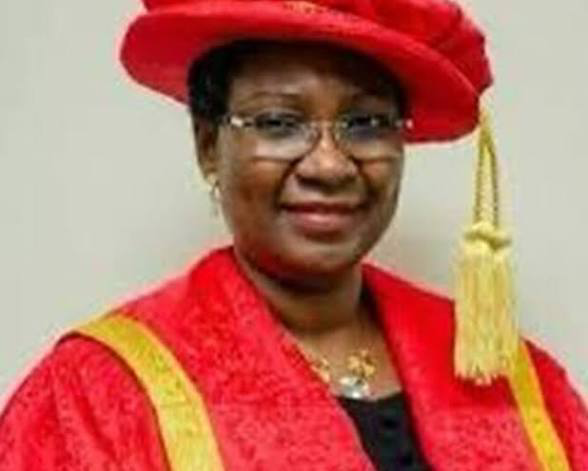
Former Vice Chancellor of Lagos State University, Professor Ibiyemi Olatunji-Bello, has said public universities in Nigeria may need to charge at least N1 million per student annually to achieve financial sustainability. Olatunji-Bello, whose five-year tenure ended on September 19, 2026, made the comment in an exclusive interview with PUNCH, identifying inadequate funding as one of the major challenges facing public universities.
According to the former vice chancellor, LASU currently spends more than N1 billion monthly on salaries, while its annual internally generated revenue stands at about N13 billion. "Our payroll right now is over N1 billion per month. All the N13 billion IGR does not cover our salaries," she said. She argued that universities seeking financial independence would have to significantly increase their tuition fees. "So, universities that want to attain self-sustainability will have to increase school fees into millions," she said.
Olatunji-Bello compared public university fees with what some secondary schools charge, noting that some secondary schools already charge more than N1 million per term, while some public universities still collect around N100,000 annually. "So, any public university that wants to sustain financial independence will have to charge school fees of not less than N1 million per student," she said. She stressed that maintaining quality education requires substantial funding, urging parents to prioritise the education of their children. "Good quality education needs money," she said.
During her tenure, Olatunji-Bello said LASU increased its internally generated revenue from about N3 billion to N13 billion through new programmes, digital initiatives and other revenue-generating efforts. She identified a 2024 Students' Union protest over a N10,000 payment for computer-based testing as the lowest point of her administration. However, she described LASU's emergence as the most subscribed university among UTME candidates in 2025 as one of the major highlights of her tenure. "When JAMB declared that we were the most subscribed university by UTME candidates in Nigeria; that was great for me," she said. "And this year, 2026, we maintained that number one position. And not only did we maintain it, but we were even awarded N25 million for maintaining compliance with JAMB regulations."
The remark comes amid growing public concerns over chronic underfunding plaguing public universities in the country. On September 9, 2026, Minister of Education Tunji Alausa urged vice-chancellors of public universities to diversify their sources of funding, saying government resources alone cannot sustain tertiary institutions. Alausa noted that public institutions are sitting on enormous opportunities through their alumni, research grants, philanthropy, endowments and private-sector partnerships.
The proposal has sparked debate over the accessibility of higher education in Nigeria, with critics arguing that a N1 million annual tuition fee would place university education beyond the reach of average Nigerian families. The National Association of Nigerian Students has previously opposed tuition increases, and the Academic Staff Union of Universities has consistently argued that the government must adequately fund public universities rather than shifting the burden to students and their parents. However, Olatunji-Bello's argument reflects a growing consensus among university administrators that the current funding model is unsustainable. For now, the debate over the future of public university funding in Nigeria remains unresolved.
📩 Stone Reporters News | 🌍 stonereportersnews.com
✉️ info@stonereportersnews.com | 📘 Facebook: Stone Reporters News | 🐦 X (Twitter): @StoneReportNew | 📸 Instagram: @stonereportersnews
Add comment
Comments