

Reported by Ariajegbe Sylvia Esezobor
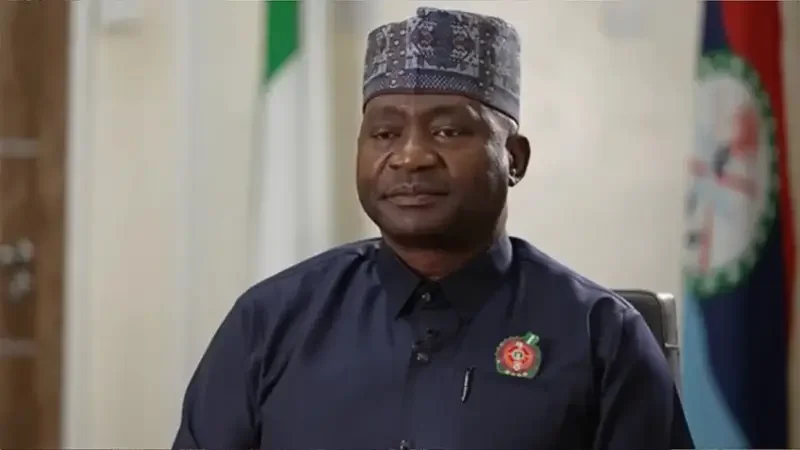
Nigeria’s Minister of Defence, General Christopher Musa (retd.), has proposed that every Nigerian citizen should undergo military training, arguing that such an experience would build discipline, endurance, and a deeper appreciation for the sacrifices made by members of the Armed Forces in protecting the country. Musa made the proposal while featuring on the African Leadership Podcast hosted by Ken Giami, released on Monday. The former Chief of Defence Staff said military training exposes individuals to hunger, exhaustion, physical strain, and prolonged periods without sleep, experiences that he believes would give Nigerians a different understanding of life and the responsibilities of national security. “For me, I think it’s the best. If I have my way, every Nigerian should be able to go through military training. I can tell you for free,” Musa said. “It will give you a different perspective about life. You will now understand what it means to stay hungry, what it means to walk in days without sleep. It will show you what endurance means, that when you walk kilometres and you are tired, but you still need to keep up going. You have not eaten, you have not taken well, because of the nature of the thing. And because you are doing it to protect.” The minister, who was commissioned into the Nigerian Army in 1991 after joining the Nigerian Defence Academy as a cadet in 1986, drew on his own experience to illustrate the demands of military service. He revealed that for the first seventeen years of his marriage, he never spent thirty consecutive days with his family. “So you can imagine how 17 years of my marriage, never spent 30 straight days together. So you have kids that are growing up, and those are formative years for your children, because you need to have that. Once they get to school, start going to universities, they are gone,” he said. “So these are the sacrifices that people make. So when you hear people saying, look, what are they doing? It’s really demoralizing. And if you demoralize your troops, they can’t give you their best.” Musa likened the sacrifices of military personnel to the biblical principle of giving one’s life for another, stressing that soldiers operate in difficult environments and conditions in the course of their duties. “And that’s exactly what the military men are doing, putting their lives at stake for their country to move around,” he said. He appealed to Nigerians to understand that soldiers are members of families who leave their loved ones behind while serving the country. “Everybody wants peace, and that is important, so we want them to understand soldiers are fathers, brothers and sisters of people. They’ve families they’ve left behind, staying in the weather, rain, dust, night or day, staying there to ensure the country is secured,” he said. Musa also expressed concern over instances where members of the public insult military personnel or question the need for continued operations, stressing that soldiers also desire peace and are working towards securing the country. The minister linked increased infiltration across Nigeria’s borders to the withdrawal of Niger, Burkina Faso, and Mali from the Economic Community of West African States. He said Nigeria was responding by strengthening bilateral relationships with neighbouring countries, including Cameroon, particularly to secure the southern part of the country. Musa also emphasised that winning the fight against insecurity required both military and non-military approaches, noting that kinetic operations alone could not resolve the complex security challenges facing the nation. The proposal for universal military training is not entirely new to Nigeria’s policy discourse. The National Youth Service Corps, established in 1973, already requires graduates of tertiary institutions to undergo a compulsory one-year service programme that includes paramilitary training. However, Musa’s suggestion goes significantly further by proposing that every Nigerian, regardless of educational background or age, should experience military training at some point. The proposal raises practical questions about feasibility, funding, and implementation, particularly in a country of over 220 million people with a military that currently numbers in the hundreds of thousands. It also raises questions about whether such training would be voluntary or mandatory, how long it would last, and whether it would be integrated into existing national service frameworks or established as a standalone programme. The minister did not provide specifics on how such a scheme would be designed or funded. Reactions to the proposal have been mixed. Some security analysts have described the idea as a potential tool for fostering national unity and civic responsibility, arguing that shared military training could help bridge ethnic and religious divides while instilling discipline in a population grappling with high youth unemployment and social unrest. Others have raised concerns about the cost, the capacity of the military to absorb millions of trainees, and the risk of politicisation. Critics have also questioned whether mandatory military training is the most effective use of resources in a country where the military is already stretched across multiple internal security operations, from the fight against Boko Haram in the North-East to banditry in the North-West and separatist agitation in the South-East. Musa’s comments come amid ongoing efforts by the Federal Government to strengthen Nigeria’s security architecture and improve public understanding of the role of the armed forces in combating insecurity. The military has faced criticism over civilian casualties, human rights abuses, and the slow pace of progress against armed groups in various parts of the country. In that context, the minister’s appeal for Nigerians to better appreciate the sacrifices of soldiers can be seen as an attempt to rebuild public trust and counter narratives that undermine military morale. Whether the proposal for universal military training gains political traction remains to be seen. What is clear is that Musa has placed a provocative idea on the national agenda, one that raises fundamental questions about citizenship, service, and the relationship between Nigeria’s military and the society it is sworn to protect. 📩 Stone Reporters News | 🌍 stonereportersnews.com ✉️ info@stonereportersnews.com | 📘 Facebook: Stone Reporters News | 🐦 X (Twitter): @StoneReportNew | 📸 Instagram: @stonereportersnews
Add comment
Comments