

Reported by Ariajegbe Sylvia Esezobor
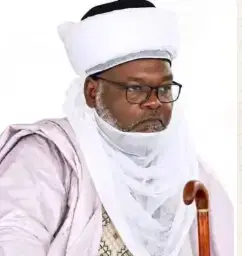
The ancient Gwandu Emirate in Kebbi State has been thrown into mourning following the death of one of its most senior traditional titleholders, Alhaji Muhammadu Rasheed, the Sarkin Gabas of Gwandu and District Head of Gwandu, who passed away on Wednesday, September 23, 2026, after a brief illness. He was a revered figure in the emirate, a custodian of its customs and traditions, and a bridge between the traditional institution and the modern machinery of governance in one of Nigeria's most historically significant kingdoms.
The death was confirmed in separate statements by the Chief Press Secretary to the Kebbi State Governor, Ahmed Idris, and the Special Adviser to the Governor on Communication and Strategy, Abdullahi Idris. According to the officials, the late traditional ruler died on Wednesday, and his funeral prayer was scheduled to be held at the Palace of the Emir of Gwandu in Birnin Kebbi at 3 p.m. the same day. "His Royal Highness passed away today, and the burial prayer will be performed at the Emir of Gwandu's Palace, Birnin Kebbi, by 3pm. May his soul rest in peace," Abdullahi Idris said. The confirmation brought to an end hours of uncertainty and conflicting reports about the identity and condition of the deceased, with an earlier report by Vanguard newspaper having identified the Sarkin Gabas as Muhammad Zayyanu Bello, a discrepancy that was resolved by the state government's official confirmation.
The late Sarkin Gabas was a man of considerable pedigree within the Gwandu traditional hierarchy. He succeeded his father, the late Alhaji Muhammadu Bashar Mai-Wurno, who was the eldest son of the late Emir of Gwandu, Alhaji Haruna Rasheed. That lineage placed him at the heart of one of northern Nigeria's most storied emirates, a kingdom with deep historical roots in the Sokoto Caliphate and a legacy of Islamic scholarship, governance and trade that stretches back centuries. As Sarkin Gabas, a title traditionally associated with the eastern gate of the emirate and one of the most senior positions in the Gwandu court, he was both a political adviser to the Emir and a direct administrator of the Gwandu District, overseeing the affairs of thousands of residents across the local government area.
The reaction from the Kebbi State Government was swift and marked by a sense of profound loss. Ahmed Idris described the demise of the district head as a great loss to Kebbi State and its traditional institution, saying it had left a vacuum in community leadership. He disclosed that Governor Nasir Idris, who was in the United States attending the 81st United Nations General Assembly alongside Vice President Kashim Shettima, was deeply shocked by the news and extended his heartfelt condolences to the family of the deceased, the people of Gwandu and the entire state. The governor's aide prayed for Allah to forgive the deceased's shortcomings and grant him Aljannatul Firdaus, and he asked God to grant the family, the Gwandu community and all of Kebbi State the fortitude to bear the loss. The sentiment was echoed across the state's political and traditional landscape, where the late Sarkin Gabas was widely regarded as a stabilising figure and a bridge between the emirate and the government.
The death of the Sarkin Gabas comes at a delicate moment for the Gwandu Emirate and the wider Kebbi State traditional institution. In November 2025, the late traditional ruler had played a visible public role when the Kebbi State Government flagged off the disbursement of N750 million in compensation to property owners affected by the construction of the N4 billion Gwandu Township Road. Speaking at his palace during the event, he had applauded the government for remembering Gwandu and fulfilling its campaign promises, demonstrating the active role he played in fostering cooperation between the traditional institution and the state administration. His presence at that ceremony, and his willingness to mobilise community support for government projects, illustrated the kind of constructive traditional leadership that the emirate now mourns.
The late Sarkin Gabas is survived by his wife and children. His son, Nasiru Zayyanu, described his father's death as painful and irreplaceable, saying the loss was felt across the Gwandu Emirate and Kebbi State. The funeral prayer was scheduled for 3 p.m. on Wednesday at the Emir of Gwandu's Palace in Birnin Kebbi, where family members, traditional titleholders, government officials, community leaders and ordinary residents were expected to gather to pay their final respects. It was to be a solemn occasion, a moment for the emirate to honour a man who had served his people with distinction and to bid farewell to a figure whose life spanned the transition from colonial-era traditional administration to the complexities of modern Nigerian governance.
The passing of the Sarkin Gabas is a reminder of the enduring significance of Nigeria's traditional institutions, which continue to serve as custodians of culture, mediators of community disputes and vital partners in governance at the grassroots level. In Gwandu, as in many parts of northern Nigeria, the district head is not merely a ceremonial figure but a working administrator who oversees local affairs, liaises with government agencies and provides counsel to the emir. The death of Alhaji Muhammadu Rasheed leaves a gap that will be difficult to fill, and the process of selecting a successor will be watched closely by the people of Gwandu and the wider Kebbi State. For now, the emirate mourns, and the state government, despite the governor's absence abroad, has made clear that the loss is shared by all. The Sarkin Gabas is gone, but the legacy of service and tradition he embodied will remain part of the Gwandu story for generations to come.
📩 Stone Reporters News | 🌍 stonereportersnews.com
✉️ info@stonereportersnews.com | 📘 Facebook: Stone Reporters News | 🐦 X (Twitter): @StoneReportNew | 📸 Instagram: @stonereportersnews
Add comment
Comments