

Reported by: Oahimire Omone Precious | Edited by: Oravbiere Osayomore Promise.
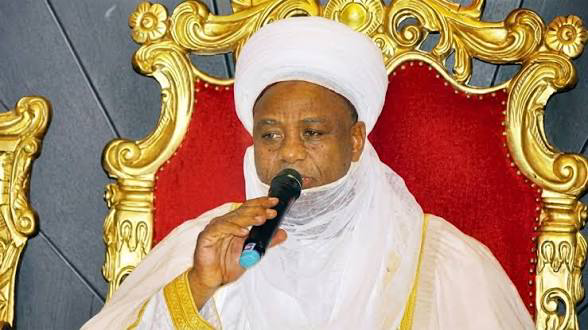
The Sultan of Sokoto, Alhaji Muhammadu Sa’ad Abubakar III, has issued a firm and unambiguous directive to religious leaders across Nigeria: stop using your positions to shield individuals accused of corruption, and allow law enforcement agencies to do their work without interference. The Sultan made the declaration on Wednesday, September 23, 2026, at the 2026 Second Council Meeting of the Nigeria Inter-Religious Council held in Abuja under the theme, “Shared Sacred Flourishing in Nigeria”.
The Sultan’s message was direct and left no room for ambiguity. “Whoever is involved, even our brothers, our sisters, our fathers, our friends, those involved, should face the law,” he declared. He was particularly blunt about religious leaders who might seek to protect alleged offenders based on their status in the church or mosque. “Don’t tell me he is the pastor of ‘so so’ and ‘so so’ church, he is the chief monk of ‘so so’ and ‘so so’ National Mosque. We don’t want to hear that. Let the EFCC Chairman go after that person, whoever it is, and deal with him according to the law,” the Sultan said.
The Sultan’s intervention comes at a time when Nigeria’s anti-corruption efforts have increasingly run into resistance from powerful interests, including religious institutions. The Economic and Financial Crimes Commission has in recent years prosecuted pastors, imams, and other religious figures over allegations of financial crimes, and the Sultan’s call for religious leaders to stop providing cover for such individuals represents a significant shift in the conversation around accountability.
Beyond the issue of shielding, the Sultan also addressed the use of illicit wealth for religious purposes. He condemned the practice of sponsoring pilgrimages to Mecca and Jerusalem with stolen public funds, stating that such acts could not earn divine acceptance. “You cannot steal money and then send people to Jerusalem and Mecca with corrupt money, and then you think God will accept your deeds. No,” he said. He reinforced the point with a theological argument: “God is not corrupt, so he doesn’t like corruption. So you cannot use corrupt money to send people to Jerusalem or to Saudi Arabia for Hajj or for any other thing”.
The Sultan also called on the EFCC to remain firm and avoid political interference in the discharge of its responsibilities. “And dealing with him according to the law, don’t deviate, don’t listen to politics or political leaders,” he urged. His remarks came as religious leaders and the EFCC leadership discussed the role of faith institutions in promoting ethical conduct and tackling corruption at the NIREC meeting. The Sultan described NIREC as a unique Nigerian platform where Christians and Muslims periodically come together to discuss issues affecting the country, urging religious leaders to speak openly about national problems instead of returning to their communities to spread false rumours.
The Sultan did not limit his remarks to corruption alone. He called on religious leaders to encourage Nigerians to pray for political leaders, including the President, governors, and members of the National Assembly, regardless of their personal assessment of their performance. “No matter how bad you think they are, continue to pray. That prayer will make God touch their lives and then they will change,” he said. He also urged Christians and Muslims to move beyond mere tolerance of one another, arguing that genuine understanding was necessary for meaningful cooperation. “But if you understand me, you can work with me, I can work with you, because we know who we are to each other,” he said.
The meeting also featured remarks from the Secretary to the Government of the Federation, Senator George Akume, who conveyed President Bola Ahmed Tinubu’s appreciation to NIREC for its commitment to peace, harmony, and stability. Akume urged religious and traditional leaders to help counter forces capable of deepening religious and ethnic divisions. He said the government was intensifying operations against banditry, kidnapping, communal clashes, and terrorism, while strengthening intelligence gathering, rapid response, and the protection of soft targets, including churches, mosques, schools, and markets. Akume also urged religious leaders to keep politics away from places of worship during electioneering, saying NIREC would convene state-level forums before the end of 2026 with police commands, INEC officials, and religious representatives to identify potential flashpoints.
The Sultan’s intervention is a significant moment in Nigeria’s anti-corruption discourse. By directly challenging religious leaders to stop shielding corrupt individuals and by condemning the use of stolen funds for religious purposes, he has placed the moral authority of his office behind the fight against graft. His call for the EFCC to act without fear or favour, and his insistence that religious affiliation should not be a shield against prosecution, echo the growing demand from ordinary Nigerians for accountability across all segments of society. As the EFCC continues its prosecutions and as the 2027 elections approach, the Sultan’s message serves as a reminder that corruption is not just a legal offence but a moral one, and that those who claim to speak for God cannot simultaneously protect those who steal from the people.
📩 Stone Reporters News | 🌍 stonereportersnews.com
✉️ info@stonereportersnews.com | 📘 Facebook: Stone Reporters News | 🐦 X (Twitter): @StoneReportNew | 📸 Instagram: @stonereportersnews
Add comment
Comments