

Reported by Ariajegbe Sylvia Esezobor
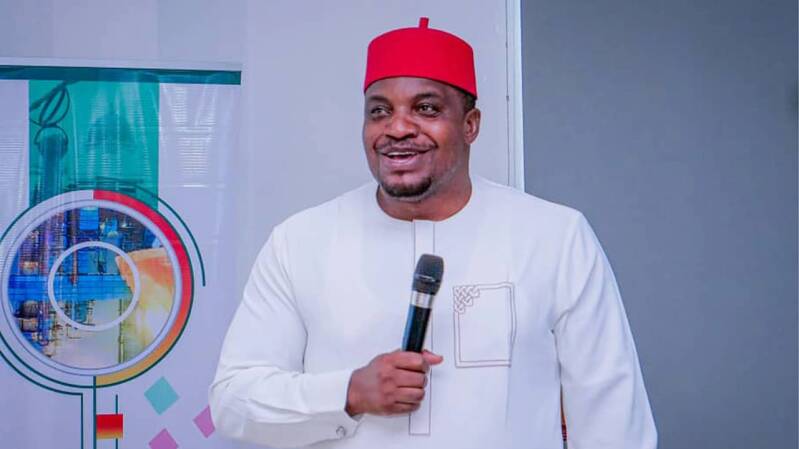
The presidential candidate of the Labour Party has proposed a fundamental shift in how Nigeria prepares and executes its national budget, advocating for zero-based budgeting and an end to what was described as the palliative economy, arguing that recurrent distribution of relief items has replaced genuine economic planning and left Nigerians dependent on government handouts rather than productive opportunity.
The proposal was outlined on Thursday during a policy engagement with economists, civil society organisations and party stakeholders in Abuja, where the candidate said the country’s budgeting process had become disconnected from measurable outcomes and that the annual appropriation cycle rewarded inertia rather than performance. Under zero-based budgeting, every item of expenditure must be justified afresh in each budget cycle rather than being carried over automatically from the previous year, a departure from the incremental approach that has characterised Nigerian budgeting for decades.
The candidate said the current system allowed ministries, departments and agencies to renew allocations without demonstrating results, which entrenched waste, duplication and the funding of activities that had long ceased to serve any public purpose. The alternative, according to the proposal, is a framework in which every naira proposed for spending must be tied to a defined objective, a measurable target and a verifiable outcome, with independent evaluation determining whether programmes continue, are restructured or are discontinued.
Central to the proposal is a critique of what the candidate described as the palliative economy, a system in which government responses to hardship are framed primarily around the distribution of food items, cash transfers and relief materials rather than structural investment in production, infrastructure and human capital. The candidate argued that while emergency relief had a legitimate role in addressing acute need, it could not substitute for economic policy, and that the persistent reliance on palliatives reflected a failure to confront the underlying causes of poverty, unemployment and food insecurity. The proposal calls for a transition from consumption-focused interventions to investment-focused programmes targeting agriculture, manufacturing, energy, education and healthcare, with a clear emphasis on job creation and productive capacity.
The candidate also criticised the practice of budgeting for projects that were never implemented, noting that capital allocations frequently remained unutilised while recurrent expenditure expanded. The proposal includes measures to strengthen the link between appropriation and execution, including quarterly publication of budget performance data, independent audit of capital projects, sanctions for agencies that fail to utilise allocated funds and incentives for those that deliver measurable results on time. It also proposes a review of the duplication of functions across federal agencies, with a view to consolidating overlapping mandates and redirecting savings to priority sectors.
The engagement drew contributions from participants who questioned the feasibility of zero-based budgeting in a political environment where budget decisions are shaped by patronage, constituency pressures and the need to maintain political coalitions. Some economists noted that zero-based budgeting is administratively demanding and requires strong institutions, reliable data and sustained political will, all of which are in short supply in Nigeria. Others argued that the approach could improve transparency and fiscal discipline if implemented gradually, beginning with pilot ministries and expanding as capacity improves. The candidate acknowledged these constraints and said the reform would be phased, with technical support from professional bodies and development partners, and a clear transition plan rather than an abrupt overhaul.
The proposal also addressed the relationship between budgeting and fiscal sustainability. The candidate said Nigeria’s debt service burden, which consumes a substantial share of government revenue, left limited fiscal space for development spending, and that zero-based budgeting was one instrument among several needed to restore fiscal balance. Other measures proposed include a review of tax expenditures and waivers, improved revenue collection efficiency, rationalisation of the cost of governance and a renewed focus on non-oil revenue sources. The candidate said the objective was not austerity for its own sake but the reallocation of resources from low-value spending to investments with demonstrable returns for citizens.
The engagement comes amid a broader national debate over economic policy ahead of the 2027 general elections, scheduled for January 16, with the governorship and state assembly elections following on February 6. President Bola Tinubu’s administration has defended its reforms, including the removal of petrol subsidy and foreign exchange liberalisation, as necessary measures to stabilise the economy and attract investment, and has pointed to social investment programmes, the student loan scheme and compressed natural gas initiatives as evidence of its commitment to cushioning the impact on vulnerable Nigerians. Opposition candidates have argued that the reforms have deepened hardship and that the government’s response has been insufficient.
The Labour Party’s own political configuration has shifted considerably over the past year, with several prominent figures realigning across parties ahead of the elections. The party has fielded candidates across various positions, and its policy platform has increasingly focused on fiscal transparency, institutional reform and the reduction of the cost of governance. The proposal for zero-based budgeting and an end to the palliative economy fits within that broader message, positioning the party as an advocate of structural reform rather than short-term relief.
Note on verification: the identity of the Labour Party’s presidential candidate for the 2027 election should be confirmed against the Independent National Electoral Commission’s final list of candidates, as the party’s leadership and ticket composition have changed during the current political cycle. The policy positions described here were presented at a public engagement, and specific implementation timelines, cost estimates and legislative requirements were not disclosed in full at the time of reporting.
For voters, the proposal raises a question that will define the 2027 contest: whether Nigeria’s economic challenges are best addressed through continued emergency interventions or through the harder, slower work of rebuilding the systems that are supposed to make emergency interventions unnecessary. The candidate’s answer is unambiguous. Palliatives, in that framing, are evidence of policy failure, not a substitute for it. Whether that argument resonates with an electorate that is currently dependent on the very interventions the candidate criticises will be tested at the polls.
📩 Stone Reporters News | 🌍 stonereportersnews.com
✉️ info@stonereportersnews.com | 📘 Facebook: Stone Reporters News | 🐦 X (Twitter): @StoneReportNew | 📸 Instagram: @stonereportersnews
Add comment
Comments