

Reported by Ariajegbe Sylvia Esezobor
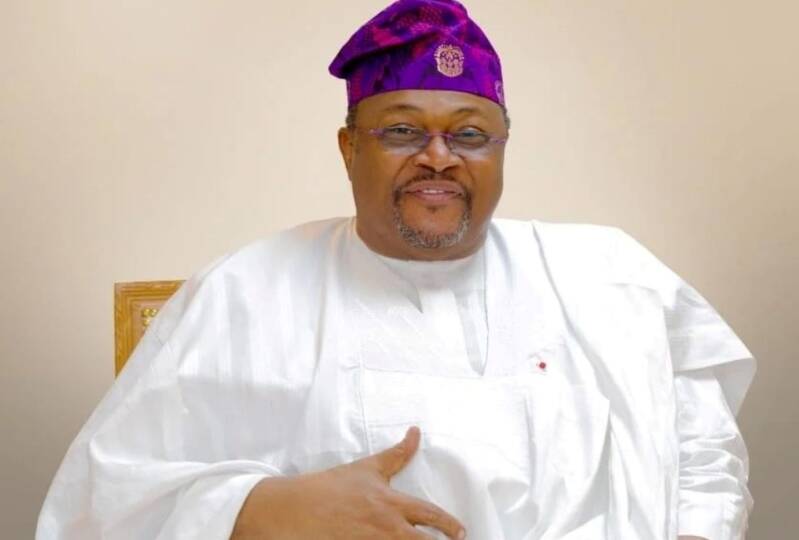
Nations are often remembered through the leaders they elect. Just as often, however, they are shaped by the entrepreneurs they produce. Among Nigeria's great business builders, one man stands apart not for the volume of his voice but for the sheer breadth of his impact—a figure so consequential yet so deliberately invisible that President Bola Tinubu once described him as a "colossus" who has demonstrated the immense possibilities of Nigerian enterprise. Dr. Mike Adenuga Jr., known to some as the "Gentle Giant" and to others simply as "The Bull," has spent more than four decades reshaping Nigeria's economy while avoiding the spotlight. He grants few interviews, makes even fewer public appearances, and appears to have concluded long ago that publicity is overrated. Instead, he lets his businesses do the talking. They have been remarkably chatty. From telecommunications and oil to banking, real estate, aviation, sports, and entertainment, Adenuga has built enterprises that touch virtually every strategic sector of the Nigerian economy, challenging monopolies, expanding access, creating jobs, and strengthening indigenous participation in industries long dominated by foreign interests.
Born on April 29, 1953, in Ibadan, Oyo State, Adenuga's journey to greatness was never handed to him. Raised by entrepreneurial parents—his father a schoolteacher and his mother a successful trader—he imbibed early lessons in discipline and commerce that would later shape his fearless approach to business. Educated in Nigeria and the United States, where he earned degrees in Business Administration, Adenuga demonstrated an unconventional work ethic that set him apart even as a young man. He was reportedly working as a taxi driver to support his studies while abroad. What distinguishes his rise is not just the scale of his success but the sectors in which he has excelled: industries often considered the backbone of modern economies. His entrepreneurial journey began in earnest in the 1980s, but it was in the 1990s and early 2000s that his influence truly began to reshape Nigeria's economic landscape.
Perhaps his most transformative contribution lies in telecommunications. When Globacom entered Nigeria's telecom market in 2003, mobile communication remained too expensive for many Nigerians. A few operators dominated the industry and consumers had limited options. Adenuga recognized something simple but powerful: telecommunications could not drive national development if ordinary people could not afford to use it. His introduction of per-second billing changed the game. Competitors were forced to rethink their pricing models, and millions of Nigerians suddenly gained more affordable access to communication. It was not merely a clever marketing strategy. It reshaped an industry. Through investments such as the Glo-1 submarine cable and an extensive fiber-optic network, Globacom helped lay the infrastructure for Nigeria's digital future. More than two decades later, Globacom remains Nigeria's only wholly indigenous telecommunications giant, a achievement that is both commercial and symbolic in a capital-intensive industry dominated by global players.
His success in oil and gas tells a similar story. Through Consolidated Oil, Adenuga built one of Nigeria's leading indigenous energy companies in a sector historically controlled by multinational corporations. In 1991, he became the first Nigerian to discover oil in commercial quantities, a feat that challenged the dominance of foreign firms and gave Nigerians the confidence of a "can-do" spirit. At a time when many assumed only foreign companies possessed the expertise and financial strength to operate at scale, Conoil proved otherwise. Long before "local content" became a policy buzzword, Adenuga was already practicing it. His influence extended into banking as well, through his early investment in Equitorial Trust Bank, which supported efforts to expand access to modern financial services during a critical period in Nigeria's economic development. His philosophy was straightforward: people cannot build wealth, grow businesses, or participate fully in the economy if they remain outside the financial system. That vision outlived the institution itself, as Equitorial Trust Bank later became part of Sterling Bank.
Yet the architecture of Adenuga's influence is not confined to commerce. It extends into the cultural bloodstream of the nation. His investments in film, music, and sport have not only amplified talent but dignified it. His investment in Nigerian sports is legendary, totalling over N25 billion. From sponsoring the Super Eagles to rejuvenating the Nigerian Premier League and hosting the prestigious Glo CAF Awards, he has been the primary benefactor of African football for over a decade. Globacom remains the lead sponsor of iconic cultural festivals, including Ojude Oba, Ofala, and Lisabi. In the world of entertainment, he has been the "Grand Godfather" of Nollywood, providing brand endorsements and financial lifelines to veteran practitioners. His patronage has functioned as both a catalyst and compass, guiding industries towards global relevance.
Philanthropy, in his world, is neither obligation nor ornament. It is instinct. It flows without announcement, guided by an ethic that places dignity above display. Through the Mike Adenuga Foundation, he has funded medical treatments, underwritten educational pursuits, and intervened in the lives of individuals and institutions with surgical precision. Through the Glo Foundation, the CSR platform of his telecoms company, he has ministered to the needs of pregnant women by paying for their delivery costs across multiple states. He demonstrated his commitment to social stability with a N1 billion donation to the Lagos State Security Trust Fund to bolster urban security and logistics. During the COVID-19 pandemic, he donated N1.5 billion to Lagos State and the Federal Government, and N500 million to support Bayelsa flood victims. Those touched by his generosity often speak not of the act itself but of its timing, arriving precisely when hope seemed most fragile. When Forbes listed him among the world's billionaires, he asked to be taken off. Wealth, to him, was not a ranking. It was a responsibility. He built a reception hall for his mother's burial, then gave it to the church when the service ended. To Adenuga, possession is a brief assignment; purpose is the point.
His leadership style is characterised by what observers describe as a "quiet roar"—a preference for strategic action over public fanfare. Those who work with him speak of sleepless nights, unrelenting focus, and a command structure that runs like an orchestra: precise, intense, efficient. Yet beyond the boardroom, he remains an enigma, a figure of whispered myth. His giving is as deliberate as his business. He once rebuilt a trader's life after reading about her misfortune in a newspaper. No press release, no photo. Just help, dispatched, completed, forgotten. Across Nigeria, students, hospitals, and flood victims tell similar stories, all linked by an invisible hand that never asks for credit.
At 73, therefore, the narrative is not one of culmination but continuation. His engagements across sectors and continents suggest a man still in dialogue with possibility. If anything, age has sharpened his clarity, deepened his patience, and expanded his horizon. In an era inclined towards immediacy, Mike Adenuga Jr. represents the enduring virtue of deliberation. He reminds us that greatness is not an event, but a continuum; not a spectacle, but a structure patiently raised over time. And so, as the years gather, they do not weigh upon him; they illuminate him. For in the quiet empire he has built, one finds not just wealth, but wisdom; not just success, but significance. He is, as someone once observed, a man who resembles figures like Chuck Feeney and Yvon Chouinard, who also saw wealth as a tool, not a trophy. Yet his rhythm is distinct: African, restrained, enduring. Indeed, Adenuga plays his game with no audience, no applause; only impact. The scoreboard is silent, but the results speak louder than sound.
📩 Stone Reporters News | 🌍 stonereportersnews.com
✉️ info@stonereportersnews.com | 📘 Facebook: Stone Reporters News | 🐦 X (Twitter): @StoneReportNew | 📸 Instagram: @stonereportersnews
Add comment
Comments