

Reported by Ariajegbe Sylvia Esezobor
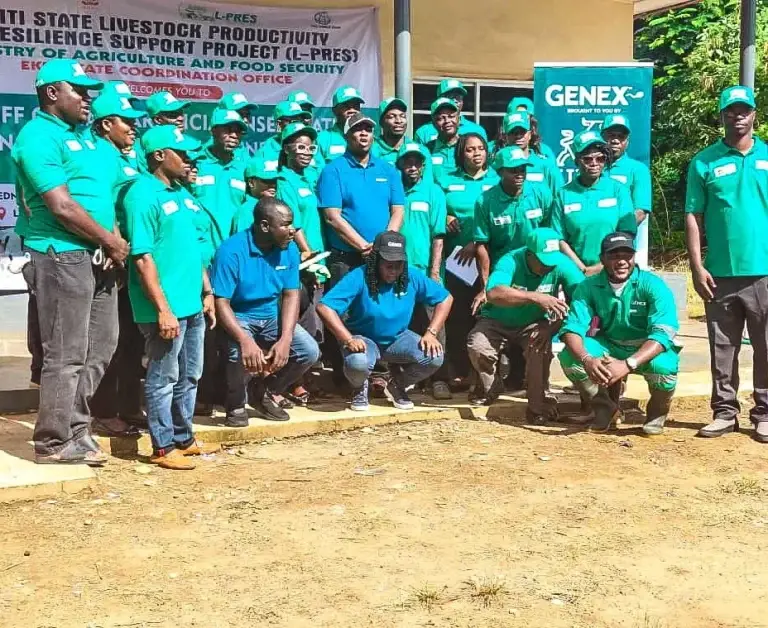
The Ekiti State Government has commenced the training of 30 officers for a mass artificial insemination programme aimed at improving the genetic quality of livestock, as part of efforts to boost meat and milk production, enhance food security and improve the livelihoods of farmers across the state.
The training, organised by the state's Livestock Productivity and Resilience Support Project, is holding in Ado Ekiti under the theme "Mass Artificial Insemination, Training and Induction of Inseminators in Ekiti State." The Commissioner for Agriculture and Food Security, Ebenezer Boluwade, who declared the programme open on Friday, said the initiative was designed to address the poor genetic quality of local breeds and the limited access to improved breeding services, which have constrained livestock productivity in the state. "The artificial insemination programme was designed by the state L-PRES for breed and genetic improvement and multiplication of livestock for better production," Boluwade said. "Ekiti State is targeting 850 cows and 150 goats while 30 professionals mainly from Animal Husbandry and Veterinary Departments are being trained and will be inducted as Artificial Insemination Technicians."
The commissioner said a survey had shown that livestock productivity among L-PRES beneficiary farmers in Ekiti State was characterised by poor genetic quality and poor access to improved breeding services, resulting in low milk yield, slow growth rates and reduced market value. "To address this gap, Ekiti State supports the L-PRES key results indicator on artificial insemination which include increased yields in milk output, live weight gain, and carcass yield, thereby improving incomes and enhance the resilience of beneficiary households," he said. He explained that the product of artificial insemination was improved hybrid vigour with better yield and performance through the crossing of local breeds with exotic breeds with good pedigree.
Boluwade outlined the advantages of the technology, noting that artificial insemination was a better channel for genetic upgrading and multiplication in livestock and that it eliminated the spread of sexually transmitted diseases among flocks. He said reproductive materials and semen of good stock could also be stored for long periods. "It is important to raise personnel that would acquire skills in artificial insemination technology and most importantly to develop experts in artificial insemination operations that can train others and ensure sustainability and transmission of skills in the technology in the state," he said. "At the end of this programme, I expect to see a marked genetic improvement in our local ruminant breeds that is capable of driving economic growth and improving livelihoods."
The Lead Consultant from Genex Urus Company, Olayiwola Adekunle, said the exercise was intended to ensure that Ekiti indigenes could perform artificial insemination rather than relying on experts from other countries. He said Genex would support the 30 trained and qualified inseminators for the next three years as part of the sustainability plan for the L-PRES project in the state. "We will be inseminating a lot of animals from 1000 upwards and also goats around the different local government areas in Ekiti State. We want to see sustainability and improved livelihood," he said. The consultant said the training was designed to equip participants with the technical competence required to deliver insemination services across the state's 16 local government areas.
The programme is part of a broader livestock development agenda being implemented under the World Bank-funded Livestock Productivity and Resilience Support Project, a six-year initiative designed to improve livestock productivity, enhance resilience and strengthen the value chain across participating states. In Ekiti, the project has already funded the establishment of a modern Artificial Insemination Centre at the Livestock Development Centre in Erifun, Ado Ekiti, alongside other infrastructure including a goat multiplication ranch, veterinary hospital renovations, livestock markets and slaughter slabs. The state has also constructed field school demonstration pens for farmer training across the three senatorial districts to enhance productivity and reduce livestock mortality.
The L-PRES project in Ekiti is coordinated by Olayinka Adedipe, who has consistently emphasised that artificial insemination would ensure genetic improvement, cross-breeding, overcome infertility and prevent the spread of sexually transmitted diseases through the use of semen from healthy animals. The state has previously trained extension agents and livestock officers from the 16 local government areas on the rudiments of artificial insemination, with a mandate to cascade the techniques to farmers.
The initiative comes amid a broader national push to strengthen Nigeria's livestock sector, which has been constrained by poor genetics, disease outbreaks and inadequate access to modern breeding technologies. The Federal Government has identified livestock development as a priority under its agricultural transformation agenda, and the World Bank has supported the sector through the L-PRES project in multiple states. The focus on artificial insemination reflects a growing recognition that genetic improvement is essential to increasing productivity without expanding the number of animals, which would place additional pressure on land and water resources amid farmer-herder tensions in parts of the country.
For the 30 officers undergoing training, the programme offers an opportunity to acquire specialised skills that are in short supply in Nigeria and to contribute to the transformation of the state's livestock sector. The induction of the trainees as certified Artificial Insemination Technicians will create a pool of local expertise capable of delivering services to farmers, reducing the cost of accessing breeding services and improving the quality of animals produced in the state. The support from Genex Urus Company over the next three years is intended to ensure that the trainees receive ongoing mentorship and that the programme is sustained beyond the initial training period.
For the people of Ekiti State, the mass artificial insemination programme represents a tangible effort to improve the productivity of the livestock sector, which remains an important source of income and nutrition for rural households. If the programme achieves its targets of inseminating 850 cows and 150 goats, it could lead to measurable improvements in milk yield, weight gain and market value, contributing to higher incomes for farmers and greater availability of animal protein. Whether those gains are realised will depend on the quality of the training, the availability of semen and equipment, and the willingness of farmers to adopt the technology. But the state has made its intention clear: to build local capacity, improve livestock genetics, and ensure that the benefits of modern breeding technology reach the farmers who need them most.
📩 Stone Reporters News | 🌍 stonereportersnews.com
✉️ info@stonereportersnews.com | 📘 Facebook: Stone Reporters News | 🐦 X (Twitter): @StoneReportNew | 📸 Instagram: @stonereportersnews
Add comment
Comments