

Reported by Ariajegbe Sylvia Esezobor
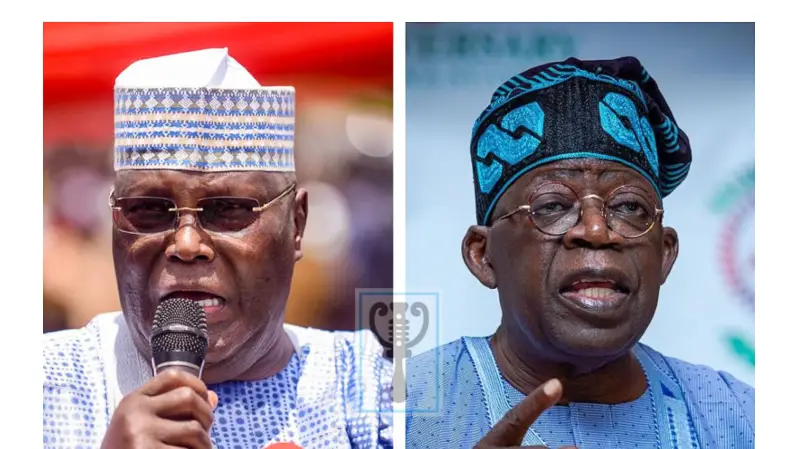
Former Vice President and African Democratic Congress presidential candidate Atiku Abubakar has called on President Bola Tinubu to immediately and substantially raise Nigeria’s minimum wage, declaring that the current N70,000 monthly benchmark has been so thoroughly eroded by fuel, food, transport and rent costs that it no longer qualifies as a living wage, and vowing that he would begin the process of raising the wage floor from his first day in office if elected in 2027.
In a statement issued on Sunday by the Director of Strategic Communications of the ADC Presidential Campaign Council, Phrank Shaibu, Atiku backed organised labour’s demand for a substantial increase in the minimum wage, accusing the Tinubu administration of presiding over what he described as a ruthless economic squeeze in which workers are paid more on paper and condemned to live on less.
“At N1,400 a litre, the entire N70,000 monthly minimum wage buys just 50 litres of petrol. What does the worker take home to feed the children? What pays the rent? What gets that worker back to work on Monday?” Atiku asked. He contrasted the purchasing power of the previous minimum wage with the current one, noting that at the April 2023 national average petrol price of N254.06 per litre, N30,000 could purchase approximately 118 litres of petrol. “Today, N70,000 buys only 50 litres at N1,400 per litre. The payslip has grown, but the fuel it can buy has more than halved. Tinubu has given workers a larger number and left them with a smaller life. That is hardship dressed up as a wage increase,” he said.
The former vice president said the damage extended far beyond the filling station, arguing that petrol prices cascade through the entire economy. “Petrol does not stay at the pump. Its price follows the farmer to market, enters the baker’s oven and appears in the fare a parent pays to take a child to school. Government then announces a wage increase and watches those costs swallow it before the month has begun,” he said.
Atiku criticised the removal of the petrol subsidy, saying the policy was implemented before adequate protection was in place for working families. “The government pulled away the floor, offered workers a flimsy umbrella and now applauds itself while the rain beats down on them. Fuel, transport, food and rent have devoured their earnings. This is a callous way to govern people who work hard and ask only for the means to live,” he said. He added that “Tinubu asked Nigerians to make sacrifices and treated the suffering that followed as an afterthought. Those with the least have been made to carry the heaviest load. That is the cruel arithmetic of this cost-of-living crisis.”
The ADC candidate also compared Nigeria’s wage floor with those of other oil-producing and African countries, citing exchange rates as of July 24, 2026, under which Libya’s monthly minimum wage was worth approximately N213,000, Algeria’s N245,000, Equatorial Guinea’s N302,000 and Gabon’s N351,000. He acknowledged that wage structures and living costs differed across countries, but maintained that such differences did not make N70,000 sufficient for Nigerian workers facing current prices. “The Nigerian worker is the engine of this country’s productive life, yet Tinubu expects that engine to run without fuel,” he said.
Atiku challenged the Federal Government to agree to a substantial increase in the minimum wage that reflects the real cost of food, transport, rent and electricity, and demanded a clear position from the President on the issue. “If he has no intention of raising workers’ pay, he should say so plainly and stop stringing the Nigeria Labour Congress and other labour leaders along,” he said. He noted that with eight months left in the current term, workers could not endure further hardship while the wage question was being debated. “The test of this government is whether the men and women who work all month can live on what they earn. A living wage must buy a living,” he said.
Atiku also used the occasion to restate his policy plans if elected. He said he would begin the work of raising the wage floor from his first day in office, and from May 2027 would focus on supporting Nigerian production, delivering relief at the pump and providing targeted assistance to those hardest hit by the cost-of-living crisis. He reiterated his proposal for a targeted production subsidy for petroleum products refined in Nigeria and sold to Nigerians, subject to a firm spending cap, public accounting and independent auditing, with the support designed to produce measurable relief at the pump. He also reaffirmed his commitment to realistic wage adjustments, targeted social protection and measures to stabilise the cost of essential goods and energy.
The intervention comes amid renewed pressure over petrol prices and the wider cost of living. Recent reports put petrol prices at about N1,400 per litre in Lagos and Abuja, with higher prices recorded in parts of northern Nigeria, intensifying concerns about the effect of fuel costs on household budgets and transportation. The Joint National Public Service Negotiating Council has demanded a new minimum wage of N500,000 and a reduction of petrol price to N500 per litre, giving the government until September 30, 2026, to act. The NLC and the Trade Union Congress have formally announced plans to reopen negotiations on the wage, while the Federal Government has signalled through the Secretary to the Government of the Federation, George Akpabio, that the N70,000 benchmark no longer reflects prevailing economic realities and will be reviewed.
The political stakes of the wage debate are considerable. The 2027 presidential election is scheduled for January 16, with the governorship and state assembly elections following on February 6. Atiku is seeking the presidency for the sixth time, with former Rivers State Governor Rotimi Amaechi as his running mate, while President Tinubu is seeking a second term on the All Progressives Congress platform. Former Anambra Governor Peter Obi is contesting on the Nigeria Democratic Congress ticket with Senator Rabiu Kwankwaso. The cost of living and fuel prices have become central issues in the campaign, and Atiku’s decision to frame the wage question as a test of the government’s commitment to ordinary Nigerians places the economic record of the Tinubu administration at the heart of the contest. As Atiku put it, a living wage must buy a living. Whether voters agree that his promise to deliver one is credible will be determined at the polls.
📩 Stone Reporters News | 🌍 stonereportersnews.com
✉️ info@stonereportersnews.com | 📘 Facebook: Stone Reporters News | 🐦 X (Twitter): @StoneReportNew | 📸 Instagram: @stonereportersnews
Add comment
Comments