

Reported by: Ijeoma G | Edited by: Oravbiere Osayomore Promise.
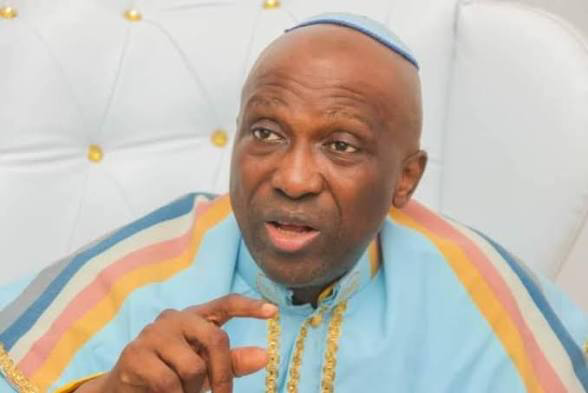
The founder of the INRI Evangelical Spiritual Church, Primate Elijah Babatunde Ayodele, has issued a stark warning to President Bola Ahmed Tinubu ahead of Nigeria's 66th Independence Day celebration, cautioning against the planned October 1, 2026, parade and declaring that there could be danger if the event goes ahead. The cleric made the warning in a video shared on his official X handle on Sunday, September 28, 2026, days before the nation marks the anniversary of its independence from British colonial rule.
Ayodele, who is known for his controversial prophecies and his frequent warnings to political leaders, did not specify the nature of the danger he foresees. He did not say whether the threat was one of violence, accident, or some other form of disruption. But his message was clear: the President should reconsider the parade. The warning has sparked a flurry of reactions on social media, with some Nigerians dismissing it as another attention-seeking prophecy and others urging the government to take it seriously in a country where security threats are a daily reality.
The Independence Day parade is a significant event on Nigeria's national calendar. It typically features a military parade, cultural displays, and a presidential address. It is held at Eagle Square in Abuja and is attended by dignitaries, diplomats, and members of the public. In recent years, the celebration has been scaled down in some states due to security concerns and economic constraints. In 2026, the government had signalled its intention to hold a full parade, with preparations already underway in the Federal Capital Territory. Ayodele's warning, if heeded, could disrupt those plans or lead to a last-minute change of venue or format.
This is not the first time Ayodele has warned Tinubu about a national event. In September 2025, he warned that there could be an attempt on the President's life during a foreign trip, a prophecy that did not materialise. In January 2026, he predicted that the 2027 elections would be characterised by violence and rigging, and he has repeatedly criticised the Tinubu administration's economic policies, calling them harsh and insensitive to the poor. His prophecies have earned him a large following among Nigerians who believe he has supernatural insight, as well as a legion of critics who view him as a self-promoter who thrives on controversy. His warnings are often vague and open to interpretation, which allows him to claim credit when events align with his predictions and to avoid accountability when they do not.
The timing of the warning is significant. Nigeria is currently grappling with a severe security crisis, with bandits and terrorists operating in large parts of the North-West, North-East, and North-Central regions. Kidnappings and attacks on rural communities are a daily occurrence. The military is stretched thin, fighting multiple insurgencies and criminal networks. In this environment, any large gathering of political and military leaders, such as the Independence Day parade, is a potential target. Security agencies are already on high alert for the celebration, and the President's security detail is among the most fortified in the world. But Ayodele's warning has drawn attention to the vulnerability of public events, particularly those that bring together the nation's leadership in one location.
The Presidency has not yet responded to Ayodele's warning. The Minister of Information and National Orientation, Mohammed Idris, has not issued a statement on the matter. The Nigeria Police Force and the Department of State Services have also not commented. Government officials often ignore prophecies, viewing them as distractions from the serious work of governance. But in a country where public anxiety is high and faith plays a central role in daily life, such warnings can take on a life of their own. Ayodele's followers are likely to amplify his message, and opposition politicians may seize on it to question the government's preparedness for the event.
The cleric's warning also raises questions about the role of prophecy in Nigerian politics. Nigeria is a deeply religious society, and many citizens turn to clerics for guidance on political and personal matters. Prophets like Ayodele wield significant influence, particularly among the urban poor and the rural population. Their pronouncements can shape public opinion, influence voting behaviour, and even trigger panic. At the same time, the line between spiritual guidance and political manipulation is often blurred. Ayodele has been accused of aligning with political interests in the past, and his prophecies have sometimes appeared to serve the agenda of one candidate or another. Whether his latest warning is a genuine spiritual insight or a calculated political move is a question that only he can answer.
For President Tinubu, the warning presents a dilemma. If he cancels or scales down the parade, he risks appearing to be swayed by a cleric's prophecy, which could undermine his authority and embolden his critics. If he proceeds and nothing happens, the warning will be forgotten, and Ayodele will move on to his next prophecy. If he proceeds and something does happen, the consequences could be catastrophic, both for the nation and for his presidency. The government's security agencies are presumably already aware of the threat environment and have taken measures to protect the event. The question is whether those measures are sufficient.
The 66th Independence Day celebration is intended to be a moment of national pride and unity. It is a day when Nigerians, regardless of their ethnic or religious differences, come together to celebrate their nationhood. But it is also a day when the nation's fault lines are exposed, and its vulnerabilities are laid bare. In a country where insecurity is the defining issue of the moment, the parade is not just a ceremonial event; it is a statement of the government's ability to protect its citizens and project power. If that statement is marred by tragedy, the consequences will be felt far beyond Eagle Square.
Ayodele's warning is a reminder that in Nigeria, prophecies are not just idle words. They carry weight, particularly when they touch on matters of life and death. The President and his security team must weigh the warning against their own intelligence assessments. They must decide whether to proceed as planned or to adjust their approach in light of the threat. Whatever they decide, the coming days will be tense, and the nation will be watching. The Independence Day parade is meant to be a celebration of freedom. It should not become a day of mourning. For now, the warning stands, and the clock ticks toward October 1.
📩 Stone Reporters News | 🌍 stonereportersnews.com
✉️ info@stonereportersnews.com | 📘 Facebook: Stone Reporters News | 🐦 X (Twitter): @StoneReportNew | 📸 Instagram: @stonereportersnews
Add comment
Comments