

Reported by: Ijeoma G | Edited by: Oravbiere Osayomore Promise.
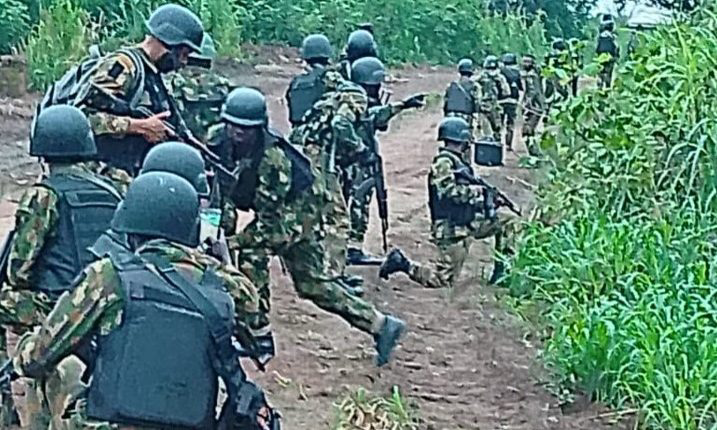
The Nigerian Army has announced a sweeping series of operations across the country within the last 24 hours, rescuing 24 kidnapped victims, arresting 14 suspects, and recovering about 800 rustled cattle, in a coordinated crackdown that spanned Kaduna, Kogi, Edo, Nasarawa, Plateau, Adamawa, Borno, and Rivers States. An operational report made available to the News Agency of Nigeria in Abuja on Monday, September 28, 2026, said troops also foiled terrorist attacks, recovered weapons, intercepted suspected oil thieves, and secured the surrender of suspected members of the Islamic State West Africa Province. The figures, while representing a snapshot of a single day, underscore the scale of the security challenges confronting the country and the military's continued reliance on intelligence-led operations to disrupt criminal networks across multiple theatres.
In Kaduna State, troops of the 312 Army Reconnaissance Battalion responded to a terrorist attack on a civilian and his family at a farm in Kankomi, Chikun Local Government Area. The attackers, riding two motorcycles and armed with AK-47 rifles, had abducted a woman and her son. The troops engaged the terrorists, forcing them to abandon their captives. The two victims were rescued unhurt and reunited with the woman's husband. The operation demonstrated the importance of rapid response in kidnapping incidents, where the first few hours often determine whether victims are recovered or disappear into the forest.
In Kogi State, troops of the 21 Battalion, supported by vigilantes, rescued two victims from Ojoto Forest in Dekina Local Government Area. The victims had been kidnapped on September 23 along the Abocho-Ajegwuwa-Dekina road. The troops exploited the forest and located the victims, bringing an end to a five-day ordeal. In Edo State, troops of the 322 Army Reconnaissance Battalion, working alongside the police and vigilantes, engaged suspected kidnappers at a ransom collection point in Ewu-Esan, Esan Central Local Government Area. The intervention forced the kidnappers to abandon two victims who had sustained machete injuries. The victims were administered first aid and evacuated to hospital, but one subsequently died en route due to the severity of his injuries. The incident highlighted the brutal reality of kidnapping in the region, where victims are often subjected to extreme violence even as ransoms are being negotiated.
In Nasarawa State, troops of Operation Whirl Stroke rescued 18 passengers who had been kidnapped from an 18-seater Yankari Express bus along the Akwanga-Andaha road. The troops pursued the suspected kidnappers, forcing them to abandon the victims and flee into the surrounding area. The rescued passengers were released to continue their journey, while efforts to apprehend the perpetrators continued. The operation prevented what could have been a mass abduction with far-reaching consequences for the victims and their families.
In Plateau State, troops of Operation Enduring Peace recovered about 800 cattle allegedly rustled by terrorists in the Kingkis area of Wase Local Government Area. The troops engaged the suspected terrorists, forcing them to abandon the cattle and flee into the forest. Cattle rustling has been a persistent driver of communal conflict and criminality in Plateau and neighbouring states, and the recovery of such a large herd represents a significant blow to the economic base of the armed groups operating in the region.
In the North-East, two suspected ISWAP family members surrendered to troops of the 192 Battalion around the Kuranabasa axis of Gwoza in Borno State. The two men reportedly escaped from an ISWAP enclave in the Mandara Mountains. Another suspected ISWAP member surrendered to troops in Monguno after reportedly fleeing a terrorist camp around Kolorom village in the Lake Chad region. The surrenders reflect the continued pressure on terrorist groups in the North-East, where military operations and internal fractures have driven fighters and their families to abandon the insurgency. Troops also discovered and safely detonated an improvised explosive device along the Gwoza-Wala-Warabe-Pulka road in Borno State, preventing what could have been a deadly attack on military or civilian vehicles.
In Adamawa State, troops of Sector 4, Operation Hadin Kai, arrested two suspects during a raid on Maki village in Hong Local Government Area. The operation led to the recovery of a locally made pistol, a Dane gun, seven cartridges, three daggers, and a machete. In Borno State, troops apprehended a suspected terrorist logistics supplier at Rimirgo village. The suspect was allegedly transporting groceries believed to be destined for a terrorist enclave, highlighting the military's focus on disrupting the supply chains that sustain insurgent operations.
In the South-South, troops of the 6 Division Garrison arrested three suspected oil thieves in the Alakiri area of Okrika Local Government Area in Rivers State. The suspects were allegedly transporting about 20,000 litres of stolen crude oil in 957 sacks loaded in two wooden boats. The interception underscored the military's dual focus on both kinetic operations against armed groups and the economic sabotage of oil theft, which drains national revenue and degrades the environment in the Niger Delta.
The operational report did not specify the total number of weapons recovered across all the operations, nor did it provide details on the identities of the arrested suspects or the specific charges they would face. The Nigerian Army has consistently emphasised that its operations are intelligence-driven and conducted in collaboration with other security agencies and local vigilantes. The involvement of vigilantes in the Kogi and Edo operations reflects the growing reliance on community-based security structures to complement military efforts.
For the 24 rescued victims, the past 24 hours have brought an end to terrifying ordeals. Some were reunited with their families; others were hospitalised with injuries sustained during their captivity. One victim did not survive. For the families of the 14 suspects in custody, the coming days will bring legal proceedings and the prospect of prosecution. For the communities that recovered 800 cattle, the operation represents the restoration of livelihoods that armed groups had sought to destroy. And for the military, the 24-hour blitz is another demonstration of its capacity to operate across multiple theatres simultaneously, even as critics continue to question whether the pace of operations can be sustained and whether the root causes of insecurity are being addressed. The report offers a snapshot of a military stretched across the country, fighting kidnappers, terrorists, and oil thieves in the same 24-hour window. Whether that pace can be maintained—and whether it will translate into lasting security—remains the defining question of Nigeria's fight against insecurity.
📩 Stone Reporters News | 🌍 stonereportersnews.com
✉️ info@stonereportersnews.com | 📘 Facebook: Stone Reporters News | 🐦 X (Twitter): @StoneReportNew | 📸 Instagram: @stonereportersnews
Add comment
Comments