

Reported by Ariajegbe Sylvia Esezobor
The Rural Electrification Agency has called for a unified approach among government agencies, state governments, development partners, private operators and other stakeholders to accelerate electricity access across Nigeria, warning that fragmentation and duplication of projects are undermining efforts to close the country's energy gap.
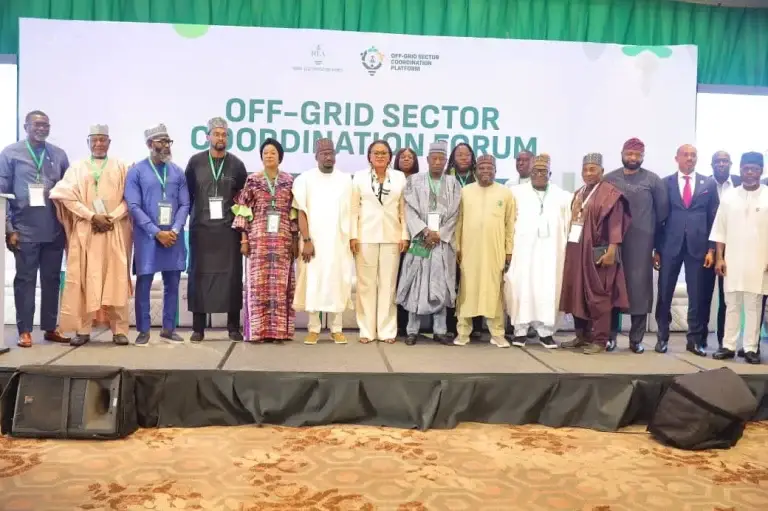
The agency's Managing Director, Dr Abba Abubakar Aliyu, made the call on Monday at the official relaunch of the Off-Grid Stakeholder Coordination and Partnership Forum held in Abuja. He said stronger coordination was necessary to prevent duplication of projects, improve the use of limited resources and ensure that interventions reached Nigerians who needed electricity most. "If we continue to work the way we currently do without bringing the states into this conversation and coordination, I can tell you that we will simply be planning to fail," Aliyu said.
The REA boss disclosed that an analysis of the 2024 and 2025 Federal Government budgets using artificial intelligence revealed that several government institutions were implementing power-related projects, highlighting the need for better coordination across the sector. According to him, some of the agencies involved in electricity-related projects were not traditionally regarded as major power-sector institutions. He said the agency itself had encountered situations where projects under different programmes overlapped at the same locations. The challenge had become more significant as funding for the sector continued to shrink, he said, stressing the need for stakeholders to share data and coordinate interventions to ensure that available resources were used efficiently. Aliyu said a centralised platform for sector data could help stakeholders identify existing projects, avoid duplication and determine areas requiring new interventions.
In his keynote address, the Minister of Power, Joseph Tegbe, represented by his Chief of Staff, Doyin Adelabu, said fragmentation remained a major challenge to the delivery of electricity projects. "Fragmentation is the quiet tax every under-coordinated sector pays: in duplicated effort, missed investment opportunities, and slower delivery of power to the Nigerians who need it most," Tegbe said. He disclosed that the Federal Government was establishing a standing Off-Grid Coordination Secretariat to track commitments and risks, convene issue-based working groups and generate shared market intelligence. He called on development partners, financiers, private operators, state governments and civil society organisations to nominate focal points, share data and commitments, and participate actively in the working groups. The minister said the Federal Ministry of Power would continue to provide policy direction through the National Electrification Strategy and Implementation Plan, while supporting the development of state electricity markets under the Electricity Act 2023.
Earlier, the Executive Director of the Rural Electrification Fund, Doris Uboh-Ogunkoya, said coordination should become a continuous function rather than an activity limited to periodic meetings. "The aim is not simply to hold more meetings, but to align our efforts, identify gaps, address bottlenecks, and follow through on commitments between meetings," she said. Also speaking, the Heinrich Böll Stiftung Nigeria representative, Ikenna-Donald Ofoegbu, urged stakeholders to look beyond the number of connections delivered when measuring the success of off-grid electricity interventions. "For many years, we measured success largely by the number of mini-grids installed, solar home systems deployed, or connections delivered. These indicators remain important. But the next phase requires us to ask a more consequential question: What happens after the connection?" he said. Ofoegbu called for greater emphasis on productive use of electricity, innovative financing, sustainability and local capacity.
The call for coordination comes as Nigeria pursues its National Energy Compact under the Mission 300 initiative, which aims to connect 300 million Africans to electricity by 2030. Over 85 million Nigerians lack reliable grid electricity, and Nigeria needs an estimated $23 billion to close its electricity access gap. The REA has secured financing from multiple sources, including a N50 billion agreement with Alpha Morgan Bank in August 2026 and $119 million from the Japan International Cooperation Agency, but the agency has acknowledged that far more investment is required.
The agency has also expanded its project pipeline significantly. In February 2026, the REA proposed a N170 billion budget for 2026, outlining plans to deliver more than 500 electrification projects nationwide. The agency is developing 288MW of interconnected mini-grids and has completed 15 mega hybrid mini-grids in federal universities. Nigeria recorded over five million new off-grid connections between 2025 and 2026, with the Distributed Access through Renewable Energy Scale-up programme, implemented by the REA, providing capital subsidies to renewable energy firms to reduce the cost of solar for Nigerians.
The Off-Grid Stakeholder Coordination and Partnership Forum, which was relaunched at Monday's event, is intended to bring together all stakeholders in the off-grid electricity market on a regular basis to align efforts and track progress. The event brought together representatives of government agencies, state governments, development partners, private sector operators, financiers and civil society organisations. The forum's relaunch followed the REA's earlier announcement that it would unveil a new coordination framework to strengthen collaboration among the growing number of stakeholders driving Nigeria's renewable energy and off-grid electricity market. The agency has said quarterly meetings alone were insufficient to foster the level of collaboration required, and that an improved framework would enable it to better coordinate resources, identify gaps and maximise impact.
The establishment of the Off-Grid Coordination Secretariat represents the most concrete outcome of Monday's forum. The secretariat is expected to serve as a standing body that tracks commitments and risks, convenes issue-based working groups and generates shared market intelligence. For the REA, the secretariat is a mechanism for ensuring that the coordination the agency has called for becomes a continuous function rather than an occasional event. For Nigeria's electricity sector, the success of the initiative will be measured by whether the fragmentation that Tegbe described as a "quiet tax" is reduced, and whether the millions of Nigerians still without reliable electricity begin to see tangible improvements in access. As Aliyu put it, without bringing the states into the conversation and coordination, the sector will simply be planning to fail.
📩 Stone Reporters News | 🌍 stonereportersnews.com
✉️ info@stonereportersnews.com | 📘 Facebook: Stone Reporters News | 🐦 X (Twitter): @StoneReportNew | 📸 Instagram: @stonereportersnews
Add comment
Comments