

Reported by: Oahimire Omone Precious | Edited by: Oravbiere Osayomore Promise.
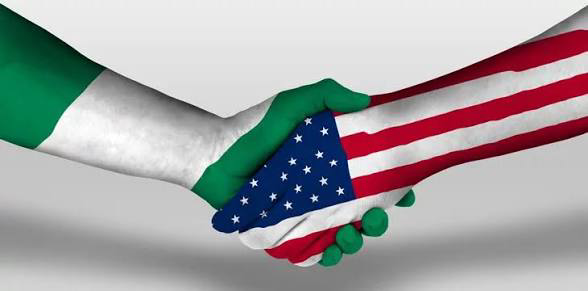
The United States government has pledged to continue working with Nigeria to end the cycle of violence attributed to Fulani militant groups in the Middle Belt, commending the Nigerian government’s response to the latest attacks and urging authorities to sustain the momentum in defending vulnerable communities, particularly in Plateau State’s Barkin Ladi Local Government Area.
In a statement issued by the US Bureau of African Affairs, Washington said it would continue its partnership with Abuja to protect Christians in the Middle Belt, a region that has witnessed some of the deadliest attacks in Nigeria’s recent history. “The United States commends Nigeria’s strong response to the latest attacks from Fulani militant groups,” the statement read. “We will continue to work with the Nigerian government to protect Christians in the Middle Belt. We urge Nigeria to continue the momentum and defend the Barkin Ladi communities in particular”.
The statement comes amid renewed violence in Plateau State. At least eight Christians, including a Baptist pastor and a church employee, were reported killed in attacks in Barkin Ladi over the weekend of September 19–20, according to Christian Daily International/Morning Star News, which cited local sources. The pastor and his secretary were reportedly killed in Dorowa Babuje while travelling to church services. Another incident on September 19 involved five people ambushed in Gana-Ropp, also in Barkin Ladi. A conflict-monitoring tracker said the deaths were corroborated by separate reporting, though the specific religious motive for the attacks had not been independently established.
The violence has not been confined to that weekend. On September 26, five miners were killed and two others injured when gunmen attacked an artisanal mining site in Marit village, Barkin Ladi. Three days earlier, two miners were killed at a mining site in Kworos Gangare, also in Barkin Ladi. On September 24, three community members were killed at Gassa. On September 23, gunmen abducted Hon. Denty Laven, a member of the Plateau State House of Assembly representing Pankshin South Constituency. The Plateau State Government imposed a dusk-to-dawn curfew on Barkin Ladi, Riyom and Mangu Local Government Areas on September 22 following a wave of attacks that left at least nine people dead in a single weekend.
The US statement is the latest development in a rapidly expanding security partnership between Washington and Abuja. In January 2026, the two governments established the US–Nigeria Joint Working Group in response to President Donald Trump’s designation of Nigeria as a Country of Particular Concern under the International Religious Freedom Act. The first session, held in Abuja on January 22, 2026, focused on reducing violence and protecting Christian communities in the Middle Belt. The second session, held in Washington, DC, on August 13, 2026, saw US Under Secretary of State for Political Affairs Allison Hooker host Nigerian National Security Adviser Nuhu Ribadu for discussions on protecting Christian communities and deepening joint security cooperation.
The partnership has been accompanied by significant financial commitments. In January 2026, the United States allocated approximately $413 million for counterinsurgency operations in Nigeria and other African countries. The US House of Representatives also passed a bill in July 2026 directing that funds from the Security Sector Programme and National Security Account be made available specifically to address attacks by Fulani ethnic militia and broader insecurity in the Middle Belt. The bill included provisions requiring that funds support investigations and prosecutions of violence committed by Fulani militia groups, jihadist terror groups and criminal gangs. However, the same legislation also included language restricting assistance to Nigeria until measurable actions are taken to protect Christian communities, reflecting congressional frustration with what some lawmakers described as insufficient action against Fulani militants.
The scale of the threat posed by Fulani militants has been documented extensively. A May 2026 report by the United States Commission on International Religious Freedom estimated that approximately 30,000 armed Fulani militants are operating across Nigeria in cells ranging from 10 to 1,000 members. The report described the armed groups as some of the deadliest non-state actors responsible for violent attacks across the Middle Belt and Southern Nigeria. It noted that violence by Fulani militants had caused the highest number of deaths of any armed group over the past year, with at least 1.3 million people displaced across the Middle Belt. A separate report indicated that Fulani militants had officially overtaken Boko Haram and ISIS as the deadliest terrorist threat operational in Nigeria.
The Nigerian government has consistently maintained that the violence in the Middle Belt is multifaceted, driven by a complex mix of factors including land disputes, grazing rights, ethnic tensions, criminality and political rivalries rather than religion alone. The US Commission on International Religious Freedom itself acknowledged in its May 2026 report that the attacks were not driven by religion alone but by overlapping motives. However, the US has continued to emphasise the protection of Christian communities in its bilateral engagements with Nigeria, a position that has drawn criticism from some quarters in Nigeria who argue that framing the conflict as religious persecution oversimplifies a complex crisis.
The US statement comes at a delicate moment for Nigeria’s security architecture. The Nigerian military has been conducting sustained operations against bandits and terrorists across the North-West and North-Central regions, including Operation FANSAN YAMMA and Operation Enduring Peace. Troops have rescued kidnapped victims, neutralised bandits and recovered weapons and livestock in multiple operations. The Nigerian Bar Association in Plateau State has accused terrorists of attacking communities during curfew hours, describing the situation as “an invitation to total anarchy”. Amnesty International has condemned the violence as an “inexcusable security failure,” saying the security measures President Tinubu claims to be implementing are not working.
For the people of Barkin Ladi, the US statement offers a measure of international attention to a crisis that has been largely ignored by the global community. But statements and partnerships alone cannot stop the killing. The US has pledged support, and Nigeria has demonstrated a willingness to engage. What remains to be seen is whether that partnership can translate into tangible protection for communities that have buried too many loved ones and watched too many attackers escape justice. The momentum the US urges Nigeria to sustain is not just a military imperative. It is a test of whether the Nigerian state can fulfil its most fundamental obligation: protecting the lives of its citizens.
📩 Stone Reporters News | 🌍 stonereportersnews.com
✉️ info@stonereportersnews.com | 📘 Facebook: Stone Reporters News | 🐦 X (Twitter): @StoneReportNew | 📸 Instagram: @stonereportersnews
Add comment
Comments