

Reported by: Ijeoma G | Edited by: Oravbiere Osayomore Promise.
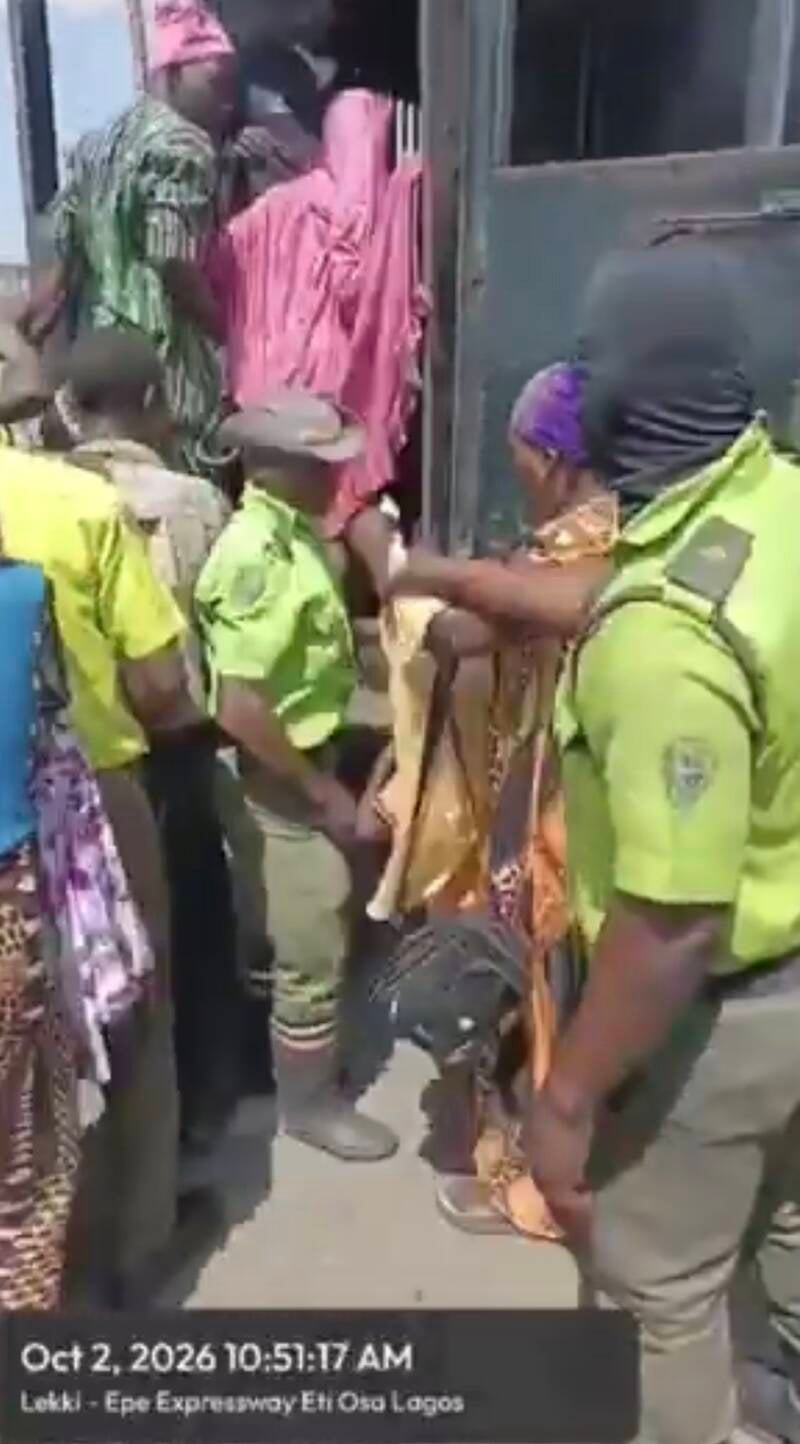
The Lagos State Government has arrested 215 suspected street beggars as part of a renewed enforcement campaign against street begging and the activities of street urchins across the state.
The arrests were disclosed on Saturday, October 3, 2026, by the Lagos State Commissioner for Environment and Water Resources, Tokunbo Wahab, who said personnel of the Lagos State Environmental Sanitation Corps, popularly known as KAI, had commenced intensive operations in different parts of Lagos.
According to the commissioner, the 215 people apprehended during the exercise comprised 152 males, 46 females and 17 young adults. He said the operation was designed to address street begging and related activities while supporting the government’s broader efforts to maintain public order and improve environmental sanitation.
Wahab said the enforcement was also intended to help create safer and more orderly public spaces for residents and visitors. The statement did not identify the individual locations where all 215 arrests were made, and it did not say that the entire figure came from the Lekki-Epe Expressway.
The latest operation comes against the backdrop of increasing attention on street begging and street-related activities along some of Lagos’ busiest corridors, including the Lekki-Epe axis. The corridor has featured prominently in recent public discussions over traffic disruption, pedestrian safety, street trading and alleged criminal activities around congested roads.
In September, stakeholders at a Lagos State House of Assembly public hearing on a proposed bill seeking to prohibit street begging and street urchins specifically raised concerns about the Lekki-Epe corridor. Participants urged the Assembly to move quickly on the proposed legislation, while stressing the need for clear definitions, public education and measures that could address the social conditions associated with street begging.
The September 15 hearing followed growing debate over how Lagos should respond to people who solicit money on roads, bridges and other public spaces. Some stakeholders argued that begging has become a public safety and environmental concern, while others called for rehabilitation and support rather than enforcement alone.
The Lagos State Government has for years maintained restrictions on street begging and other activities that obstruct public spaces. Its environmental enforcement teams have repeatedly carried out operations targeting street traders, beggars, illegal structures and other activities regarded by authorities as violations of environmental regulations.
The latest figure also follows other recent enforcement exercises. In December 2025, Lagos authorities arrested 38 people described by the government as miscreants along the Lekki-Epe Expressway over alleged solicitation of alms and disruption of traffic. The same operation involved the arrest of 18 beggars around the Ketu-Mile 12 axis and the apprehension of a 15-year-old boy accused by the authorities of aggressively soliciting alms on the Lekki-Epe corridor while displaying bank account details and operating a point-of-sale device.
That earlier operation showed the government’s growing focus on how begging is conducted on major roads, particularly where people approach motorists during traffic. Authorities have repeatedly argued that activities on busy roads can create safety and traffic-management challenges.
The government’s latest announcement, however, provided no details on the next steps for the 215 people apprehended. It did not state how many were released, prosecuted, transferred to rehabilitation facilities or returned to their states of origin. It also did not provide details on whether minors were among those classified as young adults beyond the figures supplied by the commissioner.
The distinction is important because enforcement against street begging intersects with broader questions about poverty, homelessness, child welfare and access to social services. Calls for tougher enforcement have therefore increasingly been accompanied by demands for rehabilitation and other forms of assistance for vulnerable people found begging in public places.
At the September public hearing, some stakeholders urged authorities to consider rehabilitation as part of the response. That position reflects a broader debate in Lagos over whether enforcement alone can address the underlying reasons people resort to begging, particularly where individuals are vulnerable or dependent on informal roadside activity for survival.
The proposed street-begging legislation remains part of that wider policy discussion. At the public hearing, stakeholders called for the proposed law to be sufficiently clear so that residents understand what conduct would be prohibited and what penalties could apply. The Nigerian Bar Association’s Lagos branch also highlighted concerns about the situation around the Lekki-Epe corridor.
The announcement has also renewed attention on the language used by officials when describing people found begging. While the government referred to those apprehended as street beggars, the circumstances of individual detainees were not disclosed. No specific criminal allegation was announced against the 215 people as a group.
The operation is therefore best understood as an environmental and public-order enforcement exercise, rather than a single criminal investigation involving all those arrested. Further information would be needed to establish what action will follow in each case.
For now, the government’s latest operation signals that enforcement will continue. Wahab said the intensive operations form part of efforts to maintain public order, promote environmental sanitation and ensure safer and more orderly public spaces across Lagos.
The 215 arrests therefore represent another major step in the state’s continuing campaign against street begging and related activities. But with the government yet to provide detailed information on the disposition of those apprehended, questions remain about what happens after the arrests and how enforcement will be balanced with rehabilitation and social support.
As Lagos expands and traffic pressure increases across major corridors, authorities are expected to continue policing activities that they consider disruptive to public spaces. The Lekki-Epe axis is likely to remain a particular area of attention because of its heavy traffic, rapid development and the concerns raised by residents and stakeholders.
For residents and road users, the latest operation reinforces the government’s position that major roads, pedestrian spaces and public corridors should remain orderly and accessible. For advocates concerned about vulnerable people, the continuing debate will centre on whether enforcement is accompanied by effective measures that address the social and economic circumstances behind street begging.
📩 Stone Reporters News | 🌍 stonereportersnews.com
✉️ info@stonereportersnews.com | 📘 Facebook: Stone Reporters News | 🐦 X (Twitter): @StoneReportNew | 📸 Instagram: @stonereportersnews
Add comment
Comments