

Reported by Ariajegbe Sylvia Esezobor
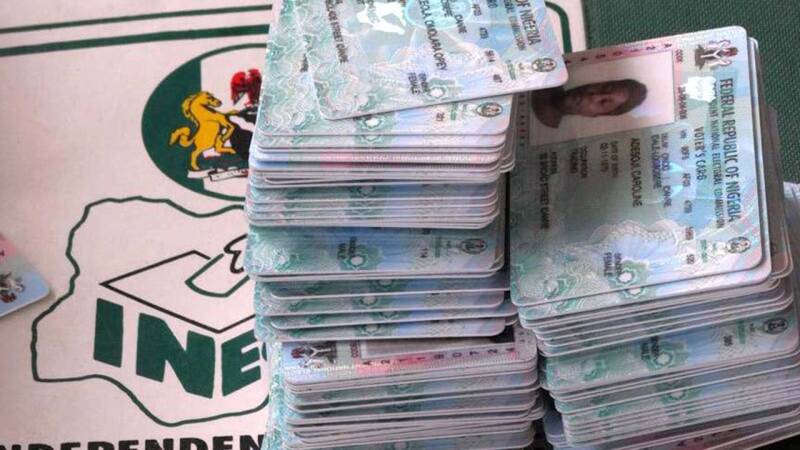
The Independent National Electoral Commission will commence the nationwide collection of Permanent Voter Cards on Friday, October 9, 2026, with Nigeria’s National Register of Voters now exceeding 103 million, the commission announced on Monday in Abuja during a strategic workshop for media executives organised by the Nigerian Guild of Editors in collaboration with the commission.
INEC Chairman Professor Joash Amupitan, a Senior Advocate of Nigeria, disclosed that the three-phase Continuous Voter Registration exercise produced 10,772,421 new registrations, subject to the completion of the Automated Biometric Identification System verification. The first phase, conducted from August 25 to December 10, 2025, registered 2,611,266 voters, the second phase, held from January 5 to April 17, 2026, recorded 4,121,835 registrations, and the third phase, which ran from May 11 to July 26, 2026, recorded 3,867,997 new registrations. Amupitan said the commission had completed the processing and distribution of Phase One PVCs to local government collection centres ahead of the nationwide exercise. “More importantly, I am using this high-level forum of editors to officially remind the Nigerian public that the nationwide collection of Permanent Voters’ Cards will commence in exactly four days, on Friday, 9th October 2026,” he said.
The commission disclosed that it had introduced printable PVC technology under Section 18(1) of the Electoral Act 2026 to ensure that waiting months for a card becomes a relic of the past. The technology was tested during the Osun governorship election and allowed voters whose PVCs had been stolen to participate. INEC also introduced an online registration portal during the third phase of the CVR exercise to reduce barriers associated with distance and time. In Oyo State, the Resident Electoral Commissioner, Professor Adeniran Tella, said the distribution of newly printed PVCs would take place from 9 a.m. to 3 p.m. daily, excluding weekends and public holidays, across all 33 INEC Local Government Area offices in the state. The exercise is meant for new registrants, those who recently transferred their polling units, and those whose PVCs were lost or damaged during the last CVR exercise.
Tella emphasised that the collection of PVCs would be strictly personal and not by proxy, warning that nobody would be allowed to collect the cards on behalf of another person. He said the commission had made adequate arrangements to ensure that the exercise remained transparent, orderly and peaceful in collaboration with security agents across the state. He also revealed that a significant number of uncollected old PVCs from the 2023 general elections remained in the commission’s custody and advised their owners to use the window period to collect them. The directive on personal collection aligns with the Electoral Act, which prohibits collection by proxy under any circumstance. The commission has consistently maintained that the PVC remains the primary instrument through which registered voters are accredited and permitted to cast their ballots on election day.
Amupitan said INEC had completed eight of the 14 major statutory activities contained in its timetable for the 2027 elections, which was issued on February 26, 2026, and was advancing towards the completion of the ninth. The timetable has been translated into an operational plan covering INEC’s headquarters directorates, 36 state offices, the Federal Capital Territory and 774 local government areas. Early procurement and distribution of non-sensitive election materials had commenced, while new operational vehicles were being distributed to state offices and local government areas. The commission had also begun nationwide readiness assessments ahead of the elections, with physical audits and staff engagements already completed in the South-West and North-West geopolitical zones, covering state office facilities, storage facilities, security arrangements and logistics deployment networks.
The INEC chairman used the occasion to issue a firm warning against electoral malpractice, announcing that the commission would work with the Federal Ministry of Justice, the Economic and Financial Crimes Commission, the Independent Corrupt Practices and Other Related Offences Commission and the Nigerian Financial Intelligence Unit to monitor campaign financing and financial inducement. “Elections must be decided by the conviction of the voter, not the depth of a candidate’s pocket,” Amupitan said. He also warned electoral officials and temporary personnel against partisanship and administrative negligence, saying those found compromising their responsibilities would face disciplinary action.
Public trust emerged as a central theme of the chairman’s address. Amupitan described it as the ultimate arbiter of electoral integrity and called for stronger partnership between the commission, editors, civil society organisations and other stakeholders. He said INEC was prepared to listen to editorial concerns, address operational challenges and provide timely information to prevent misinformation from filling communication gaps. He urged newsrooms to establish digital fact-verification desks and pledged that INEC would provide editors with direct access to verify field incidents, logistical developments and security reports in real time. He also proposed a sustained editorial feedback mechanism between INEC and the Nigerian Guild of Editors to review operational progress and resolve emerging challenges throughout the 2027 election cycle.
The commission’s readiness push coincides with a challenging political and security environment. The Supreme Court’s September 28 ruling restored Sections 77 and 84 of the Electoral Act 2026, which govern party membership registers and candidate nomination procedures, and INEC has said it will act in strict compliance with the judgment once it receives the certified true copy. The security environment remains fraught, with kidnapping, banditry and political violence posing persistent threats across several states. Stakeholders at a recent roundtable identified results transmission and collation, electoral violence, voter intimidation and security collusion as the biggest threats to the credibility of the 2027 elections. The 2023 presidential election’s failure to timeously upload polling unit results to the INEC Result Viewing portal remains a source of public mistrust that the commission is seeking to address through improved technology and transparency.
For Nigerians, the October 9 commencement of PVC collection is a critical step in the electoral calendar. The presidential and National Assembly elections are scheduled for January 16, 2027, with the governorship and state assembly elections following on February 6. The PVC is the instrument through which voters translate their preferences into political outcomes, and the commission’s appeal for registered voters to collect their cards ahead of the elections is an acknowledgement that public participation is essential to the legitimacy of the democratic process. As Amupitan put it, the commission is working to ensure that the electoral process is transparent, technology-driven and credible, and that every valid vote counts and is seen to count. The coming weeks will determine how many of the 103 million registered voters collect their cards and whether the commission’s preparations translate into a credible election in 2027.
📩 Stone Reporters News | 🌍 stonereportersnews.com
✉️ info@stonereportersnews.com | 📘 Facebook: Stone Reporters News | 🐦 X (Twitter): @StoneReportNew | 📸 Instagram: @stonereportersnews
Add comment
Comments