

Reported by Ariajegbe Sylvia Esezobor
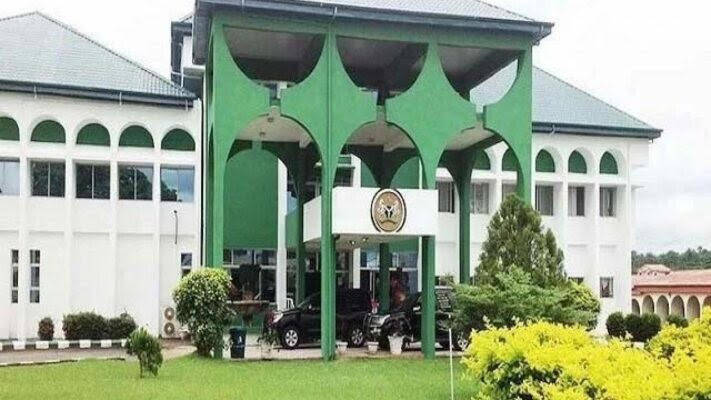
The Jigawa State House of Assembly has approved a supplementary budget of N46.369 billion for the state government and an additional N17.109 billion for the 27 local government areas, raising the state's total 2026 spending from N901.841 billion to N948.210 billion and increasing the local government budget from N288.848 billion to N305.957 billion. The approval, announced by the Speaker of the House, Haruna Aliyu Dangyatin, during plenary on Monday, October 5, 2026, followed what he described as a rigorous review process in which the Assembly made approximately 186 recommendations to ensure transparency and value for money.
Dangyatin said the supplementary appropriation became necessary to accommodate emerging developmental priorities and to strengthen service delivery across the state. "We have critically examined the supplementary request and made about 186 recommendations to ensure transparency and value for money before passage," he said. He recalled that the Assembly had passed the original N901.841 billion 2026 budget on December 23, 2025, approving Governor Umar Namadi's proposal tagged "Budget of Innovation and Transformation for Greater Jigawa II." The budget was presented to the Assembly on November 25, 2025, and focused heavily on capital projects, education and agriculture. According to the Speaker, the original budget allocated 77 per cent to capital projects, over 26 per cent to education, and substantial resources to agriculture to boost development in the state.
The supplementary budget process began in early September 2026 when the Jigawa State Executive Council approved a review of the 2026 Appropriation Law, increasing the state's total budget size by N46.369 billion. The Commissioner of Information, Sagir Ahmad Musa, disclosed at a press conference in Dutse on September 8, 2026, that the review was necessitated by prevailing revenue realities, changes in capital revenue sources and emerging expenditure priorities requiring government attention. He said the review became necessary following changes in the state's revenue outlook, including adjustments to new capital revenue sources and the reversal of savings earlier proposed from certain expenditure lines. The commissioner noted that the revised budget represents an increase of about 5.1 per cent over the original 2026 budget and was designed to align public expenditure with available resources while ensuring that critical programmes and projects receive adequate funding.
The bill was forwarded to the House of Assembly, where it passed first reading on September 24, 2026. The Speaker announced the communication from Governor Namadi during Wednesday's plenary, and the Majority Leader, Lawan Muhammad Dansure, moved the motion for first reading, which was seconded by the member representing Kiyawa Constituency, Yahaya Muhammad Andaza. The House subsequently adjourned its sitting to allow for further legislative review. Following the review, the Assembly made its 186 recommendations and approved the bill after a third reading on Monday.
Dangyatin said the supplementary budget would complement the original budget in achieving the administration's transformation agenda, and he assured that the Assembly would intensify oversight to ensure proper implementation of both the main and supplementary budgets. He also said the House remains committed to supporting policies and programmes that will improve the welfare of the people of Jigawa State. He called on the executive arm to ensure the timely release of funds for the execution of projects captured in the budget. "The House remains committed to supporting policies and programmes that will improve the welfare of the people of Jigawa State," he said, urging the executive to ensure that the funds are released promptly to avoid delays in project implementation.
The approval brings the state's total 2026 budget to N948.210 billion, one of the largest in Jigawa's history. The supplementary allocation for the 27 local government areas, N17.109 billion, raises their combined budget to N305.957 billion for the fiscal year. The increase reflects the state government's stated commitment to aligning its spending with available resources while responding to new and emerging priorities that were not anticipated when the original budget was passed in December 2025.
The political context of the budget approval is significant. The 2027 general elections are less than four months away, with the presidential and National Assembly elections scheduled for January 16, and the governorship and state assembly elections for February 6. Governor Namadi is serving his first term and is expected to seek re-election, and his administration's budget implementation will be a key issue in the campaign. The supplementary budget's emphasis on capital projects, education and agriculture aligns with the governor's stated development priorities and is designed to deliver tangible improvements that voters can assess. The Assembly's call for timely release of funds also reflects a recurring challenge in Nigeria's fiscal management, where approved budgets often face implementation delays due to cash-flow constraints and bureaucratic bottlenecks.
For the people of Jigawa State, the N46.369 billion supplementary budget represents an opportunity for accelerated development in areas that the government has identified as priorities. The N17.109 billion for local governments, if properly deployed, could strengthen service delivery at the grassroots, where the impact of budget allocations is most directly felt by residents. The Assembly's emphasis on oversight and its call for timely release of funds signal a determination to ensure that the approved allocations translate into actual projects and services rather than remaining on paper. As Dangyatin put it, the supplementary budget will complement the original budget in achieving the administration's transformation agenda, and the Assembly will intensify oversight to ensure that both the main and supplementary budgets are implemented as approved. The coming months will determine whether the funds are released promptly and whether the projects they are meant to finance are delivered in time to make a difference before the 2027 elections.
📩 Stone Reporters News | 🌍 stonereportersnews.com
✉️ info@stonereportersnews.com | 📘 Facebook: Stone Reporters News | 🐦 X (Twitter): @StoneReportNew | 📸 Instagram: @stonereportersnews
Add comment
Comments