

Reported by Ariajegbe Sylvia Esezobor
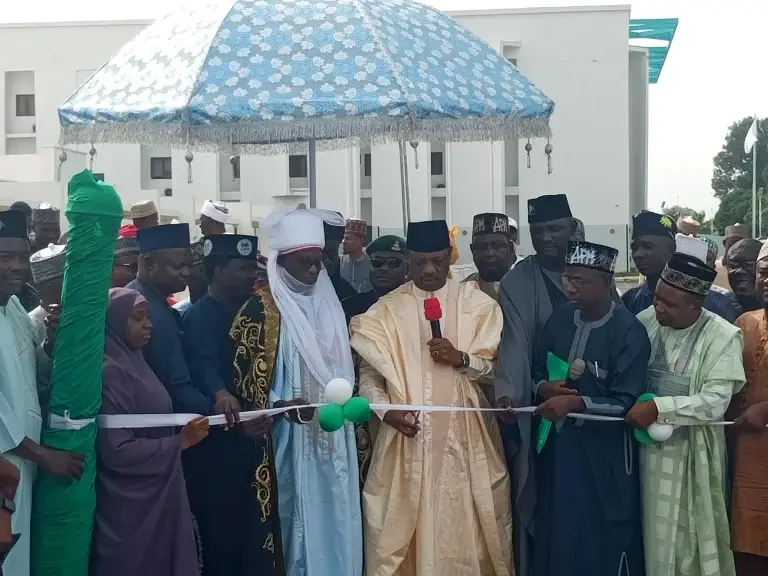
The Bauchi State Government has commissioned 20 digital multifunctional 4D ultrasound scanning machines and 73 anti-shock garments valued at approximately N625 million for deployment across its 20 general hospitals and high-volume primary healthcare centres, in an intervention aimed at expanding access to prenatal diagnosis and reducing maternal and infant mortality across the state. The equipment was unveiled on Tuesday, October 6, 2026, at the Government House in Bauchi by the Deputy Governor, Rt. Hon. Muhammad Awwal Jatau, who chairs the State Task Force on Primary Health Care, during the 2025 Annual Recognition and Award Ceremony and the Quarter Two 2026 meeting of the task force.
Jatau said the 73 anti-shock garments would be used in the management of postpartum haemorrhage, the leading cause of maternal deaths in Nigeria, while the 20 4D ultrasound machines would improve prenatal diagnostics and access to quality maternal healthcare. “To strengthen our capacity to prevent and manage maternal mortality, we will today officially commission 73 life-saving anti-shock garments for the management of postpartum haemorrhage,” Jatau said. “We will also deploy 20 advanced 4D ultrasound scanning machines to 20 General Hospitals across the state at a cost of N750m, to improve prenatal diagnostics and access to quality maternal healthcare.” He emphasised that the administration was committed to ensuring easy access to quality and standardised healthcare service delivery, particularly for women and children. “Because when those are adequately taken care of, the burden is less,” he said. He also pledged that the administration would continue to partner with donor agencies and international development partners to secure support for improving healthcare services.
The 4D ultrasound machines, described by officials as among the latest diagnostic equipment available anywhere in the world, will be distributed to all 20 general hospitals across the state. The Project Focal Person for the IMPACT project, Dr Adamu Mohammed, said the machines can perform a wide range of examinations, including obstetric scanning to determine the number and position of babies during pregnancy, transvaginal and transabdominal ultrasound scans, echocardiography and Doppler examinations. “Because it is 4D, once you are doing the scanning, you will be able to turn any organ that you are looking at 360 degrees to be able to look at all the different sides,” Mohammed said. “So it will be able to give you a more accurate diagnosis while you are scanning.” He disclosed that the machines were procured with support from the World Bank-backed IMPACT project and cost about N595 million, while the anti-shock garments cost approximately N25 million.
Mohammed said the intervention was designed to enable the facilities to provide free ultrasound scanning services, with about 300,000 women targeted to benefit within the next three months. “We are targeting that we will support the facilities to provide free scanning machines in the next three months. We will be targeting about 30,000 pregnant women to benefit as an immediate benefit to the people of Bauchi State,” he said, though other officials put the broader target at 300,000 women across the state. The anti-shock garments, he explained, are designed to temporarily control severe bleeding caused by postpartum haemorrhage and prevent women from going into shock while they are being referred to higher-level health facilities. “When they realise that the bleeding is beyond what they can handle, they will actually put that anti-shock garment for her, and it will actually temporarily stop the bleeding,” he said.
The equipment had been procured in 2025 but could not be distributed to health facilities due to logistics problems, which the Executive Chairman of the Bauchi State Primary Healthcare Board, Dr Rilwanu Mohammed, said had now been cleared. He assured that with the commissioning by the Deputy Governor, the equipment would be distributed to the facilities immediately so that they could be put to use. The state government, through the support of the IMPACT Project, is also providing free antenatal care and delivery kits across the 212 primary healthcare centres in the state. According to Jatau, the government had also engaged and formally absorbed 1,678 skilled birth attendants into the permanent civil service to address manpower shortages in healthcare facilities. “By deploying these skilled healthcare professionals across our primary healthcare facilities, we are addressing critical human resource gaps that have historically affected rural healthcare delivery and establishing a stronger institutional safety net for pregnant women across Bauchi State,” he said.
The intervention forms part of a broader maternal health strategy that the Bauchi State Government has pursued in recent years. In July 2026, Governor Bala Mohammed disclosed that his administration had invested billions of naira in healthcare, including the equipping of 20 general hospitals with 4D ultrasound machines and the distribution of more than 72,000 antenatal care kits and 64,000 Mama Kits to pregnant women. The state has also upgraded 138 primary healthcare centres and benefited from a N10 billion Federal Government maternal and newborn healthcare intervention, which delivered medical equipment to 20 primary healthcare centres across the state. In January 2026, the Bauchi State Government warned healthcare workers against charging pregnant women for antenatal care, declaring that the service remained completely free in all government health facilities. The government also distributed free delivery kits to ease the financial burden on families.
Maternal mortality remains one of Nigeria’s most pressing health challenges, with the country accounting for more than 28 per cent of global maternal deaths and a maternal mortality ratio of 1,047 deaths per 100,000 live births. Postpartum haemorrhage is the leading cause of these deaths, and access to timely diagnosis and emergency obstetric care is critical to reducing the toll. The deployment of 4D ultrasound machines and anti-shock garments is intended to address two of the most consequential gaps in the maternal health chain: the ability to detect complications early through accurate prenatal diagnosis, and the capacity to stabilise women experiencing severe bleeding before they can be referred to higher-level facilities.
The political context of the intervention is significant. The 2027 general elections are less than four months away, and healthcare has emerged as a key issue in the campaign. Governor Bala Mohammed is serving his second term and is ineligible to seek re-election as governor, but he remains a significant political figure in the state and a supporter of President Bola Tinubu’s re-election bid. The timing of the commissioning, just days after the President ordered a thorough investigation into the NAF aircraft crash in Ondo State and as the government intensifies its messaging on delivery, reflects the administration’s efforts to demonstrate tangible progress in the health sector. For the women of Bauchi State, the free ultrasound scans and anti-shock garments represent a direct improvement in the quality of care available to them during pregnancy and childbirth. For the state government, the intervention is a demonstration of its commitment to reducing maternal and infant mortality. For the international development partners supporting the programme, it is evidence that their investments are translating into tangible improvements in health outcomes. As Jatau put it, when the health needs of women and children are adequately taken care of, the burden on families and the broader society is lessened, and the state moves closer to the goal of ensuring that no woman dies while giving life.
📩 Stone Reporters News | 🌍 stonereportersnews.com
✉️ info@stonereportersnews.com | 📘 Facebook: Stone Reporters News | 🐦 X (Twitter): @StoneReportNew | 📸 Instagram: @stonereportersnews
Add comment
Comments