

Reported by Ariajegbe Sylvia Esezobor
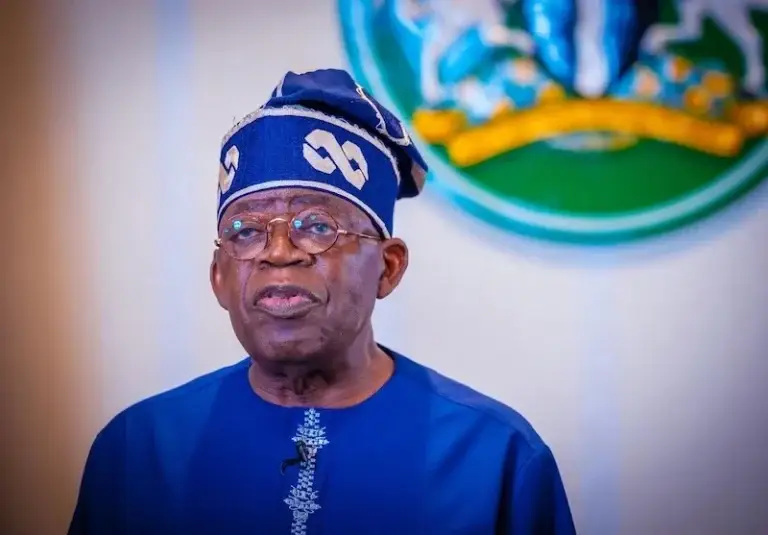
President Bola Ahmed Tinubu has declared that Nigeria is making a decisive break from decades of dependence on crude oil revenues, saying his administration has already significantly reduced oil’s dominance in the nation’s finances and will accelerate the transition towards a diversified, gas-powered economy. The President spoke in Abuja on Tuesday at the fifth anniversary of the Nigerian Upstream Petroleum Regulatory Commission, where he was represented by Vice President Kashim Shettima, according to a statement issued by the Senior Special Assistant to the President on Media and Communications, Stanley Nkwocha.
“We have already reduced our dependence on oil revenue, and we intend to go further,” Tinubu said. “But a diversified economy still needs energy, foreign exchange and investment, and that is where this sector serves the nation. Our gas can power homes and factories. Petroleum earnings support a stable naira and help fund the Federation.” He said the objective was no longer to build an economy that merely extracts and exports petroleum resources, but one that uses oil and gas to stimulate manufacturing, agriculture, infrastructure, jobs and investment across the country.
The President framed the shift within the Renewed Hope Agenda, saying agriculture, manufacturing, the digital economy and the creative industries were increasingly driving Nigeria’s economic transformation. He declared that the current period would be remembered as “the decade of gas,” noting that Nigeria holds the largest gas reserves in Africa. “With the largest gas reserves in Africa, we will expand gas supply for power, industry and clean cooking, reduce flaring and methane emissions, and grow renewable energy alongside it,” he said. “Nigeria will meet its climate responsibilities without sacrificing the development and energy access our people deserve.”
The figures support the President’s narrative of diversification. Nigeria’s oil and condensate reserves stood at 37.01 billion barrels as of January 2026, while gas reserves increased to 215.19 trillion cubic feet, according to NUPRC data. Under the Decade of Gas initiative, the Federal Government is targeting an increase in domestic commercialised gas production to 10 billion standard cubic feet per day by 2027 and 12 billion standard cubic feet per day by 2030. The NNPC has also unveiled a Gas Master Plan 2.0 to align with the initiative, positioning natural gas as the backbone of Nigeria’s energy security. Four major gas projects have reached Final Investment Decision under the Tinubu administration, including the $800 million Ima Gas Project, the fourth such FID after Iseni, Ubeta and HI. The Ima project, with independently confirmed gross reserves of about 1.28 trillion cubic feet of non-associated gas, will supply critical feedgas to Nigeria LNG Limited in support of its Train 7 expansion, which will increase capacity at the Bonny Island plant from 22 million tonnes per annum to 30 million tonnes per annum.
The shift away from oil dependence is also reflected in Nigeria’s export earnings. The Nigerian Export Promotion Council reported that non-oil exports closed 2025 at an unprecedented $6.1 billion, an 11.5 per cent increase over the $5.46 billion recorded in 2024 and the country’s highest formally documented non-oil export value to date. The President said the country’s changing economic structure had renewed confidence in the upstream petroleum sector, with oil production becoming more stable through the combined efforts of security agencies, operators, host communities and the NUPRC. He said investors who had previously moved their capital out of Nigeria were returning, with the country now ranking as Africa’s leading destination for upstream investment for two consecutive years. Nigeria’s share of upstream Final Investment Decisions in Africa rose sharply from four per cent to about 40 per cent between 2024 and 2025.
The President also issued a warning to operators in the sector, saying the government would no longer tolerate a situation in which investors enjoyed incentives without fulfilling their obligations. “Operators who enjoy incentives must deliver on their commitments to work programmes, local content, the environment and host communities, and the Commission must also account publicly for its own performance,” he said. He pledged to protect the sanctity of contracts and ensure that disputes were resolved quickly and fairly, arguing that regulatory certainty remained essential to attracting long-term capital. He acknowledged that investors had complained about high operating costs, lengthy contracting processes and uncertainty around fiscal terms for complex projects. “We listened, and we acted,” he said, calling the NUPRC “the bridge between government policy and investment on the ground” and charging it to keep its processes clear and its timelines reliable.
The Minister of State for Petroleum Resources (Oil), Senator Heineken Lokpobiri, said the NUPRC had recorded significant achievements over the past five years, attributing the progress to reforms under the Tinubu administration. He disclosed that Nigeria currently produces about 1.7 million barrels of crude oil per day and holds more than 37 billion barrels of oil reserves, but stressed that the country still required increased investment, additional licensing rounds and intensified exploration to unlock its petroleum resources. The Chairman of the NUPRC Governing Board, Senator Magnus Abe, credited the commission’s achievements to Tinubu’s leadership and what he described as the clarity of the PIA framework.
The political context of the President’s remarks is significant. The 2027 general elections are less than four months away, and the economy has emerged as the central issue in the campaign. President Tinubu is seeking a second term on the All Progressives Congress platform, while former Vice President Atiku Abubakar of the African Democratic Congress, former Anambra Governor Peter Obi of the Nigeria Democratic Congress and Oyo State Governor Seyi Makinde of the Allied Peoples Movement are among the major challengers. The government has consistently argued that its reforms, including the removal of the petrol subsidy and the unification of the exchange rate, are creating the conditions for sustainable growth, and the President’s emphasis on gas as the fuel of Nigeria’s industrial future provides a forward-looking narrative to counter criticism of the short-term hardship caused by those reforms. For Nigerians, the promise of a gas-powered economy offers the prospect of cheaper energy, revived factories and new jobs, but the transition will take time, and the benefits will depend on whether the investments announced translate into infrastructure, supply and affordability. As Tinubu put it, this is the decade of gas, and Nigeria intends to use it to build an economy that works for all its people.
📩 Stone Reporters News | 🌍 stonereportersnews.com
✉️ info@stonereportersnews.com | 📘 Facebook: Stone Reporters News | 🐦 X (Twitter): @StoneReportNew | 📸 Instagram: @stonereportersnews
Add comment
Comments