

Reported by Ariajegbe Sylvia Esezobor
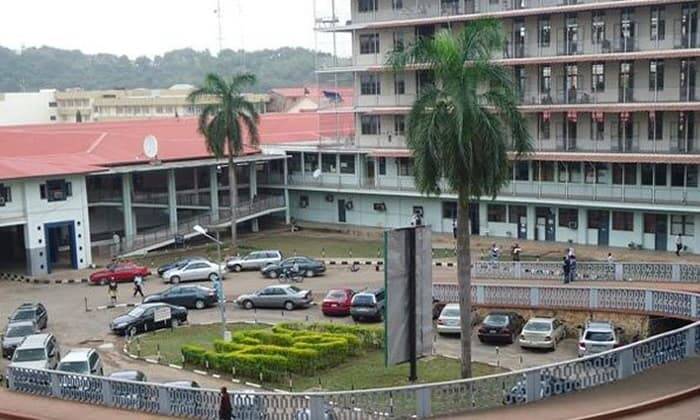
The Olubadan of Ibadanland, His Imperial Majesty Oba (Dr.) Rasidi Adewolu Ladoja, Arusa I, has urged the Federal Government to urgently resuscitate the health facilities at the University College Hospital, Ibadan, describing the premier teaching hospital as a shadow of its former self and warning that both infrastructure and personnel shortages have reached crisis proportions. The monarch made the call on Tuesday, October 6, 2026, while playing host to the Minister of Finance and Coordinating Minister of the Economy, Mr Taiwo Oyedele, and the Coordinating Minister of Health and Social Welfare, Professor Muhammad Ali Pate, at his palace in Ibadan.
In a statement issued by his Chief Press Secretary, Chief Ayoade Solomon Olugbemiga, the Olubadan expressed deep concern over what he described as the precarious situation of the hospital’s facilities. “I am worried about the present precarious situation of the health facilities in the University College Hospital, which has lost its old glory,” Oba Ladoja said. “Apart from the shortage of health facilities, there is also an acute shortage of medical personnel. Urgent action must be taken to arrest the situation.” The monarch, however, commended President Bola Ahmed Tinubu for the efforts his administration has made towards restoring the hospital, urging the Federal Government to sustain and intensify those interventions.
The ministers had visited the palace as part of their trip to Ibadan to commission the newly built Advanced Radio Diagnostic and Cardiac Catheterisation Laboratory, or Cathlab, at UCH, a facility executed through a partnership involving the Nigeria Sovereign Investment Authority and MedServe. Professor Pate described the unveiling as “a promise made and promise kept,” recalling that President Tinubu had approved a package of 16 major health infrastructure projects in February 2024, comprising six cancer centres and the expansion of MedServe with 10 diagnostic facilities. The UCH Cathlab is one of the 10 diagnostic facilities, bringing the total completion of the package to 13 out of 16. “This is a massive infrastructure investment never seen in 66 years of independence. In three years, we have seen that, but more is to come,” Pate said.
The ministers assured the Olubadan that his concerns would be conveyed to the Federal Government for appropriate consideration. Pate specifically acknowledged the monarch’s appeal and stated that plans were already underway for a major revamp of UCH infrastructure, describing the hospital as “a fantastic icon of excellence that needs renewal.” On the shortage of medical personnel, Pate said the government was addressing the emigration of health workers through measures including the doubling of quotas for the training of medical, nursing and pharmacy students, while conceding that the results would take time to manifest. He said the government was working to improve remuneration and compensation in line with what it could afford.
The Olubadan’s intervention reflects a broader crisis in Nigeria’s tertiary health institutions, many of which were established as centres of excellence but have suffered decades of underinvestment. UCH Ibadan, founded in 1952, was Nigeria’s first university teaching hospital and was initially commissioned with 500 bed spaces. It has since grown to over 1,400 bed spaces across its main hospital and satellite facilities, but the hospital’s infrastructure has not kept pace with the demands placed on it. The shortage of medical personnel, which the Olubadan highlighted, has been compounded by the “japa” syndrome, the ongoing wave of Nigerian doctors and nurses emigrating to the United Kingdom, the United States, Canada and other destinations in search of better pay and working conditions. Official figures show that nearly 21,000 Nigerian health workers relocated abroad within one year, including thousands of doctors and nurses.
The newly inaugurated Cathlab centre is expected to provide advanced diagnostics and cardiac catheterisation services, reducing the need for Nigerians to travel abroad for procedures that can now be performed locally. The Chief Medical Director of UCH, Professor Jesse Otegbayo, said the project marked the culmination of a 788-day journey from the groundbreaking in August 2024 to the inauguration in October 2026. Oyedele, the finance minister, said 13 Phase One centres, including those in Bauchi, Jos, Nguru, Ibadan, Ilorin, Asaba, Enugu, Uyo, Kaduna and Sokoto, were expected to serve approximately 300,000 Nigerians within their first two years of operation. He emphasised that government budgets alone could not meet Nigeria’s development needs and that mobilising private and other development capital was essential.
The timing of the Olubadan’s appeal is significant. The 2027 general elections are less than four months away, and healthcare has emerged as a central issue in the campaign. President Tinubu is seeking a second term on the All Progressives Congress platform, while former Vice President Atiku Abubakar of the African Democratic Congress, former Anambra Governor Peter Obi of the Nigeria Democratic Congress and Oyo State Governor Seyi Makinde of the Allied Peoples Movement are among the major challengers. The government has consistently pointed to its health infrastructure investments, including the 16-project package approved in 2024, as evidence of its commitment to improving the sector. Critics argue that infrastructure alone cannot compensate for the chronic shortage of health workers, the poor state of many existing facilities and the high out-of-pocket costs that continue to push millions of Nigerians into poverty.
For the people of Ibadan and the millions of Nigerians who depend on UCH for specialist care, the Olubadan’s message carries the weight of lived experience. The hospital that trained generations of Nigeria’s finest doctors and treated countless patients from across the South-West and beyond is no longer the institution it once was. The new Cathlab is a welcome addition, but it does not address the broader deterioration that the monarch described. The Federal Government’s response, if it is to be meaningful, must go beyond commissioning new centres to rehabilitating the old ones, retaining the health workers who are leaving in droves and ensuring that the care provided within the hospital’s walls meets the standard that its name once commanded. As the Olubadan put it, the hospital has lost its old glory, and urgent action must be taken to arrest the situation.
📩 Stone Reporters News | 🌍 stonereportersnews.com
✉️ info@stonereportersnews.com | 📘 Facebook: Stone Reporters News | 🐦 X (Twitter): @StoneReportNew | 📸 Instagram: @stonereportersnews
Add comment
Comments