

Reported by Ariajegbe Sylvia Esezobor
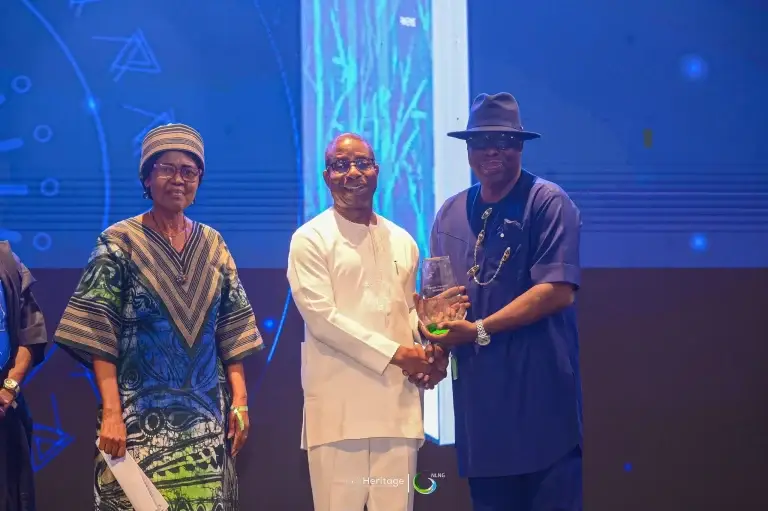
Nigerian poet, lawyer and activist Ogaga Ifowodo has won the 2026 Nigeria Prize for Literature, claiming the $100,000 award for his poetry collection, Why Does God Need a Gun? The announcement was made on Friday, October 9, 2026, at the NLNG Grand Award Night in Lagos, bringing to a close a fiercely contested edition that began with 223 poetry submissions and narrowed to three finalists.
The winning collection, described by the Advisory Board as a sensitive portrayal of religious and political violence in Nigeria through the voice of an imagined victim, beat two other shortlisted works: Unbind Me Now by James Ngwu Eze and Flora’s Love Colony by Tares Oburumu. The 2026 edition of the prize was dedicated to poetry, continuing the award’s annual rotation among prose fiction, poetry, drama and children’s literature. Now in its 22nd year and sponsored by Nigeria LNG Limited, the Nigeria Prize for Literature is one of Africa’s most prestigious literary honours and carries the continent’s largest cash prize for a single literary work.
In the same ceremony, Peter Oghenetega Oke and Feranmi Abiola emerged as joint winners of the inaugural Nigeria Prize for Creative Arts, which carries a $20,000 award. Oke won for Beyond Tarkwa Bay, while Abiola won for Mara Mania. Their documentaries emerged from 98 submissions. The literature and creative arts awards followed the September announcement of Mary-Brenda Akoda as the winner of The Nigeria Prize for Science and Innovation for GenScan AI (GenMRI/C-MORE), an artificial intelligence-powered innovation designed to accelerate magnetic resonance imaging.
Professor Akachi Adimora-Ezeigbo, chairperson of the Advisory Board for the Nigeria Prize for Literature, praised the winning collection and the shortlisted works for their technical skill, confidence and mature use of language. She noted that the three books, though distinct in voice and style, engaged with related concerns including questions of identity and belonging, the promises and disappointments of nationhood, the consequences of extremism and displacement, and the enduring impact of conflict on individuals and communities. “These are works deeply rooted in the Nigerian experience, yet they reach far beyond our borders,” she said.
At the heart of Ifowodo’s collection is a question that challenges the justification of violence in the name of religion: why would an all-powerful God need human beings to defend Him with guns, bombs and bloodshed? Through this question, the poet interrogates religious extremism and the tendency of individuals and groups to cloak violence in the language of faith. The collection also confronts the trauma of terrorism and abduction, drawing attention to the experiences of victims whose lives have been devastated by violence perpetrated in the name of religion. One of its central concerns is the plight of children abducted by terrorist groups, including the girls taken from Chibok and Dapchi in northeastern Nigeria. Ifowodo has explained that the title emerged from the voice of a poetic persona representing children abducted by Boko Haram, the Islamic State West Africa Province and other terrorist organisations. The collection challenges the assumption that violence can be justified by religious conviction, asking readers to confront the human cost of fanaticism and the contradictions inherent in claiming to defend an omnipotent God through bloodshed.
The victory marks a significant milestone in a literary career that has spanned more than three decades. Ifowodo is the author of six poetry collections, including Homeland and Other Poems, which won the Association of Nigerian Authors Poetry Prize in 1993; Madiba, which won the ANA/Cadbury Poetry Prize in 2003; The Oil Lamp, which won the ANA/Gabriel Okara Poetry Prize in 2005; and A Good Mourning, which was shortlisted for the Nigeria Prize for Literature in 2017. He trained as a lawyer and has been a consistent voice on issues of human rights, environmental justice and democratic governance. His writing has been shaped by his activism, particularly his work on the Niger Delta and his advocacy for the rights of communities affected by oil exploration. He has also been a columnist and a public commentator, bringing to his prose the same clarity and conviction that characterise his poetry.
The competition itself was intense. The longlist of 11 titles, announced in July, was whittled down to three finalists in August. The shortlisted works reflected what the judges described as the depth and quality of contemporary Nigerian poetry. Eze’s Unbind Me Now was praised for using fluid and aesthetically captivating language to condemn the sociopolitical dysfunction of Nigeria and the wider world. Oburumu’s Flora’s Love Colony, written in a densely poetic style, explored Nigeria’s troubled history and challenged long-standing narratives of the country’s colonial foundations. The judges assessed the shortlisted books on the strength of their language, form, originality, craftsmanship and lasting literary value. In the hours before the announcement, rumours of a potential joint victory had circulated, driven by the sheer quality of the top three finalists and their shared dedication to diagnosing the nation’s moral and political condition. Instead, the panel made a definitive choice, handing the singular prize to Ifowodo.
The political and cultural context of the award is significant. The Nigeria Prize for Literature has become a major platform for Nigerian writers to engage international audiences through stories that explore identity, resilience and shared humanity. The prize rotates among four literary genres, and its focus on poetry this year placed a spotlight on a form that often receives less commercial attention than prose fiction. The award ceremony drew a cross-section of Nigeria’s literary, artistic and corporate elite, reflecting the growing prestige of the prize and its role in celebrating excellence in the arts.
For Ifowodo, the recognition represents both a personal achievement and a validation of poetry’s capacity to confront the most difficult questions facing society. His collection does not merely condemn terrorism; it examines the beliefs, power structures and moral contradictions that sustain religious violence. It asks readers to consider the human cost of fanaticism and the contradictions inherent in claiming to defend an omnipotent God through bloodshed. In a year defined by powerful voices and urgent themes, Ifowodo’s Why Does God Need a Gun? emerged as the work that the judges believed demanded the highest recognition. The $100,000 prize will support his continued literary work and provide him with the resources to address personal and creative needs, as he noted in an interview before the award. For Nigerian poetry, the prize affirms that the art form remains vibrant, consequential and capable of reaching audiences far beyond the country’s borders. For Nigerians, the collection offers a mirror in which the nation’s deepest wounds and highest aspirations are reflected with unflinching honesty. As Adimora-Ezeigbo put it, these are works deeply rooted in the Nigerian experience, yet they reach far beyond our borders.
📩 Stone Reporters News | 🌍 stonereportersnews.com
✉️ info@stonereportersnews.com | 📘 Facebook: Stone Reporters News | 🐦 X (Twitter): @StoneReportNew | 📸 Instagram: @stonereportersnews
Add comment
Comments